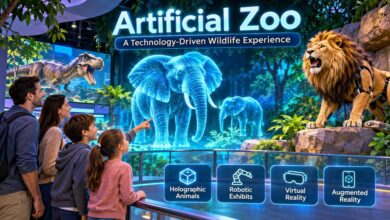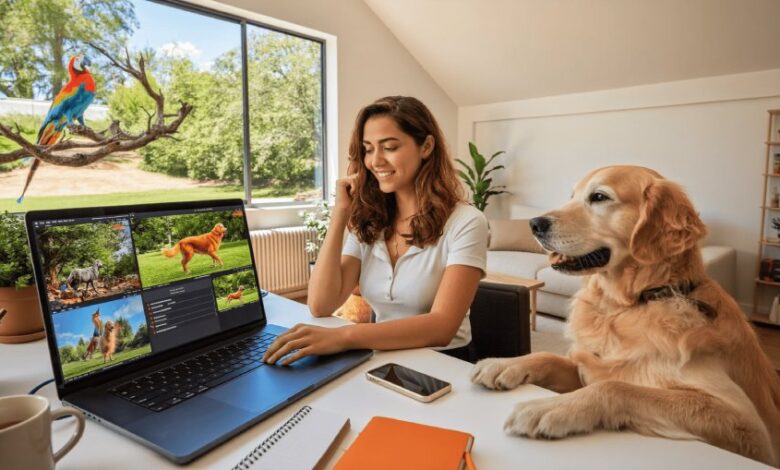
Animal content is among the most watched material online and among the easiest to get wrong in ways that matter.
Not aesthetically. A badly lit clip of a cat is still a clip of a cat. The problem is that people watching animal content are frequently deciding something, and what they are deciding affects an actual animal. Whether a species is easy to keep. How big a tank needs to be. What normal behaviour looks like. Whether a particular animal is well.
An AI Animal Video Generator with realistic video creation features from Higgsfield can create convincing animal footage for illustrations. However, misleading videos showing animals behaving unnaturally can cause harm, especially when influencing potential pet buyers.
The line between those two uses is clear once it is stated, and almost nobody states it.
Why Does Generated Animal Footage Mislead?
Because it has no obligation to be possible.
Real footage is constrained by reality. An animal filmed in a tank is in a tank that exists, at a size that exists, with tankmates that survived together. All of that information travels with the footage whether or not anybody intended it.
An AI Animal Video Generator sequence carries none of those constraints:
- Species combinations that would not coexist
- Enclosure sizes that no animal could live in
- Behaviours the species does not perform
- Habitats the animal does not occupy
- Condition that looks ideal regardless of what produces it
The enclosure point is the most consequential. Generated footage of fish in a small, beautifully planted tank shows something achievable only because nothing in it has to stay alive.
Somebody watching takes it as a reference. That is where the harm happens.
What Must Never Be Produced?
Anything somebody might act on about a specific animal or a specific setup.
- Never produce an animal for a sale or adoption listing
- Never generate your own pet, which followers notice immediately
- Never present generated footage as a wildlife observation
- Never produce a species in a habitat it does not occupy
- Never use an AI Animal Video Generator to show a care setup as achievable
The adoption listing point is the one with immediate consequences. Somebody travels to meet an animal that does not match the footage, and the animal bears the cost of the disappointment.
The husbandry point is slower and affects more animals. A generated setup that looks beautiful and could not sustain life becomes the reference somebody builds toward, and the animals in the real version of it do not do well.
Film the actual animal, in the actual setup, as it actually is.
Where Does It Legitimately Help?
Illustration and explanation, clearly labelled.
- Anatomy and biology diagrams, where a drawing serves better than footage
- Behaviour explanation, showing a process rather than a specific animal
- AI Animal Video Generator concept work for products or branding
- Decorative material, including backgrounds and transitions
- Scale comparison, where a schematic communicates size
The behaviour explanation case is genuinely valuable. Some things are difficult to film, happen rarely, or occur inside an animal, and an illustration explains them better than waiting three years for footage.
Label it as illustration. An audience accepts a marked diagram without hesitation and objects strongly to discovering that footage was produced.
That objection is sharper in animal communities than almost anywhere else, because the audience includes people who keep the species and know what is real.
What About Filming Pets?
Patience, floor level, and never making the animal uncomfortable.
- Get down to their height, which transforms the footage
- Film in good light, preferably daylight through a window
- Wait, since the good moment is not on demand
- Never stress an animal for a shot
- Never restrain or position a pet for AI Animal Video Generator content or any other kind
The last two are where animal content goes wrong most often. A pet held in a pose it is resisting, startled for a reaction, or repeatedly disturbed for another take is being used rather than filmed.
Signs that the animal has had enough are usually obvious and routinely ignored. Lip licking, turning away, flattened ears, a tank fish hiding behind a plant. Those mean stop.
Nothing is worth it. The footage is not better for the animal being unhappy, and the audience frequently notices before the creator does.
Should Wildlife Be Treated Differently?
More strictly, because the stakes include conservation.
Generated wildlife footage presented as observation corrupts the record. Somebody reports a species in a location it does not occur, a conservation claim rests on an image nobody checked, and genuine footage becomes easier to dismiss.
- Never present AI Animal Video Generator wildlife as a sighting
- Never produce a species outside its range
- Never generate anything for a record, a survey or a report
- Label conceptual wildlife material clearly
- Use genuine archive where real footage is needed
Public domain archives from government agencies hold substantial genuine wildlife footage, which is both free and real. That is almost always the better answer than producing something.
The sighting record point matters particularly for rare or threatened species, where a false report can waste limited survey resources.
Does This Affect Rescue and Rehoming?
It does, and rescues are among the least equipped to deal with it.
A rescue advertising an animal relies on the listing being accurate, because a failed adoption costs the animal a return and the organisation a foster place.
Where the risk sits:
- Produced images in listings, which misrepresent the specific animal
- Enhanced photographs that alter coat, build or condition
- An AI Animal Video Generator clip standing in for footage nobody had time to shoot
- Stock imagery of a similar animal, used because the real one photographs badly
- Fabricated behaviour, suggesting a temperament not yet assessed
The temperament point matters most. An adopter choosing a calm animal and collecting an anxious one is a failed placement, and the animal is returned having lost another home.
Photograph the actual animal, including the scar, the grey muzzle and the missing eye. Somebody is looking for exactly that animal, and the ones who are put off by an honest photograph were never the right home.
Film a short clip too. Thirty seconds of an animal moving tells an adopter more than any still, and it costs nothing.
What About Aquarium Content?
A particular case, because the hobby runs on visual reference.
Aquascaping and fishkeeping are intensely visual pursuits where people copy what they see. That makes accuracy in aquarium video a welfare question rather than an aesthetic one.
What generated aquarium footage gets wrong:
- Stocking levels that no filtration could support
- Tank sizes shown with species that outgrow them
- Incompatible species sharing a frame
- Plant growth at densities requiring conditions not shown
- Water clarity that implies maintenance nobody did
Invertebrate content carries the same issue. A care guide like this one on Amano shrimp works because it describes what the species actually needs, and footage accompanying that kind of guide has to match.
Film your own tank. Including the algae.
How Do You Film an Aquarium Properly?
With the room lights off and the glass clean, which solves most problems.
- Turn off the room lights, so reflections disappear
- Clean the glass, inside and out, before filming
- Shoot straight on, since angled glass distorts
- Never use flash, which startles fish and ruins anything an AI Animal Video Generator could fix
- Lock the focus, because autofocus hunts constantly
The room lights point is the biggest single improvement available. Reflections of a lit room on aquarium glass are what make most tank footage look amateurish, and switching off a lamp removes them entirely.
Let the fish settle. Footage shot immediately after somebody approaches the tank shows stressed animals, which is both worse content and a misleading representation of how they normally behave.
An AI Animal Video Generator cannot fix reflections, and nothing needs to if the lights are off.
Does Labelling Actually Matter?
To this audience, considerably.
Animal communities contain specialists. Keepers who know the species, aquarists who recognise an impossible tank, birders who know what occurs where. They identify generated content quickly and they remember who published it.
- Label produced material on the frame
- Say so in the caption as well
- Explain what the illustration is showing
- Never label after being asked, which is too late
- Keep AI Animal Video Generator work visually distinct from footage
Being straightforward costs nothing and builds the thing that animal content actually runs on, which is trust about care advice.
Somebody who believes your care guide will follow it, and an animal depends on that being accurate.
What Should a Care Guide Show?
The real setup, including what it looks like on an ordinary day.
- The actual enclosure, at the actual size, with dimensions stated
- The equipment, named, since people will ask
- Maintenance as it happens, not only the clean result
- Problems, including algae, illness and what you did
- The animal behaving normally, which takes patience
The ordinary day point is what separates useful guides from aspirational ones. A tank photographed the hour after a full maintenance session is not what anybody’s tank looks like, and showing only that sets up every beginner to think they are failing.
An AI Animal Video Generator sequence cannot show an ordinary day, because it has no ordinary days.
Show yours. It is more useful and more honest.
How Should Footage Be Kept?
Organised by animal and date, which matters more here than elsewhere.
- Date everything in Higgsfield, since growth and change are the record
- Note the setup at the time, including size and equipment
- Keep the raw footage, not just published AI Animal Video Generator cuts
- Store the Higgsfield project for any illustrative material separately
- Keep health-related footage permanently
The health footage point is practical. A vet asking what a behaviour looked like three weeks ago is considerably better served by a clip than by a description, and the clip takes seconds to film at the time.
Keeping Higgsfield illustrative material in a separate folder from real footage prevents the one mistake that matters, which is the two getting mixed up later.
What Would One Care Video Take?
An afternoon, mostly waiting.
- Set up the shot with the room lights off and the glass clean
- Let the animal settle for twenty minutes before filming
- Film normal behaviour into Higgsfield, at length, and select afterwards
- Show the setup honestly, including dimensions
- Produce any diagrams in an AI Animal Video Generator, labelled
- Caption it, since most people watch without sound
- Keep the Higgsfield project separate from the real footage
The twenty minutes of settling is the step that makes the difference. An animal that has forgotten you are there behaves normally, and normal behaviour is what a care video is supposed to show.
Everything else is patience.
FAQ’s
Why is generated animal footage a problem?
It has no obligation to be possible. Impossible stocking levels, enclosure sizes and species combinations become the reference somebody builds toward.
Where is it genuinely useful?
Anatomy diagrams, behaviour explanation, concept work and decoration, all clearly labelled as illustration.
Can an AI Animal Video Generator be used in an adoption listing?
Never. Somebody travels to meet an animal that does not match, and the animal bears the cost.
What is the biggest aquarium filming mistake?
The room lights on. Reflections on the glass are what make most tank footage look amateurish, and switching off a lamp removes them.
How long should a pet settle before filming?
About twenty minutes. An animal that has forgotten you are there behaves normally, which is the point.
Is there a free way to try this?
Higgsfield operates a free tier as part of an AI creative suite, which covers producing labelled illustrative material for a guide.
Conclusion
Animal content is watched by people who are about to make a decision affecting something alive, which is a higher bar than most content has to clear.
An AI Animal Video Generator belongs in diagrams, explanations and decoration, labelled, and Higgsfield runs it in a browser for exactly that.
The animal, the enclosure and the ordinary day get filmed. Lights off, glass clean, twenty minutes of patience, and show it as it actually is.