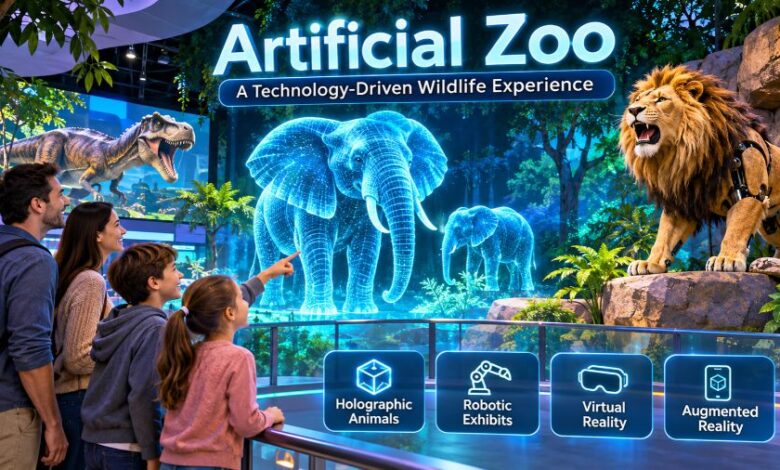
Artificial Zoo is an emerging concept that combines digital technology, robotics, holographic displays, and interactive environments to recreate wildlife experiences without depending entirely on living animals. Unlike traditional zoological parks, artificial zoos allow visitors to explore realistic representations of wild animals, underwater ecosystems, prehistoric creatures, and natural habitats through innovative technologies. These attractions are creating new opportunities for education, entertainment, and wildlife awareness while raising interesting questions about the future of animal exhibitions. From holographic elephants and robotic lions to immersive virtual safaris, artificial zoos demonstrate how modern technology can bring the natural world closer to people in completely different ways.
What Is an Artificial Zoo?
An artificial zoo is a technology-based attraction or educational environment that presents animals through artificial representations rather than keeping every displayed species alive in physical enclosures. These representations can include computer-generated animals, holographic projections, mechanical creatures, interactive digital displays, and realistic physical models. The main purpose is to recreate the appearance and behaviour of wildlife while allowing visitors to explore different ecosystems in controlled environments. Some artificial zoos focus primarily on entertainment, while others emphasize education, scientific communication, and environmental awareness. The term does not describe one standardized technology or officially recognized category of zoological institution. Instead, it broadly describes different approaches to presenting wildlife through artificial means. Depending on the attraction, visitors might encounter a digitally recreated tiger, watch a robotic dinosaur move, or explore an underwater environment filled with virtual marine animals. This approach offers an alternative way to experience wildlife without requiring every attraction to maintain living animal populations.
How Does an Artificial Zoo Work?
Artificial zoos combine hardware, software, visual effects, sensors, and interactive equipment to create convincing wildlife experiences. The technology depends on the type of attraction, but most systems use carefully designed digital content or mechanical structures to reproduce animal movements, appearances, and environmental details. Developers create three-dimensional animal models, animate their movements, and integrate them into specially designed exhibition spaces. Projection systems, display screens, tracking equipment, sound systems, and sometimes augmented reality glasses help bring these digital environments to life. Robotic exhibits work differently because they use motors, mechanical joints, controllers, and sensors to produce physical movement. Visitors may walk through specially constructed tunnels, view animals inside simulated enclosures, or interact with digital creatures using supported devices. Advanced attractions can also combine lighting, sound effects, and environmental effects to create a more immersive experience. The result is a carefully coordinated presentation in which technology makes artificial wildlife appear more realistic and engaging.
Different Types of Artificial Zoos
Artificial zoos can be developed using several technologies, and understanding their differences helps explain how these attractions operate. Some focus on projected digital animals, while others use physical robots, virtual environments, augmented reality, or realistic models. Each approach offers a different experience depending on the available equipment, exhibition design, and educational objectives.
Holographic Zoos
Holographic zoos use specialized visual display systems to create three-dimensional representations of animals that appear to occupy the surrounding environment. Visitors can see digitally recreated elephants, dolphins, whales, dinosaurs, and other creatures without encountering actual animals. One notable example is the Hologram Zoo concept developed by Australian company Axiom Holographics. Its attractions combine specialized displays, glasses, and interactive visual technology to create immersive wildlife environments. Depending on the installation, visitors can explore themed tunnels, animal enclosures, and other digital experiences. These systems are often marketed as holographic experiences, although their underlying technology can differ from conventional scientific holography. Their main attraction is the ability to present large-scale digital wildlife in an engaging environment without maintaining living animal exhibits.
Robotic and Animatronic Zoos
Robotic zoos use mechanical animals designed to reproduce the movements and appearance of real creatures. These artificial animals are commonly built using motors, actuators, mechanical structures, electronic controllers, and realistic external materials. Animatronic lions can move their heads, open their mouths, and produce recorded sounds, while mechanical dinosaurs can simulate walking, breathing, and other movements. This technology is particularly useful for museums, educational exhibitions, theme parks, and temporary wildlife attractions. Unlike digital holographic animals, robotic creatures have a physical presence that visitors can observe directly. Their realism depends on engineering quality, movement programming, materials, and sound design. Although they cannot reproduce every detail of living animal behaviour, they provide an interesting way to demonstrate animal anatomy, movement, and prehistoric life.
Virtual Reality Zoos
Virtual reality zoos use computer-generated environments and VR headsets to transport visitors into digitally created wildlife habitats. Participants may explore African grasslands, tropical forests, underwater environments, or prehistoric landscapes while interacting with virtual animals. The experience is designed to create a sense of presence inside a simulated environment rather than simply watching animals on a conventional screen. Visitors can look around, move through virtual spaces, and sometimes interact with objects or creatures using controllers and other supported equipment. Educational applications can introduce users to different species, explain animal adaptations, and demonstrate environmental relationships. However, VR experiences depend on compatible hardware and software, and some visitors may experience discomfort when using headsets. These attractions are especially useful when physical access to remote wildlife environments is difficult or impractical.
Augmented Reality Zoos
Augmented reality zoos combine digital animal representations with real-world surroundings. Instead of replacing the entire environment, AR technology adds virtual creatures, animations, information, and interactive elements to what visitors can already see. A visitor might use a smartphone, tablet, or specialized glasses to view a digitally recreated elephant standing inside an exhibition area. The technology can also display information about animal habitats, feeding behaviour, physical characteristics, and conservation challenges. Augmented reality provides an opportunity to make educational exhibitions more interactive without constructing complicated physical animal enclosures. Its effectiveness depends on accurate digital models, reliable tracking, compatible devices, and well-designed educational content. Museums, schools, and science centres can use these experiences to explain wildlife in a visually engaging format.
Major Features of Modern Artificial Zoos
Modern artificial zoos are designed to provide experiences that go beyond traditional static animal displays. Their features may include realistic three-dimensional models, synchronized animal movements, interactive environments, immersive sound, and educational information. Some attractions allow visitors to explore multiple ecosystems during one visit, including forests, deserts, oceans, and polar regions. Advanced visual systems can present animals from different viewing angles, while tracking technology helps adjust certain displays according to visitor movement. Sound effects recreate environmental conditions, including animal calls, flowing water, rainfall, and forest sounds. Some installations also incorporate seasonal exhibitions and regularly updated digital content to introduce new experiences. These features make artificial wildlife attractions flexible because operators can change the displayed species and environments without physically transporting animals. However, the quality of the experience depends on the technology, creative production, maintenance, and accuracy of the educational material.
Real-World Examples of Artificial Zoo Technology
Artificial zoo technology is no longer limited to theoretical concepts or experimental demonstrations. Holographic wildlife attractions and robotic animal exhibitions have introduced different ways for visitors to experience digitally recreated nature. One prominent example is the Hologram Zoo developed by Axiom Holographics, an Australian technology company associated with immersive three-dimensional displays. Its attractions feature digital representations of animals and environments, including African wildlife, polar ecosystems, marine creatures, and dinosaurs. Another example is Hologram Zoo Vancouver, which promotes immersive experiences featuring dinosaurs, Africa, and space. Educational publications have also covered these attractions as examples of augmented reality and immersive visual technology. Outside holographic attractions, animatronic animal exhibitions and virtual wildlife experiences demonstrate how mechanical engineering and computer-generated environments can support similar goals. These examples show that artificial wildlife experiences can take several forms, rather than depending on one particular display technology.
Benefits of Artificial Zoos
Artificial zoos offer several potential advantages for entertainment, education, and wildlife presentation. One important benefit is that digital and mechanical animal exhibits do not require the same direct animal housing and daily care as conventional living-animal collections. This can reduce certain animal welfare concerns associated with keeping wildlife in captivity, although it does not eliminate the need for responsible technology production and operation. Another advantage is flexibility because operators can introduce extinct species, rare animals, and inaccessible marine creatures without maintaining physical specimens. Artificial environments can also make wildlife education more interactive by allowing visitors to explore different habitats through visual storytelling and digital demonstrations. Schools and museums may use these experiences to explain biodiversity, animal adaptations, and ecological relationships. Furthermore, artificial exhibits can operate indoors throughout different seasons and can be adapted for locations where maintaining traditional zoological facilities would be impractical. Their ability to combine entertainment with educational information makes them an interesting development in modern exhibition design.
Artificial Zoos vs Traditional Zoos
Artificial zoos and traditional zoological parks provide different approaches to presenting wildlife, and neither should automatically be considered a complete replacement for the other. Traditional zoos maintain living animal populations and may contribute to conservation breeding, veterinary research, public education, and species protection. Their responsibilities include providing suitable habitats, nutrition, veterinary care, enrichment, and appropriate living conditions. Artificial zoos, by comparison, focus on digital, mechanical, or physical representations that allow visitors to observe animals without displaying living specimens. They can demonstrate extinct species and simulate environments that would be difficult to recreate in a conventional zoo. However, artificial representations cannot provide the same opportunity to observe genuine animal behaviour, biological processes, or interactions between living species. Traditional zoos also vary considerably in their conservation practices and animal welfare standards. Artificial attractions are therefore better understood as an alternative educational and entertainment format rather than a universal substitute for wildlife conservation institutions.
Challenges and Limitations of Artificial Zoos
Despite their advantages, artificial zoos face several technological, financial, and educational challenges. Developing realistic digital animals requires skilled designers, animators, software engineers, and specialized equipment. High-quality projection systems, robotic components, tracking devices, and display installations can involve significant initial investment. Ongoing maintenance is another consideration because electronic equipment, mechanical systems, and software require regular servicing. Some visitors may also find artificial animals less engaging than living creatures, particularly when they want to observe natural behaviour. Another important limitation concerns educational accuracy. Poorly designed digital animals may display unrealistic movements, incorrect physical characteristics, or misleading information about wildlife. Operators must therefore ensure that scientific content is carefully reviewed and presented responsibly. In addition, immersive technologies can create accessibility challenges for visitors who experience motion sickness, have visual impairments, or cannot comfortably use specialized equipment. Addressing these limitations is essential if artificial zoos are expected to become reliable educational attractions rather than purely entertainment-focused installations.
Artificial Zoos and Wildlife Conservation
Artificial zoos can support wildlife conservation awareness by presenting endangered species and environmental challenges through interactive educational experiences. Visitors can learn about habitat destruction, biodiversity loss, illegal wildlife trade, climate change, and the importance of protecting natural ecosystems. Digital environments can also introduce animals that are difficult to observe in their natural habitats, helping audiences understand their physical characteristics and ecological roles. However, an important distinction exists between raising awareness and directly protecting wildlife. A holographic elephant cannot replace habitat protection, veterinary intervention, conservation breeding, or field research. Artificial attractions should therefore communicate how real conservation programmes operate and explain why protecting living species remains essential. When educational content is developed with input from zoologists, conservation specialists, and scientific institutions, these experiences can become useful tools for environmental communication. Their greatest contribution may be encouraging curiosity about nature and helping visitors understand the challenges facing wildlife populations around the world.
The Future of Artificial Zoo Technology
The future of artificial zoos will likely involve improvements in three-dimensional displays, artificial intelligence, animation, robotics, and interactive educational systems. More advanced software could allow digital animals to respond dynamically to visitor interactions and demonstrate different behaviours under simulated environmental conditions. Artificial intelligence may also support educational guides that answer questions about species, habitats, and conservation challenges. Improvements in display technology could make digital wildlife more detailed and convincing while reducing dependence on specialized viewing equipment. Robotic engineering may produce more sophisticated mechanical animals with smoother movements and more realistic appearances. Another promising direction is the integration of artificial zoos into schools, museums, science centres, and family entertainment venues. However, future development will depend on affordability, technical reliability, accessibility, and the quality of educational content. The most successful attractions will likely be those that combine engaging technology with accurate information and a clear understanding of their educational purpose.
Conclusion
Artificial Zoo represents an interesting intersection of wildlife education, digital entertainment, robotics, and immersive technology. By using holographic displays, virtual reality, augmented reality, and mechanical animal models, these attractions offer new ways to explore wildlife without depending entirely on living animals. Real-world developments such as Axiom Holographics’ Hologram Zoo demonstrate how immersive displays can turn digital representations of animals into engaging visitor experiences. Although artificial zoos cannot replace biological research, natural habitats, or genuine wildlife conservation programmes, they can complement traditional educational approaches and encourage greater interest in biodiversity. Their long-term value will depend on technological innovation, scientific accuracy, accessibility, and responsible presentation of the natural world.
Also read: AICOT Explained: Key Meanings, Uses and Technology Behind the Name
FAQs
1. What is an artificial zoo?
An artificial zoo is an attraction that recreates wildlife using holograms, robotics, virtual reality, augmented reality, or realistic artificial animal models.
2. Are artificial zoos different from traditional zoos?
Yes, artificial zoos display simulated or mechanical animals, whereas traditional zoos maintain living animals and provide opportunities to observe genuine wildlife behaviour.
3. How do holographic zoos work?
Holographic zoos use specialized displays, projection systems, software, and sometimes augmented reality glasses to create immersive three-dimensional representations of animals.
4. Are artificial zoos suitable for children?
Yes, artificial zoos can provide engaging educational experiences for children by introducing wildlife, habitats, animal characteristics, and environmental conservation through interactive displays.
5. Which company developed the Hologram Zoo?
Axiom Holographics, an Australian technology company, developed the Hologram Zoo concept using specialized three-dimensional display technology for immersive wildlife experiences.
6. Can artificial zoos replace traditional zoos?
No, artificial zoos can complement wildlife education, but they cannot replace living animals, biological research, conservation breeding, or genuine wildlife protection programmes.