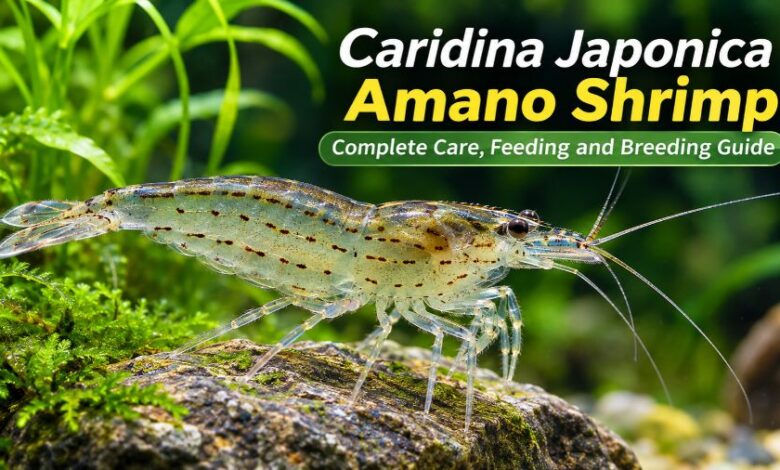
Caridina Japonica Amano Shrimp, commonly known as Amano shrimp or Yamato shrimp, are among the most popular freshwater invertebrates in planted aquariums because of their impressive algae-eating abilities, peaceful behaviour, and relatively straightforward care requirements. Scientifically recognised today as Caridina multidentata, this species has an interesting life cycle that makes it different from many other aquarium shrimp. Whether you are considering adding Amano shrimp to a freshwater aquarium or want to understand their feeding habits, water requirements, appearance, compatibility, and reproduction, this comprehensive guide explains everything you need to know about keeping these useful aquatic creatures healthy.
What Is Caridina Japonica Amano Shrimp?
Caridina Japonica Amano Shrimp is the traditional name associated with a freshwater shrimp species belonging to the Atyidae family. Its currently accepted scientific name is Caridina multidentata, while Caridina japonica is an older scientific synonym that remains widely used in aquarium communities and online searches. Native populations are associated with Japan and Taiwan, where these shrimp inhabit freshwater environments connected to coastal waters. They became particularly popular in the aquarium hobby through Japanese aquascaper Takashi Amano, who helped introduce them as effective natural algae consumers in planted aquariums. Their ability to graze on unwanted algae, biofilm, and organic debris makes them valuable additions to carefully maintained freshwater tanks.
Physical Appearance and Identifying Characteristics
Amano shrimp have an elongated, slightly transparent body that can appear grey, brown, tan, or greenish depending on their environment, diet, and individual characteristics. Their sides feature distinctive markings that help aquarists distinguish them from other freshwater shrimp species. Adult specimens commonly reach approximately 4–5 centimetres in length, although individual sizes vary. They have several pairs of walking legs, delicate antennae, and specialised feeding appendages that help them collect algae and other small food particles from aquarium surfaces. Females are generally larger than males and typically display longer, dash-shaped side markings, while males often have smaller, more separated dots. These physical differences become easier to recognise when comparing mature individuals.
Natural Habitat and Geographic Distribution
Amano shrimp are associated with freshwater rivers and streams in Japan and Taiwan, particularly environments connected to coastal ecosystems. Their natural habitats provide flowing water, oxygen, stones, vegetation, and surfaces where algae and biofilm can develop. These conditions explain many of their aquarium preferences, including good water circulation, stable oxygen levels, and access to natural grazing surfaces. Unlike freshwater shrimp that complete their entire life cycle in freshwater, Caridina multidentata has an amphidromous life cycle. Adults inhabit freshwater environments, but their newly hatched larvae require more saline conditions during development. This connection between freshwater rivers and coastal waters is one of the most interesting biological characteristics of the species.
Aquarium Requirements for Amano Shrimp
Creating a suitable aquarium environment is essential for keeping Amano shrimp healthy and active. A mature freshwater aquarium with stable water conditions, effective filtration, adequate oxygenation, and plenty of surfaces for grazing provides a suitable habitat. A tank of approximately 40 litres or larger is a practical starting point, particularly when keeping several shrimp alongside community fish. Live plants, driftwood, aquarium stones, and natural decorations provide additional feeding and hiding areas. Gentle to moderate water movement helps maintain circulation without creating unnecessarily strong currents throughout the aquarium. A secure lid is also useful because shrimp can climb near the waterline and occasionally escape, especially when stressed or exposed to unsuitable conditions.
Ideal Water Parameters for Caridina Japonica Amano Shrimp
Maintaining consistent water parameters is more important than constantly adjusting the aquarium to achieve a particular numerical value. Amano shrimp generally adapt to a reasonably broad range of freshwater conditions when changes happen gradually. A temperature of approximately 20–27°C and a pH around 6.5–7.5 provide useful starting targets for many community aquariums, although the species can tolerate a wider range under suitable conditions. Moderate water hardness is generally appropriate, and adequate minerals are necessary for successful moulting. Ammonia and nitrite should remain at zero, while nitrate should be controlled through appropriate filtration, feeding, and routine water changes. Sudden changes in temperature, pH, hardness, or mineral concentration can stress shrimp and increase the risk of health problems.
What Do Amano Shrimp Eat?
Amano shrimp are omnivorous scavengers that spend much of their time searching for edible material across aquarium surfaces. Their natural diet includes algae, biofilm, decaying plant material, microorganisms, and organic debris. In aquariums, they also consume leftover fish food, sinking shrimp pellets, algae-based foods, and suitable vegetables. Their feeding behaviour makes them particularly useful in planted tanks where algae develops on leaves, decorations, and other surfaces. However, they should not be expected to survive entirely on visible algae, especially in a recently established or exceptionally clean aquarium. Providing occasional supplementary food helps maintain their nutritional condition, particularly when natural food sources become limited.
Best Foods for Amano Shrimp
Suitable supplementary foods include specialised shrimp pellets, algae wafers, blanched spinach, zucchini, and small portions of other aquarium-safe vegetables. Commercial shrimp foods containing appropriate minerals can help support normal growth and moulting. Food should be provided in controlled quantities because excessive feeding can increase organic waste and negatively affect water quality. If uneaten food remains in the aquarium, removing it helps prevent unnecessary decomposition. Amano shrimp may also consume their shed exoskeletons after moulting, which provides an opportunity to recover some of the minerals contained in the old shell.
Are Amano Shrimp Good Algae Eaters?
Amano shrimp are widely considered effective algae consumers, particularly in planted freshwater aquariums. They regularly graze on hair algae, thread algae, biofilm, and certain other types of unwanted organic growth. Their constant movement across plant leaves, driftwood, aquarium glass, and stones allows them to reach areas that may be difficult for larger aquarium inhabitants to clean. They are especially useful when algae growth is caused by an imbalance in aquarium maintenance, lighting, or available nutrients. However, they are not a complete solution to every algae problem. Some types of algae are less attractive or difficult for them to consume, and their feeding preferences can change when alternative foods are readily available. The most effective approach is to combine Amano shrimp with balanced lighting, appropriate nutrient management, regular maintenance, and suitable filtration.
Male vs Female Amano Shrimp
Identifying the sex of Amano shrimp becomes easier when the animals reach maturity. Females generally have larger bodies, broader abdomens, and more elongated markings along their sides. Males are usually smaller and have relatively separated round or oval-shaped spots. Female shrimp also develop a visible saddle behind the head when their ovaries contain developing eggs. After successful mating, fertilised eggs are carried underneath the female’s abdomen, where they remain attached to her swimmerets until hatching. These differences are useful for aquarists interested in observing natural behaviour or attempting to breed Amano shrimp. However, young individuals can be difficult to identify accurately because their distinguishing characteristics may not yet be fully developed.
Amano Shrimp Breeding and Reproduction
Breeding Amano shrimp is considerably more challenging than breeding many commonly kept freshwater shrimp, including Neocaridina varieties. Adult males and females can reproduce in freshwater aquariums, and females carry fertilised eggs beneath their bodies until the larvae hatch. However, the newly hatched offspring cannot simply grow into miniature freshwater shrimp under ordinary aquarium conditions. Their natural development involves a transition between freshwater and more saline environments. The larvae enter a planktonic stage and require suitable salinity, food, water quality, and environmental conditions to develop successfully. Scientific research has demonstrated that Caridina multidentata larvae can develop under a range of saline conditions, with successful development depending on environmental and nutritional factors. Once they complete their larval development, juvenile shrimp can return to freshwater habitats.
Why Amano Shrimp Larvae Need Saltwater
The requirement for saline water is the main reason Amano shrimp breeding presents difficulties for ordinary aquarium keepers. Their adult freshwater habitat is only one part of their natural life cycle. After hatching, the larvae need suitable brackish or marine conditions rather than the freshwater environment occupied by their parents. Research published in the scientific journal Crustacean Research has examined how temperature and salinity influence larval survival and development. Successful development also depends on appropriate microscopic food, including phytoplankton and other suitable organisms. This specialised larval stage means that simply keeping male and female Amano shrimp together in a freshwater tank is not enough to establish a self-sustaining population.
Best Tank Mates for Amano Shrimp
Amano shrimp are generally peaceful and can live with many small, non-aggressive freshwater aquarium species. Suitable companions may include neon tetras, harlequin rasboras, small peaceful rasboras, Corydoras catfish, and certain other community fish. They can also share planted aquariums with other peaceful shrimp and compatible freshwater snails. However, compatibility depends on the temperament, size, and feeding behaviour of the other inhabitants. Large predatory fish, aggressive cichlids, and species that naturally consume crustaceans may attack or eat Amano shrimp. Even relatively peaceful fish can occasionally threaten newly introduced or vulnerable shrimp. Providing dense plants, rocks, and hiding spaces helps reduce stress and gives shrimp opportunities to avoid unwanted interactions.
Common Health Problems and Aquarium Care Mistakes
Although Amano shrimp are considered relatively hardy, unsuitable aquarium conditions can still cause serious health problems. Sudden changes in water chemistry, excessive temperatures, poor oxygenation, and accumulated waste can affect their survival. Copper-containing medications and treatments intended for fish should receive particular attention because copper exposure can be dangerous to freshwater invertebrates. Moulting difficulties may occur when mineral availability or general water conditions are unsuitable. Another common mistake is introducing shrimp into a newly established aquarium without sufficient biological filtration or natural grazing material. Overfeeding can also contribute to deteriorating water quality. Regular maintenance, gradual acclimatisation, suitable mineral conditions, and careful observation are important parts of responsible Amano shrimp care.
Amano Shrimp Lifespan and Growth
Amano shrimp commonly live for approximately two to three years in suitable aquarium conditions, although lifespan varies with genetics, environment, nutrition, and overall care. Their growth involves periodic moulting, during which they shed their old exoskeleton to allow the development of a larger body. Immediately after moulting, their new outer covering remains relatively soft, making them more vulnerable to potential predators and physical stress. They gradually develop a stronger exoskeleton as it hardens. Providing a balanced diet, stable mineral conditions, suitable hiding places, and consistent water quality supports normal development. Aquarists should not remove every shed exoskeleton because shrimp may consume it and recover useful minerals.
Advantages and Limitations of Keeping Amano Shrimp
Amano shrimp offer several advantages for freshwater aquarium enthusiasts, particularly those maintaining planted aquascapes. Their natural grazing behaviour helps control certain types of algae, while their peaceful temperament makes them compatible with many community aquarium species. They are also interesting to observe because they remain active throughout the day, exploring plants, decorations, and feeding surfaces. However, they have limitations that prospective owners should understand. They cannot eliminate every form of algae, require supplementary nutrition when natural food is insufficient, and are not suitable companions for every fish species. Their specialised reproductive cycle also makes captive breeding more complicated than maintaining many other freshwater shrimp. Understanding these limitations helps aquarists develop realistic expectations and provide appropriate long-term care.
Conclusion
Caridina Japonica Amano Shrimp, now scientifically recognised as Caridina multidentata, are valuable freshwater aquarium inhabitants known for their algae-grazing behaviour, peaceful temperament, and distinctive appearance. Their ability to consume hair algae and biofilm makes them particularly useful in planted aquariums, while their relatively adaptable nature allows them to live in many established community tanks. Successful care depends on stable water conditions, suitable nutrition, compatible tank mates, and an environment with plenty of natural grazing surfaces. Their unusual amphidromous life cycle also makes reproduction an interesting challenge for aquarium enthusiasts. With appropriate preparation and consistent maintenance, Amano shrimp can become useful and fascinating members of a healthy freshwater aquarium.
Also read: Peitner: Meaning, Origin, History and Family Name Explained
FAQs
1. Is Caridina Japonica the Same as Amano Shrimp?
Yes, Caridina japonica is an older scientific name for Amano shrimp. Its currently accepted scientific name is Caridina multidentata, according to recognised taxonomic databases.
2. How Big Do Amano Shrimp Grow?
Adult Amano shrimp commonly reach approximately 4–5 centimetres in length, with females generally growing larger and developing broader bodies than males.
3. Do Amano Shrimp Eat Hair Algae?
Yes, Amano shrimp readily consume hair algae and thread algae. They also graze on biofilm, organic debris, and various other aquarium food sources.
4. Can Amano Shrimp Breed in Freshwater Aquariums?
Adult Amano shrimp can reproduce in freshwater, but their larvae require saline conditions and specialised food to complete development successfully.
5. Are Amano Shrimp Safe With Small Aquarium Fish?
Generally, yes. They coexist with many peaceful community fish, including small tetras and rasboras, although aggressive or predatory fish can attack them.
6. How Long Do Amano Shrimp Live?
Amano shrimp typically live around two to three years in suitable aquarium conditions, although their lifespan depends on water quality, nutrition, and environmental stability.