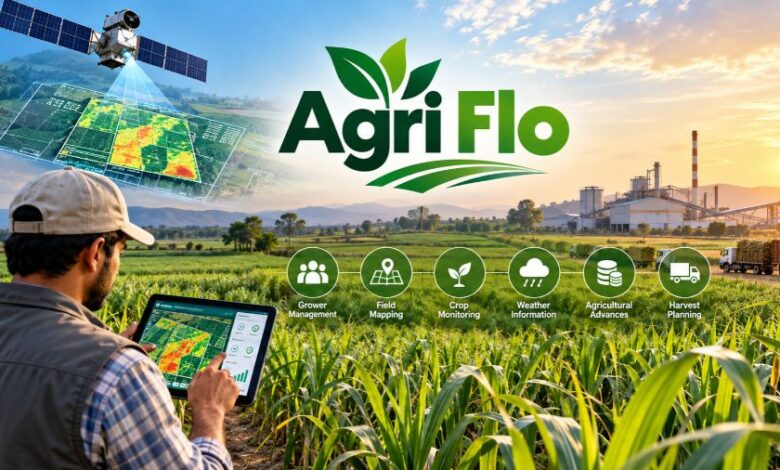
Agri Flo, also written as AgriFlow, is a name associated with agricultural solutions designed to improve farming operations, resource management, and productivity. One notable platform using this name is AgriFlow by Comsoft Corporation, which focuses on grower management, field mapping, satellite-based crop monitoring, and agricultural data for sugar mills in Pakistan. As farming businesses manage increasingly complex supply chains, technology can help them understand what is happening across their fields and make better operational decisions. Agri Flo represents an example of how digital tools can connect growers, field workers, agricultural managers, and business operations through a more organized information system. Understanding its purpose, features, potential advantages, and limitations helps farmers and agribusiness professionals determine whether this type of technology suits their needs.
Understanding the Purpose of Agri Flo
The main purpose of Agri Flo, in its agricultural software application, is to improve visibility across farming operations. Traditional agricultural management often depends on paper registers, spreadsheets, telephone calls, and physical field inspections. These methods can become difficult to manage when a business works with thousands of growers and numerous fields spread across different locations. AgriFlow brings grower information, field boundaries, crop observations, and operational records into a centralized digital environment. This approach can help agricultural businesses organize information and identify areas that require attention. Rather than replacing agricultural expertise, such software supports decision-making by making relevant information easier to access, compare, and interpret.
How Agri Flo Supports Grower Management
Grower management is an important part of agricultural businesses that purchase crops from independent farmers. A sugar mill, for example, may work with many growers who supply sugarcane throughout the harvesting season. Maintaining accurate information about each grower can be challenging when records are distributed across multiple files and departments. AgriFlow provides digital grower profiles that can organize information about land holdings, farming activities, planting history, and associated operational records. Centralized records help authorized staff find information more quickly and reduce confusion caused by duplicate or outdated entries. Better organization can also support communication between growers and agricultural organizations, although the quality of the results depends on accurate data collection and consistent record maintenance.
Field Mapping and Agricultural Land Records
Field mapping is another important capability associated with AgriFlow. Agricultural organizations need reliable information about the location, boundaries, and approximate or verified area of the land used for crop production. Field teams can collect geographical information and record field boundaries using digital survey tools. Once a boundary has been reviewed and approved, it can provide a consistent reference for crop monitoring and operational planning. This information may help managers understand how much land is under cultivation, where particular crops are growing, and which areas belong to individual growers. Accurate mapping can also improve the organization of field visits. However, digital maps should be checked against reliable survey information and local land records wherever formal ownership or legal boundaries are involved.
Satellite-Based Crop Monitoring
Satellite-based crop monitoring allows agricultural teams to observe changes in fields without relying exclusively on repeated physical inspections. AgriFlow uses satellite observations to help monitor registered sugarcane fields and identify variations in crop condition. Depending on the available imagery and analytical methods, vegetation patterns may indicate healthy growth, possible stress, or changes that deserve further investigation. This information can help field officers prioritize inspections and direct attention toward areas that may need support. Satellite monitoring is especially useful when a business manages a large agricultural area and cannot visit every field frequently. Nevertheless, satellite observations do not provide a complete diagnosis of crop health. Local inspections, soil assessments, weather information, and agronomic expertise remain important for confirming the causes of unusual crop conditions.
Weather Information and Early Warning
Weather conditions influence planting, irrigation, crop development, harvesting, and transportation. Heavy rainfall can create waterlogging, while high temperatures and limited rainfall may contribute to moisture stress. Agricultural monitoring systems can combine field observations with weather information to help managers understand changing conditions. AgriFlow includes field-level weather information and forecasts as part of its crop intelligence approach. Such information can help teams assess whether a crop warning may be connected to recent weather and identify fields that deserve closer attention. Forecasts can also support short-term planning for inspections and agricultural activities. However, weather forecasts are not guarantees, and field conditions can vary significantly over short distances. Farmers should interpret forecasts alongside local observations rather than treating them as definitive predictions.
Managing Agricultural Advances and Inputs
Many agricultural businesses provide growers with financial advances or farming inputs before the harvest. These arrangements can support crop production, but they also create financial and administrative responsibilities. Businesses need to understand which growers received assistance, what resources were provided, and how those resources relate to individual fields and farming seasons. AgriFlow is designed to connect relevant grower, field, advance, and input records within a shared management system. This can improve visibility into outstanding financial exposure and help teams maintain more consistent records. Better documentation may also support discussions about future financing and input requirements. However, digital records do not automatically guarantee accurate accounting, fair lending decisions, or improved repayment rates. Clear procedures, reliable data, and appropriate financial controls remain essential.
Harvest Planning and Supply Chain Coordination
Harvest planning requires coordination between growers, field teams, transportation providers, and processing facilities. For sugar mills, the timing and quantity of incoming sugarcane can directly affect daily operations. If crop readiness is assessed mainly through informal reports or occasional visits, managers may struggle to predict when particular fields will be harvested. AgriFlow’s monitoring and field management capabilities can help organizations build a clearer picture of crop readiness and harvesting progress. This information may support decisions about vehicle allocation, field scheduling, and the expected movement of crops toward processing facilities. Better coordination can reduce avoidable delays and help teams use resources more efficiently. Actual improvements, however, depend on dependable field data, transportation capacity, grower cooperation, and the ability to respond to changing harvesting conditions.
Potential Benefits for Farmers and Agribusinesses
The potential benefits of Agri Flo depend on the organization using it and the quality of its implementation. Agricultural managers may benefit from centralized records, improved field visibility, more targeted inspections, and better coordination between departments. Field officers may spend less time searching through paperwork and more time investigating fields that need attention. Growers may benefit when agricultural organizations can identify potential problems earlier and maintain clearer records of assistance and production history. For larger businesses, a shared information system can help finance, agronomy, and operations teams work from consistent records. These are potential operational advantages rather than guaranteed financial outcomes. Businesses should evaluate measurable indicators such as administrative workload, response times, field coverage, crop losses, and harvesting efficiency before concluding that a platform has delivered value.
Who Can Benefit From Agri Flo?
AgriFlow’s grower management and satellite monitoring approach is particularly relevant to sugar mills and agribusinesses that manage extensive grower networks. Organizations that finance growers, coordinate crop procurement, or oversee large agricultural sourcing areas may find centralized field information useful. Agricultural managers can use digital records to organize field operations, while finance teams can examine relevant grower and input records. Agronomy teams may use monitoring information to prioritize field visits and investigate possible crop stress. Smaller farms may also benefit from digital agriculture tools, although the suitability of a particular platform depends on its pricing, accessibility, supported workflows, and implementation requirements. Businesses should confirm the intended customer base and available features before assuming that Agri Flo offers the same services for every crop or farm size.
Technology Requirements and Implementation Considerations
Adopting agricultural software requires more than installing an application. Businesses must establish reliable data collection procedures, assign responsibilities, train staff, and maintain accurate grower records. Field surveys may need to capture geographical boundaries, crop details, and supporting information, while office teams must review submitted records and resolve inconsistencies. Offline functionality can be particularly valuable in rural areas where mobile connectivity is unreliable, provided that the specific implementation supports it. Organizations should also evaluate user permissions, data protection, backup procedures, system integration, and ongoing technical support. Before introducing a platform across an entire operation, a business can test it in a representative agricultural area and compare the results with existing processes. A structured rollout makes it easier to identify practical problems before expanding deployment.
Limitations and Important Things to Consider
Although agricultural technology can improve information management, it cannot eliminate every farming challenge. Satellite imagery may be affected by cloud cover, image resolution, crop characteristics, and the timing of observations. Digital records can contain errors when field boundaries or grower details are entered incorrectly. Weather forecasts may change, and crop stress can have several causes that require expert investigation. Implementation also involves costs, staff training, data maintenance, and changes to established working practices. Businesses should therefore avoid relying on a single dashboard or automated warning when making important agronomic or financial decisions. They should ask vendors about supported crops, data update frequency, integration options, service availability, security practices, and pricing. A careful evaluation helps determine whether the software addresses genuine operational problems and offers benefits proportionate to its cost.
Also read: Intellicast: What Happened to the Popular Weather Forecasting Website?
Conclusion
Agri Flo, particularly AgriFlow by Comsoft Corporation, illustrates how agricultural technology can connect grower management, digital field surveys, satellite crop monitoring, weather information, and harvest planning. Its approach is relevant to agribusinesses that need better visibility across large grower networks, especially sugar mills coordinating sugarcane production in Pakistan. Centralized records and field-level monitoring can help organizations prioritize inspections, organize operational information, and make more informed decisions. However, the effectiveness of any agricultural platform depends on reliable data, appropriate implementation, trained users, and practical follow-up. Businesses should verify the exact Agri Flo product they intend to use, understand its capabilities, and assess its suitability for their agricultural operations. When applied thoughtfully, digital agriculture tools can complement human expertise and support more organized, responsive, and data-informed farming management.