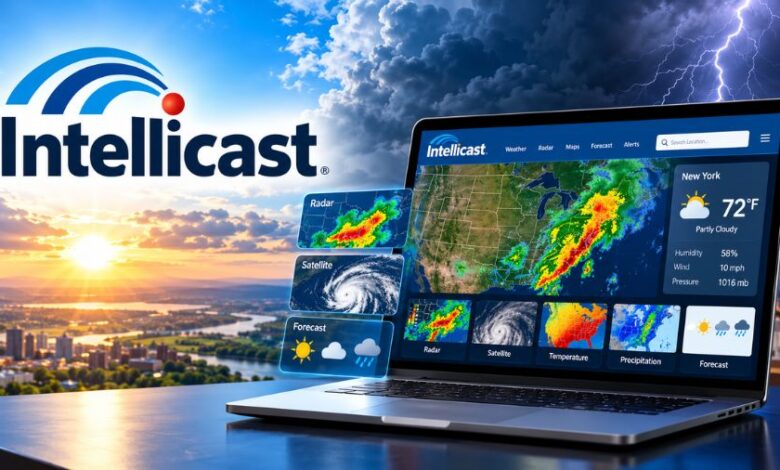
Intellicast was once a well-known destination for people who wanted detailed weather forecasts, interactive radar maps, satellite images, and information about developing storms. The platform attracted everyday weather watchers as well as people whose work depended on reliable weather information. Its detailed maps and practical presentation made it a familiar resource for checking changing conditions. However, many longtime users eventually noticed that the original website was no longer available in its familiar form. Intellicast transitioned into Weather Underground in January 2019, marking an important change for its users. Understanding what Intellicast offered, why the transition happened, and where its features went can help readers find suitable weather information today.
What Was Intellicast?
Intellicast was an online weather service designed to make meteorological information accessible through forecasts, maps, and visual weather data. Rather than presenting only a basic temperature and a short description of the day’s conditions, it offered tools that helped users understand broader weather patterns. Visitors could examine radar imagery, follow precipitation, view satellite pictures, and explore maps showing temperatures and other atmospheric conditions. The platform developed a reputation among users who preferred detailed weather displays over simple forecast summaries. Its combination of visual information and practical forecasting tools made Intellicast useful for planning outdoor activities, preparing for storms, and monitoring conditions that could change throughout the day.
Why Was Intellicast Popular?
One important reason for Intellicast’s popularity was its emphasis on visual weather information. A conventional forecast might report a chance of rain, but an interactive radar map could help users see where precipitation was developing and how it was moving. This made it easier to understand the potential impact of approaching weather systems. The website also organized different types of weather information into recognizable categories, helping users move between radar, satellite imagery, temperature maps, and surface forecasts. People who checked weather conditions frequently appreciated having several useful tools in one place. Although individual preferences varied, Intellicast became particularly familiar to weather enthusiasts who valued detailed maps and straightforward access to changing conditions.
Intellicast Weather Radar and Interactive Maps
Intellicast weather radar was one of the platform’s best-known features. Radar imagery helps display precipitation detected by weather radar systems, allowing users to identify areas experiencing rain, snow, or thunderstorms. Animated radar sequences can provide additional context by showing how precipitation patterns change over time. Intellicast also offered different map views that supported a broader understanding of weather conditions. Users could explore regional radar information, satellite imagery, temperature patterns, and other meteorological displays. These tools were especially useful when a single forecast description did not provide enough detail. However, radar images require interpretation, and they do not guarantee precisely where or when precipitation will reach a particular location.
Satellite Images and Weather Forecasting
Satellite imagery provided another valuable way to examine weather conditions. While radar focuses primarily on precipitation and related atmospheric signals, satellite images can reveal cloud formations and large-scale weather systems. Infrared imagery can help users examine cloud-top temperatures, while visible imagery can show cloud patterns when sufficient sunlight is available. These perspectives complement traditional forecasts by helping readers understand the structure and movement of weather systems. Intellicast brought several such visual resources together within its weather information service. For people interested in tracking storms or understanding regional weather developments, the combination of satellite and radar information offered a more complete picture than a temperature reading alone.
Why Did Intellicast Close?
Intellicast did not simply disappear without explanation. Its operator announced a transition to Weather Underground, with redirection from the original website beginning on January 17, 2019. The stated goal was to bring together weather data, technology, mapping capabilities, and engineering resources under a consolidated service. Intellicast had been part of The Weather Company, and its relationship with Weather Underground had already involved the integration of certain features and technologies. The change therefore represented a broader product consolidation rather than an announcement that weather forecasting itself was ending. Although the original Intellicast identity was retired, the transition was intended to preserve important capabilities within Weather Underground.
What Happened to Intellicast’s Features?
Following the transition, Intellicast users were directed toward Weather Underground, where the company said its familiar technology and features would continue. The receiving platform provided access to weather maps covering radar, satellite imagery, temperature, wind, precipitation totals, and surface weather conditions. Its interactive mapping tools offered ways to explore weather information through different geographic views. Nevertheless, a transfer of technology does not necessarily mean that every original page, map, menu, or display remains identical. Some longtime users expressed disappointment with changes to the website’s layout and the availability of particular features. This distinction helps explain why people may remember Intellicast as a separate experience even though related weather tools continued under another brand.
Intellicast and Weather Underground Compared
Intellicast and Weather Underground served overlapping purposes, but their presentation and user experiences were not identical. Intellicast was particularly associated with detailed weather maps and a layout favored by users who wanted to examine conditions quickly. Weather Underground combines forecasting information with local weather observations, interactive maps, and data from personal weather stations. Its broader approach gives users several ways to explore current conditions and forecasts. However, the usefulness of either service depends on the information needed, the location being checked, and the tools currently available. Someone interested primarily in radar may judge a weather platform differently from someone who wants historical observations, hourly forecasts, or information from nearby weather stations.
Can You Still Use Intellicast Today?
The original Intellicast website is no longer operating as an independent weather service in its former form. Its established destination became Weather Underground, which continues to provide weather information and mapping tools associated with the transition. People searching for Intellicast today may therefore encounter pages that explain the merger or direct them toward related weather resources. It is important to distinguish the historical Intellicast brand from the current availability of individual features. A map that existed on the old platform may have been moved, redesigned, replaced, or discontinued. Users looking for a particular function should identify the information they need and check whether a modern service offers an equivalent tool.
Best Alternatives to Intellicast
Several weather services can help people who miss Intellicast’s detailed presentation. Weather Underground is a natural starting point because it received the Intellicast transition. AccuWeather offers forecasts, precipitation information, and radar features for supported locations. The United States National Weather Service provides official forecasts, warnings, and radar resources for the country it serves. Other national meteorological agencies provide comparable official information in their respective regions. The best alternative depends on whether a reader needs storm tracking, long-range planning, local observations, or emergency alerts. Users should also consider map clarity, mobile compatibility, accessibility, and the availability of location-specific data before choosing a regular weather resource.
How to Read Weather Radar More Effectively
Understanding radar imagery can make any modern weather website more useful. First, check the map legend to learn what its colors represent because display conventions can differ between services. Next, examine the animation rather than relying on a single frame, since movement may reveal whether a precipitation area is approaching or moving away. Confirm the map’s timestamp and location to avoid interpreting outdated information as current conditions. Radar can also have limitations caused by distance, terrain, atmospheric conditions, and the way precipitation is detected. For decisions involving dangerous weather, use official warnings and local emergency guidance alongside radar displays. No map should be treated as a guarantee of future conditions.
Why Reliable Weather Information Matters
Accurate and timely weather information supports decisions in everyday life and professional settings. Travelers may use forecasts to plan journeys, outdoor workers may prepare for rain or extreme temperatures, and event organizers may adjust schedules when storms threaten. Farmers, boaters, and aviation professionals may need more specialized observations and forecasts appropriate to their activities. Intellicast appealed to many users because it brought detailed weather information into an accessible online environment. Today, people can pursue similar goals by combining current forecasts, radar imagery, satellite observations, and official alerts. Checking the publication time and consulting authoritative information are particularly important when conditions are changing quickly or could affect personal safety.
Also read: GrammarVista.com USA: A Complete Guide to the English Learning Website
Conclusion
Intellicast remains a recognizable name in online weather forecasting because of its detailed radar maps, satellite imagery, and practical approach to presenting meteorological information. Its transition to Weather Underground in January 2019 ended the original website’s independent identity, but the change was intended to carry forward important weather technologies and features. Some users welcomed the consolidation, while others missed the familiar layout and specific tools they had relied on. Anyone searching for Intellicast today should understand that its former website and its individual weather features are not necessarily the same thing. By exploring modern forecasting services, checking official weather alerts, and learning how to interpret radar maps, readers can continue accessing useful weather information for everyday planning and changing conditions.