PebbleGo is a digital learning platform designed to help young students explore educational topics, develop reading skills, and build research confidence through interactive content. Created for elementary school learners, it combines age-appropriate nonfiction articles, read-aloud audio, educational videos, vocabulary support, and classroom activities in one accessible environment. The platform is particularly useful for teachers, school libraries, and students who need reliable information presented in an easy-to-understand format. From exploring animal habitats and scientific discoveries to learning about historical figures and social studies, PebbleGo provides a structured way for children to develop knowledge and independent learning habits.
What Is PebbleGo?
PebbleGo is an educational research and literacy platform developed for students in kindergarten through Grade 5 and beyond. It provides a collection of carefully prepared digital learning resources that make nonfiction research more accessible to younger readers. Rather than presenting information through complicated academic language, the platform organizes educational subjects into manageable articles supported by audio, images, videos, and interactive activities. Its primary purpose is to help children improve reading comprehension, expand their vocabulary, develop background knowledge, and learn how to find information independently. Teachers can also use its resources to introduce classroom topics, support reading exercises, and encourage students to investigate questions through structured research.
Who Owns PebbleGo?
PebbleGo is developed and published by Capstone, an educational publishing company known for producing books, digital learning materials, and classroom resources. Capstone focuses on supporting literacy development and curriculum-based education through products designed for students, teachers, and school libraries. Its educational offerings include digital nonfiction collections, interactive eBooks, print publications, and learning tools. PebbleGo is an important part of its digital education portfolio because it brings several learning resources together in a single platform. The company continues to develop the platform through additional educational features, accessibility improvements, and tools that support changing classroom requirements.
Understanding PebbleGo and Its Learning Modules
One of PebbleGo’s most useful features is its subject-based organization. Instead of requiring children to search through unrelated information, the platform provides dedicated educational modules that make discovering relevant content easier.
PebbleGo for Early Elementary Students
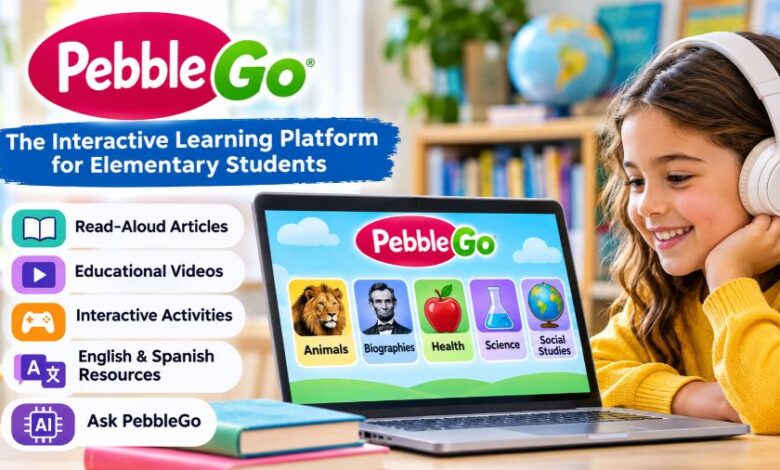
The original PebbleGo platform is designed primarily for kindergarten through Grade 2 learners. Its five core subject modules cover Animals, Biographies, Health, Science, and Social Studies. Each section introduces educational concepts through accessible nonfiction articles and supporting resources. Students can explore animal characteristics, learn about notable individuals, understand basic health concepts, investigate scientific ideas, and discover information about communities and history. These subjects help introduce foundational knowledge while encouraging children to develop an interest in reading and research.
PebbleGo Next for Older Elementary Students
PebbleGo Next extends the learning experience for students in Grades 3 through 5. Its seven subject modules include Animals, Biographies, Health, Indigenous Peoples’ History, Science, Social Studies, and States. The content provides opportunities to explore more developed topics and build stronger research skills as students progress through elementary education. For example, students can investigate historical events, learn about Indigenous communities, explore scientific principles, and research the geography and government of US states. This progression makes the platform useful for schools that want digital resources supporting multiple elementary grade levels.
Key Features of PebbleGo
PebbleGo combines reading resources with interactive learning features to make educational research more approachable for children. Its design focuses on helping students understand information rather than simply presenting large amounts of text.
Read-Aloud Audio and Reading Support
Read-aloud audio is an important accessibility and literacy feature. Students can listen to articles while following the written content, helping them connect spoken words with their written forms. Word highlighting and vocabulary support can also assist developing readers as they work through unfamiliar language. These tools are particularly valuable for children who are still developing reading fluency, students learning English, and those who benefit from additional reading support. Instead of making independent research dependent entirely on reading ability, PebbleGo provides multiple ways to access educational information.
Educational Videos and Interactive Activities
The platform incorporates multimedia resources that help explain subjects through different learning formats. Depending on the available article and subscription, students may encounter educational videos, maps, timelines, games, and printable activities. These resources can make abstract or unfamiliar concepts easier to understand. For example, an article about an animal can be supported by visual information that helps children explore its appearance, habitat, or behavior. Interactive activities also provide opportunities to review information and demonstrate understanding after completing an article.
Vocabulary and Research Tools
PebbleGo supports vocabulary development by presenting educational terminology within relevant subject material. Students can encounter unfamiliar words in context and use supporting resources to improve their understanding. Research-focused features also encourage learners to identify useful information, explore related subjects, and organize what they discover. These activities introduce important academic habits, including asking questions, recognizing relevant information, and supporting answers with reliable educational material.
English and Spanish Learning Resources
Language accessibility is another important part of the platform. PebbleGo provides educational content in English and Spanish, helping schools support bilingual classrooms and students with different language needs. Its Spanish offering includes more than 3,000 articles, alongside reading support and vocabulary resources. Providing educational material in multiple languages can help students access subject knowledge while developing their reading abilities. Availability and content coverage can vary depending on the selected subscription.
What Is Ask PebbleGo? Understanding Its AI-Powered Learning Tool
Ask PebbleGo introduces artificial intelligence into the educational research experience through a guided question-and-answer feature. It is designed to help elementary students explore questions using information from the PebbleGo and PebbleGo Next educational collections. Rather than functioning like an unrestricted general-purpose chatbot, the feature uses a large language model to locate relevant information from the platform’s curated content and produce a summarized response with supporting source references. This approach gives students an opportunity to practice asking questions, reviewing answers, and identifying where information comes from. It can also help teachers introduce basic AI literacy and responsible technology use within an educational setting.
How Ask PebbleGo Works
Students enter a question using the available question interface, and the system searches its educational knowledge base for relevant material. The AI-supported process then creates an answer using information from matching PebbleGo articles. Source references accompany responses so students can explore the original material and understand how the answer was developed. If the platform cannot confidently find relevant information, it can return an answer-not-found response instead of inventing an explanation. This restricted approach distinguishes Ask PebbleGo from AI tools that generate responses using unrestricted internet information.
AI Safety and Student Privacy
Student safety is an important consideration when schools introduce artificial intelligence. According to Capstone’s published guidance, Ask PebbleGo includes safeguards intended to restrict inappropriate questions and keep responses connected to its curated educational resources. The company also states that student prompts are not used to train AI models or create advertising profiles. Limited query information may be retained in aggregated or de-identified form for service functionality, troubleshooting, and improvement. However, no AI system should be treated as completely error-free. Teachers and school administrators should continue providing appropriate supervision and encourage students to verify information against the cited educational material.
Benefits of Using PebbleGo in Schools
PebbleGo can support several areas of elementary education by combining reading development with subject-based research. One major benefit is that it allows students to investigate educational questions through material designed for their reading levels. This can make research activities less intimidating for children who are still developing independent reading skills. Its audio and multimedia features provide additional ways to understand information, while its subject modules support classroom lessons in science, history, health, and other areas. Teachers can also use the platform to introduce topics before lessons, provide additional reading exercises, and create opportunities for independent exploration. For school libraries, it offers a structured collection of digital nonfiction resources that students can use when completing assignments or exploring personal interests.
How Teachers and Students Can Use PebbleGo
PebbleGo is designed for several educational situations, including classroom teaching, individual research, group activities, and school library programs. Teachers can introduce a topic using a relevant article and then encourage students to identify important facts or explain what they have learned. During science lessons, children might explore animals, habitats, or environmental subjects. History and social studies lessons can use biography and cultural resources to introduce people, communities, and historical developments. Students can also use educational activities and printable materials to reinforce their understanding after reading. Depending on the school’s subscription and available tools, educators can incorporate digital projects, instructional collections, and classroom sharing features into their teaching activities.
PebbleGo Login and How to Access the Platform
Access to PebbleGo is generally provided through participating schools, libraries, and educational institutions rather than through an unrestricted individual account. Students and teachers can use the platform through the login system established by their institution. Schools may provide usernames and passwords or enable single sign-on through supported services such as Clever, ClassLink, and Google Classroom. Once access has been configured, users can explore the educational modules available under their subscription. Anyone experiencing login difficulties should contact their school’s administrator or library staff because account credentials and access permissions are usually managed by the subscribing institution.
PebbleGo Pricing and Subscription Options
PebbleGo operates through subscription arrangements designed for educational institutions, including schools, libraries, and districts. Its pricing structure depends on the selected package, available modules, and additional learning resources. PebbleGo Classic provides access to core educational content and selected administrative features, while PebbleGo Premier offers a broader collection of learning resources and classroom tools. Premier features can include access to PebbleGo Next modules, interactive learning extensions, digital project tools, instructional resources, and Ask PebbleGo. The company also offers additional products such as Spanish-language resources, eBook bundles, and print books. Specific costs are not universally fixed because subscription arrangements can vary. Schools interested in purchasing access should request a current quotation based on their requirements.
Limitations and Challenges of PebbleGo
Although PebbleGo provides useful educational resources, it has limitations that schools should consider before subscribing. Its content is primarily designed for elementary learners, meaning older students and advanced researchers may require more detailed academic resources. Access also depends on institutional subscriptions, so individual families may not have the same availability as participating schools or libraries. Another consideration is that curated educational content cannot cover every possible research question. Students may need additional resources when investigating subjects beyond the platform’s collection. Ask PebbleGo also requires responsible supervision because AI-generated summaries can occasionally be incomplete or unclear. Finally, schools should evaluate subscription costs, language availability, accessibility requirements, and integration options before selecting a package.
The Future of PebbleGo and Digital Elementary Education
Digital education platforms are becoming increasingly important as schools explore ways to combine traditional teaching with interactive learning experiences. PebbleGo’s development of multimedia resources, classroom creation tools, and AI-supported research reflects this wider direction. Its focus on age-appropriate content and structured information provides an alternative to sending young students directly to unrestricted search engines. Features such as Ask PebbleGo also introduce opportunities for educators to discuss how AI systems retrieve information, generate summaries, and provide sources. The platform’s future value will depend on how effectively it maintains educational accuracy, improves accessibility, responds to classroom needs, and develops responsible technology features. For schools, the most meaningful progress will be technology that strengthens teaching and learning rather than replacing educators or independent thinking.
Conclusion
PebbleGo is an educational technology platform that brings together age-appropriate nonfiction articles, reading assistance, multimedia resources, and interactive activities for elementary school students. Developed by Capstone, it supports learning across subjects such as science, animals, biographies, health, and social studies through its original platform and PebbleGo Next. Its read-aloud features, bilingual resources, and classroom tools make educational research more accessible to developing readers. The introduction of Ask PebbleGo adds a guided AI-supported research experience while keeping answers connected to curated educational content. Although subscription access, content limitations, and the need for teacher supervision remain important considerations, PebbleGo offers schools and libraries a structured digital resource for supporting literacy, curiosity, and independent learning.
Also read: IEP Direct Explained: Key Features, Benefits and How Schools Use It
FAQs
1. What is PebbleGo mainly used for?
PebbleGo helps elementary students research educational topics, improve reading comprehension, develop vocabulary, and explore subjects through interactive articles and multimedia learning resources.
2. Is PebbleGo free to use?
PebbleGo generally requires an institutional subscription. Participating schools and libraries provide access, while pricing depends on the selected subscription package and resources.
3. What is the difference between PebbleGo and PebbleGo Next?
PebbleGo primarily supports kindergarten through Grade 2, while PebbleGo Next extends educational research resources to students in Grades 3 through 5.
4. Does PebbleGo include artificial intelligence?
Yes, Ask PebbleGo is an AI-powered question-and-answer feature that generates responses using curated PebbleGo educational content and provides supporting references.
5. Can students access PebbleGo at home?
Yes, students can generally access PebbleGo outside school when their institution’s subscription permits remote access and provides the necessary login credentials.
6. Who owns and develops PebbleGo?
Capstone develops and publishes PebbleGo as part of its educational publishing portfolio, which includes digital learning platforms, nonfiction books, and classroom resources.