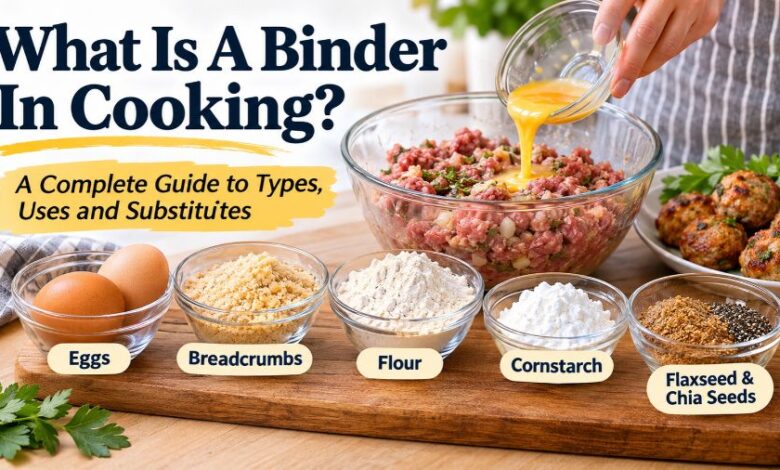
What Is A Binder In Cooking is a common question for anyone interested in preparing better meals, experimenting with recipes, or understanding how different ingredients work together. A binder is an ingredient that helps hold food components together, giving mixtures the structure, consistency, and stability they need during preparation and cooking. From eggs and breadcrumbs in homemade meatballs to flaxseed in vegan burgers, binders play an important role in everyday cooking. Understanding how they work, which ingredients are suitable for different recipes, and how to choose alternatives can help home cooks achieve better results while adapting meals to their preferences and dietary requirements.
What Is A Binder In Cooking?
A binder in cooking is an ingredient used to hold multiple food components together so that a mixture maintains its shape and consistency. It works by absorbing moisture, forming a gel, creating a protein structure, or helping separate ingredients combine into a more stable mixture. Binders are particularly useful in recipes where individual ingredients might otherwise separate, crumble, or fall apart during cooking. For example, an egg helps ground meat form a cohesive meatball, while breadcrumbs absorb excess moisture and support the mixture’s structure. Depending on the recipe, a binder can also improve tenderness, texture, and moisture retention. It is important to understand that binders do not always work in the same way. Some become firm when heated, others absorb liquid, and certain ingredients create a gel-like consistency without requiring heat.
Why Are Binders Important in Cooking?
Binders are important because they help recipes achieve their intended shape, texture, and consistency. Without an appropriate binding ingredient, certain foods can become difficult to handle, break apart during frying, or lose their structure when removed from a baking tray. In recipes such as vegetable patties, fish cakes, meatloaf, and meatballs, a suitable binder helps distribute ingredients more evenly and produces a mixture that is easier to shape. Binders can also influence the final eating experience by making food softer, firmer, thicker, or more cohesive. Their importance extends beyond home cooking because commercial food manufacturers also use binding ingredients to maintain the consistency and stability of various food products. Choosing the right binder is therefore not simply about preventing food from falling apart; it is also about achieving the texture and quality expected from a particular recipe.
Common Types of Binders Used in Cooking
Different recipes require different binding ingredients, and each option has its own characteristics. Some binders work particularly well with meat, while others are more suitable for baking, vegetarian meals, sauces, and desserts. Understanding their individual functions makes it easier to select an appropriate ingredient without unnecessarily changing a recipe’s flavour or texture.
Eggs
Eggs are among the most widely used natural binders in cooking because their proteins coagulate when heated, helping ingredients form a stable structure. They are commonly included in meatballs, meatloaf, fish cakes, casseroles, and baked goods. When raw egg is mixed into a food mixture, it helps distribute and connect the ingredients. During cooking, its proteins set and strengthen the structure. Egg yolks also contain lecithin, which provides emulsifying properties in recipes such as mayonnaise and certain sauces. However, eggs perform several functions beyond binding, including adding moisture, colour, and richness. This makes them particularly useful in recipes where more than one structural function is required.
Breadcrumbs
Breadcrumbs are another popular binding ingredient, especially in meat-based recipes and homemade patties. Their primary contribution is moisture absorption, which helps control the consistency of a mixture. When combined with milk, water, eggs, or other liquids, breadcrumbs can create a soft mixture known as a panade. This technique is commonly used in meatballs and meatloaf to improve tenderness while helping the ingredients remain together. Breadcrumbs can also help prevent mixtures from becoming excessively wet or difficult to shape. Their effectiveness depends on the type of bread, particle size, and amount of moisture available in the recipe.
Flour
Flour can act as a binder because its starch and proteins contribute to structure and consistency. Wheat flour is commonly used in pancakes, fritters, batters, dumplings, and certain vegetable preparations. When mixed with liquid, flour forms a cohesive mixture that becomes firmer as it cooks. Its starch also absorbs water and contributes to thickening. However, excessive flour can produce a heavy, dense, or pasty result, particularly in delicate foods. For this reason, it is important to use an appropriate quantity and select the type of flour according to the recipe.
Cornstarch
Cornstarch is primarily known as a thickening ingredient, but it can also contribute to binding in certain preparations. When heated with liquid, its starch granules swell and form a thicker consistency through a process called gelatinisation. This property makes cornstarch useful in sauces, puddings, fillings, and some vegetable patties. It is also used in recipes where a smooth texture is desirable without adding the flavour associated with some other binding ingredients. Unlike eggs, cornstarch does not provide the same protein-based structure, so it should not be treated as a direct replacement in every recipe.
Oats
Oats are useful in recipes that require moisture absorption and a firm but relatively tender structure. Rolled oats and ground oats are commonly added to vegetable burgers, meatloaf, and homemade patties. They absorb liquid as the mixture rests, making it easier to shape and handle. Oats are particularly useful when preparing meals without eggs, although their binding strength depends on the recipe’s moisture level and other ingredients. Ground oats generally distribute more evenly than whole rolled oats, while larger flakes can create a more noticeable texture in the finished dish.
Ground Flaxseed and Chia Seeds
Ground flaxseed and chia seeds are popular plant-based binding ingredients. When combined with water, they absorb moisture and develop a thick, gel-like consistency that can help hold ingredients together. A commonly used flax egg consists of one tablespoon of ground flaxseed mixed with three tablespoons of water and left to rest until thickened. Chia seeds can be prepared similarly. These alternatives are useful in vegan baking, vegetable patties, and certain egg-free recipes. However, they may change the appearance, flavour, or texture of food, and they do not reproduce every function of a traditional egg.
How Does a Binder Work in Cooking?
A binder works through different physical and chemical processes depending on its composition and the conditions of the recipe. Some ingredients absorb liquid and become thicker, while others develop a structure when exposed to heat or cooling. Protein-based binders, such as eggs, coagulate during cooking and form a network that holds other ingredients together. Starch-based binders, including flour and cornstarch, absorb water and contribute to thickness as their granules gelatinise during heating. Ingredients such as ground flaxseed and chia seeds create mucilage, a gel-like substance that helps connect particles in a mixture. These mechanisms explain why different binders produce different results even when used for the same general purpose. Understanding how an ingredient behaves makes it easier to choose an appropriate option and avoid problems such as excessive density, dryness, or weak structure.
How to Choose the Right Binder for Different Recipes
Selecting the right binder requires considering the ingredients, moisture level, cooking method, and desired texture of the finished dish. A meatball mixture may benefit from eggs and breadcrumbs because one provides heat-setting protein while the other absorbs moisture. Vegetable patties often require oats, mashed potatoes, or ground flaxseed because these ingredients help manage moisture and improve consistency. In baking, the choice becomes more specific because eggs may provide binding alongside aeration, emulsification, and moisture. Replacing them with a single alternative may therefore change the final result. Sauces and fillings have different requirements, making flour, cornstarch, or other starches more suitable in many situations. The most effective approach is to identify the function required from the binder rather than selecting an ingredient simply because it is commonly used in other recipes.
Best Egg Substitutes for Binding Food
Egg-free cooking does not mean sacrificing every structural quality associated with traditional recipes. Several ingredients can provide useful binding properties, although their suitability depends on the food being prepared. Ground flaxseed and chia seeds are particularly useful in vegan burgers and certain baked goods because they develop a gel when hydrated. Mashed potatoes can help vegetable patties maintain their shape while adding a soft texture. Pureed beans also provide moisture and structure in plant-based dishes. Chickpea flour mixed with water is another option for certain savoury preparations because it creates a cohesive mixture that firms during cooking. Cornstarch and potato starch can help bind selected mixtures, although they generally provide different textures from eggs. When choosing an alternative, cooks should consider whether the original egg was intended primarily for binding, moisture, or leavening, since these functions may require different substitutes.
Common Cooking Problems Caused by Incorrect Binders
Using an unsuitable binder or adding too much of it can negatively affect a recipe. Excessive breadcrumbs or flour may produce dry, dense patties, while too much liquid can prevent a mixture from holding its shape. An insufficient amount of binding ingredient may cause meatballs or vegetable burgers to crumble during handling or frying. Another common problem occurs when an ingredient is expected to perform a function it cannot provide. For example, replacing eggs with cornstarch in a cake may provide some binding but will not automatically reproduce the egg’s aeration, emulsification, and moisture contributions. Cooking conditions also matter because some binders need heat to develop their full structure, whereas others require resting or cooling. Adjusting moisture gradually and allowing absorbent ingredients sufficient time to hydrate can help prevent many consistency problems.
Binder vs Thickener: Understanding the Difference
Although binders and thickeners sometimes use the same ingredients, they perform different functions in cooking. A binder primarily helps ingredients stay connected, particularly in solid or semi-solid mixtures such as meatballs, vegetable burgers, and baked dishes. A thickener increases the viscosity of liquids, making sauces, soups, gravies, and fillings less runny. Flour and cornstarch can perform thickening functions, but they may also contribute to binding in suitable recipes. Eggs provide another example because their proteins can bind ingredients while also thickening custards and other preparations. The distinction depends on the intended result rather than the ingredient itself. Understanding this difference helps prevent mistakes when adapting recipes or selecting substitutes.
Are Cooking Binders Healthy and Safe to Use?
Most commonly used food binders are ordinary cooking ingredients that can form part of a balanced diet. Eggs provide protein and other nutrients, oats contain dietary fibre, and flaxseed provides fibre and plant-based fats. However, nutritional value varies depending on the ingredient, quantity, and overall recipe. Dietary requirements also deserve consideration. Wheat flour and traditional breadcrumbs contain gluten, while eggs are unsuitable for people with an egg allergy. Cross-contact can also be a concern when preparing food for someone with an allergy or intolerance. Commercially manufactured food products may contain specialised stabilisers and binding agents, so checking ingredient labels is useful when specific dietary restrictions apply. Food safety remains important when working with raw eggs and meat, and appropriate storage, handling, and cooking practices should always be followed.
Conclusion
Understanding what a binder is in cooking makes it easier to prepare foods with better structure, consistency, and texture. From eggs and breadcrumbs to oats, starches, flaxseed, and chia seeds, different ingredients offer different binding properties depending on the recipe. The best choice depends on moisture levels, cooking conditions, dietary preferences, and the desired finished result. While binders and thickeners sometimes overlap, knowing their individual functions helps cooks make more informed ingredient substitutions and avoid common preparation problems. Whether preparing traditional meatballs, experimenting with plant-based burgers, or adapting an egg-free baking recipe, selecting an appropriate binder is an important part of achieving reliable cooking results.
Also read: Sp5der Hoodie: Ultimate Streetwear Style, Designs, Sizing and Buying Guide
FAQs
1. What Is the Most Common Binder in Cooking?
Eggs are among the most common cooking binders because their proteins coagulate during heating, helping ingredients stick together in meatballs, meatloaf, and baked dishes.
2. Can I Use Flour Instead of Eggs as a Binder?
Yes, flour can bind certain mixtures, but it absorbs moisture differently and cannot reproduce all the structural and functional properties of eggs.
3. What Is the Best Vegan Binder for Cooking?
Ground flaxseed mixed with water is a popular vegan binder, particularly for vegetable patties and selected baked goods requiring egg-free alternatives.
4. Why Do Meatballs Fall Apart During Cooking?
Meatballs may fall apart because of insufficient binding, excessive moisture, poor mixing, or handling before their structure becomes sufficiently firm during cooking.
5. Are Breadcrumbs Considered a Binding Agent?
Yes, breadcrumbs help bind food mixtures by absorbing moisture and improving consistency, particularly in meatballs, meatloaf, fish cakes, and homemade patties.
6. What Is the Difference Between a Binder and a Thickener?
A binder helps ingredients stick together, while a thickener increases liquid viscosity. Some ingredients, including flour, cornstarch, and eggs, can perform both functions.