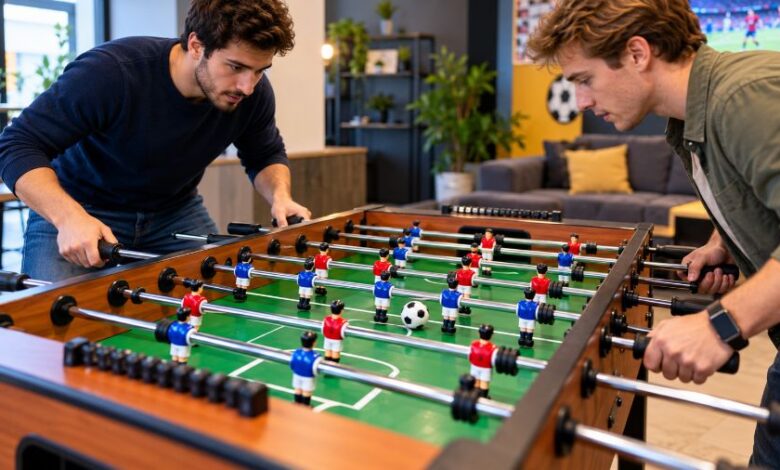
Sport Foosball is an exciting tabletop game that brings the competitive spirit of football into a smaller playing environment. Also known as table football or table soccer, it allows players to control miniature football figures attached to rotating rods and use them to pass, defend, and score goals. The game combines quick reactions, hand-eye coordination, concentration, and strategic thinking, making it enjoyable for beginners and experienced competitors alike. Over the years, Sport Foosball has become a popular recreational activity in homes, schools, entertainment centres, clubs, and professional tournaments. Although the basic objective is simple, mastering the game requires patience, practice, and an understanding of different techniques. Learning about its history, equipment, rules, and strategies helps players appreciate why this engaging activity has developed into an organized competitive sport.
Understanding the Basics of Sport Foosball
Sport Foosball is played on a rectangular table designed to resemble a miniature football pitch. The table contains two goals, a playing surface, several horizontal rods, and small figures representing football players. Participants use handles attached to the rods to move the figures sideways and rotate them to strike a lightweight ball. The main objective is to score more goals than the opposing player or team before the match ends. Unlike outdoor football, foosball requires very little physical space, yet it demands considerable attention and precise movements. Players must continuously observe the ball, anticipate their opponent’s actions, and choose suitable attacking or defensive positions. The game can be played casually for entertainment or competitively under organized rules, making it suitable for people with different interests and experience levels.
The History and Development of Table Football
The history of table football extends back to the early twentieth century, when inventors began developing tabletop games inspired by association football. Different versions appeared in Europe, and the game gradually gained popularity in cafés, social clubs, recreation rooms, and private homes. The word foosball is derived from the German word for football, reflecting the game’s European connections. As manufacturing methods improved, companies introduced stronger tables, smoother playing surfaces, and more responsive rods that improved the overall experience. Foosball eventually moved beyond casual entertainment as dedicated players began organizing competitions and developing specialized techniques. Today, the game is recognized internationally as table soccer, with organized events, competitive communities, and standardized rules. Its continued popularity demonstrates how a simple recreational invention can evolve into a skill-based activity enjoyed by people across different generations.
Essential Equipment Used in Sport Foosball
The quality of the equipment can significantly influence how Sport Foosball feels and plays. A standard table includes a sturdy frame, a smooth playing surface, goals, metal rods, handles, and miniature player figures. The ball is usually lightweight and designed to move consistently across the table. Some tables are intended for occasional family entertainment, while others are manufactured for frequent use and competitive matches. Important features to consider include table stability, rod movement, handle comfort, playing-surface durability, and the availability of replacement parts. Players should also consider the available room because a foosball table needs enough surrounding space for comfortable movement. Choosing suitable equipment helps prevent unnecessary frustration and supports consistent practice. For competitive players, a well-maintained table with predictable ball movement can make learning techniques and evaluating performance considerably easier.
Basic Rules Every Player Should Know
Understanding the rules is essential for enjoying Sport Foosball fairly and confidently. A match generally begins with a serve, after which both sides attempt to gain possession and move the ball toward the opposing goal. Players use their rods to control the figures, block shots, and create scoring opportunities. Many competitive rule sets prohibit excessive rod spinning, which can make the game less controlled and potentially unsafe. Other rules address serving procedures, ball movement, dead balls, time limits for possession, and appropriate player conduct. Exact requirements can vary according to the competition or local playing format, so participants should understand the rules being used before starting a match. Beginners can first practise the basic movements and scoring system before introducing more detailed regulations. Learning the rules early encourages fair competition, reduces disagreements, and helps players develop habits that remain useful as their abilities improve.
Popular Playing Styles and Match Formats
Sport Foosball offers several playing formats, with singles and doubles being the most common. In singles, one player competes against another and is responsible for controlling the available rods on their side. This format challenges concentration, coordination, and the ability to switch quickly between attacking and defending. Doubles matches involve two players on each team, allowing partners to divide responsibilities and coordinate their movements. One player may concentrate primarily on defence while the other focuses on creating attacking opportunities, depending on the team’s arrangement and preferences. Communication is particularly important in doubles because poorly coordinated movements can leave openings for the opposition. Recreational games may also use informal scoring limits or friendly challenges. Each format offers a different experience, helping players improve individual ability, teamwork, decision-making, and confidence while keeping the game interesting.
Fundamental Skills for Beginners
Beginners can improve their Sport Foosball performance by concentrating on ball control before attempting complicated shots. The first step is learning to stop the ball, move it deliberately, and position the figures without losing possession. Practising gentle movements helps players understand how the rods affect the ball’s direction and speed. Accuracy is generally more useful during the early stages than attempting to hit every shot with maximum force. Players should also develop awareness of the entire table rather than focusing exclusively on the ball. Observing defensive positions and identifying open spaces makes attacking decisions more effective. Short practice sessions repeated consistently can produce better results than occasional games without a clear objective. As basic control improves, players can gradually introduce passing, defensive blocks, and different shooting angles to build a stronger foundation.
Advanced Techniques and Winning Strategies
Experienced players use a combination of timing, controlled movements, and tactical decisions to create scoring opportunities. Passing the ball between figures can help move it away from crowded defensive areas and open a clearer shooting lane. Players may also practise controlled shots that target gaps between defenders instead of relying on powerful, unpredictable movements. Changing the direction and timing of attacks makes it harder for opponents to anticipate the next move. Defensive strategy is equally important because an effective player must limit shooting opportunities while remaining ready to respond to passes. Maintaining balanced positioning and watching the opponent’s habits can reveal useful patterns during a match. Advanced techniques should be developed gradually through repetition and observation. Rather than depending on one favourite shot, successful players learn to adapt their approach according to the opponent’s strengths, weaknesses, and defensive positioning.
Benefits of Playing Sport Foosball
Sport Foosball provides entertainment while encouraging several useful mental and coordination skills. Players must react quickly, follow moving objects, coordinate their hands, and make decisions under pressure. These demands can support hand-eye coordination, concentration, spatial awareness, and strategic thinking. The game also provides opportunities for social interaction because participants communicate, compete, celebrate successful goals, and learn to handle both winning and losing. Families can use foosball as a shared recreational activity, while schools and clubs may incorporate it into supervised games and competitions. Another advantage is accessibility: unlike outdoor football, the game does not require a large field or extensive running. Nevertheless, foosball involves limited whole-body exercise and should complement rather than replace regular physical activity. Its greatest benefits come from combining enjoyable competition with practice, social engagement, and continuous learning.
Choosing the Right Foosball Table
Selecting the right foosball table depends on the intended use, available space, budget, and experience of the players. Families may prefer a durable recreational model that is easy to maintain and suitable for casual games. Schools, offices, and entertainment centres often need stronger construction because their tables may receive frequent use from many different players. Serious competitors should pay particular attention to playing-surface consistency, rod responsiveness, stability, and compatibility with the relevant competition requirements. Before purchasing, buyers should measure the room and allow sufficient space around the table for comfortable movement. Maintenance is another important consideration because loose handles, dirty surfaces, or damaged components can affect gameplay. Comparing construction quality and long-term repair costs can help buyers make a more practical decision. A suitable table improves enjoyment, supports regular practice, and provides a reliable foundation for developing better playing skills.
Competitive Foosball and Tournament Preparation
Competitive Sport Foosball requires preparation beyond simply playing frequently. Participants benefit from setting practice goals, learning the applicable rules, and identifying areas where their performance needs improvement. For example, a player may dedicate one session to accurate shooting, another to defensive positioning, and another to passing under pressure. Recording personal progress or reviewing match performance can help identify recurring mistakes. Tournament players must also learn to remain composed when matches become close because frustration and rushed decisions can undermine otherwise strong skills. Doubles teams should practise communication and agree on responsibilities before competing. Organized table-soccer events provide opportunities to test techniques against different playing styles and gain valuable experience. Although competitive success takes time, consistent training and a willingness to learn from mistakes can help players become more confident, disciplined, and effective participants.
Also read: Matt LaFleur: The Accomplished American Football Coach at Green Bay
Conclusion
Sport Foosball is much more than a miniature version of football. It combines entertainment, coordination, strategy, and competition in a format that is accessible to beginners while offering substantial challenges for experienced players. Understanding the equipment, learning the rules, developing accurate ball control, and practising effective attacking and defensive techniques can significantly improve the playing experience. Choosing an appropriate table and maintaining it properly also contribute to consistent gameplay. Whether enjoyed with family and friends, played in recreational clubs, or pursued through competitive tournaments, foosball offers opportunities for social interaction and personal development. With regular practice, patience, and a willingness to adapt, players can gradually improve their abilities and discover new aspects of the game. Its combination of simplicity and strategic depth continues to make Sport Foosball an engaging tabletop activity for people of many ages and skill levels.