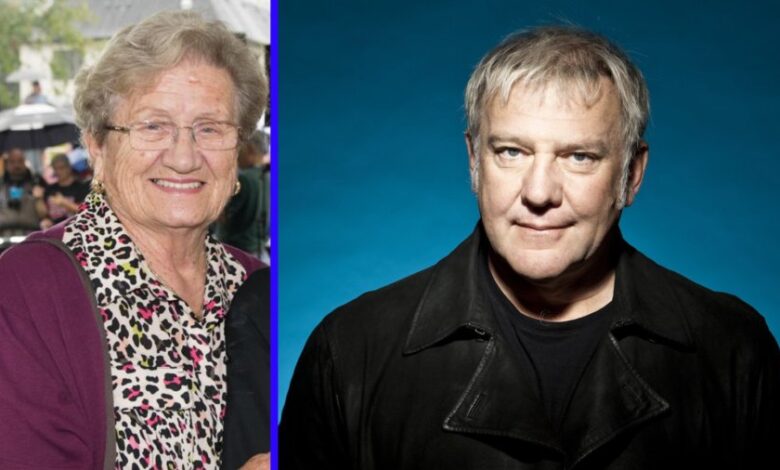
Melanija Zivojinovich is a name most rock fans have never heard, yet her influence quietly echoes through decades of legendary music. She was the mother of Alex Lifeson, the iconic guitarist of the Canadian rock band Rush, and her journey from war-torn Yugoslavia to a new life in Canada is the kind of story that rarely makes headlines but absolutely deserves to be told. While her son filled arenas around the world, Melanija lived the way so many immigrant mothers of her generation did: modestly, devotedly, and largely away from the spotlight. In this article, we’ll take a closer look at who Melanija Zivojinovich really was, her marriage to Nenad Zivojinovich, the family she raised in Toronto, and the lasting mark she left on one of rock music’s most respected guitarists.
Quick Bio
| Detail | Information |
|---|---|
| Full Name | Melanija Živojinović (Zivojinovich) |
| Nickname | Mellie (also recorded as “Melly”) |
| Year of Birth | Circa 1922 |
| Place of Origin | Yugoslavia (Serbian heritage) |
| Nationality | Yugoslav-born, later Canadian |
| Ethnicity | Serbian |
| Husband | Nenad Zivojinovich |
| Famous Son | Alex Lifeson (born Aleksandar Živojinović) |
| Other Children | Several, including daughter Sally |
| Known For | Being the mother of Rush guitarist Alex Lifeson |
| Residence | Fernie, British Columbia; later Toronto, Ontario |
| Screen Appearance | Rush: Beyond the Lighted Stage (2010) |
| Religion | Serbian Orthodox background (traditional heritage) |
| Language | Serbian and English |
Who Is Melanija Zivojinovich?
Melanija Zivojinovich was a Serbian immigrant who left Yugoslavia and built a new life in Canada alongside her husband, Nenad Zivojinovich. Genealogical records suggest she was born around 1922, which places her childhood squarely in the turbulent years between the two world wars in the Balkans. To the wider world, she’s known primarily as the mother of Alex Lifeson, the guitarist who co-founded Rush and helped shape progressive rock as we know it. But reducing her to a single line in her son’s biography sells her short. Melanija belonged to a generation of immigrants who crossed an ocean with very little, worked hard in an unfamiliar country, and poured everything they had into their children. That quiet sacrifice, more than anything else, is her real legacy.
Early Life and Serbian Roots
Details about Melanija’s early years are scarce, and honestly, that’s not surprising. Record-keeping in rural Yugoslavia during the 1920s and 1930s was inconsistent at best, and many family documents from that era were lost to war and displacement. What we do know is that she was of Serbian heritage and grew up in a region that experienced enormous upheaval during her youth. The Kingdom of Yugoslavia was a young and fragile state when she was a child, and by the time she reached adulthood, World War II had torn through the Balkans with devastating force. Growing up in that environment shaped an entire generation of Serbs into resilient, practical, family-centered people. Those values traveled with Melanija when she eventually left her homeland, and anyone who has listened to Alex Lifeson talk about his upbringing can hear their echo in his stories.
Immigration to Canada with Nenad Zivojinovich
Melanija and her husband, Nenad Zivojinovich, were among the many Yugoslav immigrants who came to Canada in the years surrounding World War II. Canada was actively welcoming European newcomers at the time, particularly to its western provinces where mining, forestry, and railway work created steady demand for labor. The couple settled in Fernie, British Columbia, a small mining town nestled in the Rocky Mountains. It’s hard to overstate how big a leap that must have been. Leaving behind language, family, and everything familiar to start over in a remote Canadian mountain town takes a kind of courage that’s easy to romanticize and much harder to actually live. Yet that’s exactly what Melanija and Nenad did, and their decision changed the course of music history in a way neither of them could have possibly imagined.
Life in Fernie, British Columbia
Fernie in the early 1950s was a working-class community built around coal. It was in this small town that Melanija gave birth to her son Aleksandar Živojinović on August 27, 1953. That baby boy would grow up to become Alex Lifeson, one of the most inventive guitarists in rock history. The family didn’t stay in Fernie for long, though. Like many immigrant families of the era, they eventually moved east in search of better opportunities, and Toronto became their permanent home. Still, there’s something poetic about the fact that a future Rock and Roll Hall of Famer was born in a tiny British Columbia mining town to a Serbian immigrant mother who had crossed the world just a few years earlier.
Settling Down in Toronto
By the early 1960s, the Zivojinovich family had established themselves in the Toronto area. Canadian voter records from 1962 and 1965 list “Mrs Melly Zivojinovich” as a resident of York, Ontario, in the York Centre electoral district. Those little bureaucratic entries are among the few official traces Melanija left behind, but they paint a picture of a settled, participating member of her adopted country. Toronto had a growing Serbian and broader Yugoslav community at the time, complete with churches, cultural clubs, and social networks that helped newcomers keep their traditions alive. It was in this environment, surrounded by Serbian food, language, and music at home while Canadian culture buzzed outside the front door, that young Alex grew up straddling two worlds.
Raising a Family the Old-Country Way
Melanija and Nenad Zivojinovich raised a sizable family. Records connected to the family name several children, including Alex and his sister Sally, along with siblings mentioned in later family documents. The household, by all accounts, ran on traditional Serbian values: hard work, respect for elders, loyalty to family, and an expectation that children would make something of themselves. Alex Lifeson has spoken about this upbringing with obvious affection over the years. He once joked in an interview that in a Yugoslav family like his, parents were more likely to push a child toward the accordion than the guitar. That single quip says a lot about the cultural world Melanija built inside her Canadian home, one where the sounds and expectations of the old country still carried real weight.
Melanija’s Role in Alex Lifeson’s Musical Journey
Here’s where the story gets genuinely interesting for music fans. Alex Lifeson’s path to the guitar wasn’t exactly paved by his parents. His formal musical education actually began on the viola, an instrument he reportedly had little love for, and the family’s musical expectations leaned more toward traditional European instruments. But something shifted along the way. Alex became captivated by the guitar after his brother-in-law, a flamenco player, lent him one, and at age twelve he received his first guitar as a Christmas gift from his father, a modest Kent classical acoustic. While Nenad handed over the instrument, it’s fair to assume Melanija had a say in that decision, as mothers usually do. Whatever hesitation the Zivojinovich household may have had about rock and roll, they ultimately let their son chase it. Without that quiet permission, there’s a very real chance Rush never happens.
The Meaning Behind the Zivojinovich Name
One of the most charming details in this whole story involves the family surname itself. Živojinović, anglicized as Zivojinovich, roughly translates from Serbian as “son of life.” When Alex needed a stage name that English-speaking audiences could actually pronounce, he didn’t abandon his heritage. Instead, he translated it. “Lifeson” is a direct calque of Zivojinovich, meaning the name millions of Rush fans know is really just his mother and father’s Serbian surname wearing an English coat. Every time someone says “Alex Lifeson,” they’re unknowingly honoring Melanija and Nenad’s family name and, by extension, the Serbian roots Melanija carried with her across the Atlantic. It’s a small linguistic detail, but it captures beautifully how the family blended their old identity with their new home.
Her Appearance in Rush: Beyond the Lighted Stage
For decades, Melanija remained completely out of public view, which makes her one known screen appearance all the more special. In 2010, the acclaimed documentary Rush: Beyond the Lighted Stage was released, chronicling the band’s improbable rise from Toronto basements to global arenas. Melanija appeared in the film as herself, credited simply as Alex Lifeson’s mom. For fans, it was a rare and touching glimpse of the woman behind the guitarist. The documentary leaned heavily into the band members’ family backgrounds, including the immigrant stories that shaped both Alex and bassist Geddy Lee, whose parents were Holocaust survivors. Melanija’s presence in the film grounded Alex’s story in something warm and real, reminding viewers that even rock legends start out as somebody’s kid at the kitchen table.
Marriage and Partnership with Nenad
Melanija’s marriage to Nenad Zivojinovich spanned decades and two continents. Together they weathered emigration, the challenges of settling in a new country, and the everyday grind of raising a large family on working-class means. Nenad passed away on August 27, 2003, a date that, in a bittersweet coincidence noted in family records, fell on Alex’s fiftieth birthday. His obituary listed Melanija as his surviving wife alongside their children, a quiet testament to a partnership that lasted a lifetime. Couples like Melanija and Nenad rarely get their stories told, but their steadiness formed the foundation on which everything else, including their son’s extraordinary career, was built.
A Private Woman in a Public Family
It’s worth pausing to appreciate just how thoroughly Melanija avoided the spotlight, especially considering her son spent fifty years as a member of one of the most beloved bands in rock history. Rush fans are famously devoted, the kind of people who can recite album liner notes from memory, yet even among them, details about Melanija are limited to a handful of records and that one documentary appearance. That wasn’t an accident. The Zivojinovich family, like many immigrant families, valued privacy and normalcy. Alex himself has always kept his family life relatively guarded, raising his own children in Toronto away from the rock-star circus. That instinct to protect the home front almost certainly came from his parents, and from Melanija in particular.
Melanija’s Lasting Legacy
So what is Melanija Zivojinovich’s legacy? On paper, it’s simple: she was a wife, a mother, and an immigrant who built a life in Canada. But look a little deeper and the picture expands considerably. Her legacy lives in every Rush record, in the work ethic Alex Lifeson brought to five decades of touring and recording, and in the very name he performs under. It lives in the Serbian-Canadian community she was part of, one that produced not just a guitar hero but generations of successful, grounded families. And it lives in the broader story of postwar immigration to Canada, a story of ordinary people whose quiet sacrifices made extraordinary things possible. Melanija never sought recognition, but her fingerprints are all over one of music’s great careers.
Lesser-Known Facts About Melanija Zivojinovich
Even with limited public information, a few genuinely interesting details about Melanija have surfaced over the years, and they’re worth collecting in one place. She went by the affectionate nickname “Mellie” among family and friends, and official Canadian voter records from the 1960s list her under the name “Mrs Melly Zivojinovich.” Her son was born in Fernie, British Columbia, but the family’s long-term home was the York area of Toronto. Her husband’s Christmas gift of a guitar to twelve-year-old Alex arguably ranks among the most consequential presents in rock history. And her surname, translated into English, became one of the most recognizable stage names in progressive rock. Each of these fragments, small as it is, adds a little more color to the portrait of a woman who preferred to stay in the background.
Conclusion
Melanija Zivojinovich never wrote a song, never played a note on stage, and never gave a magazine interview, yet her story is inseparable from the story of Rush. She crossed the world with Nenad Zivojinovich, raised a family with old-country values in a new-country city, and gave her son both the roots and the freedom he needed to become Alex Lifeson. Behind nearly every great artist stands a parent whose sacrifices made the dream possible, and in Alex’s case, that parent was a Serbian immigrant mother from Yugoslavia who built her life quietly in Toronto. Her name may only appear in genealogy records and a single documentary credit, but her influence rings out every time a Rush record spins. That, in the end, is a legacy worth celebrating.
Read more: Charlene Lifeson: The Untold Story of Alex Lifeson’s Wife of 50 Years
FAQs
Who is Melanija Zivojinovich?
Melanija Zivojinovich is the mother of Rush guitarist Alex Lifeson. She was a Serbian immigrant from Yugoslavia who settled in Canada with her husband, Nenad Zivojinovich.
When was Melanija Zivojinovich born?
Genealogical records indicate she was born around 1922 in Yugoslavia. Exact details about her birth are not publicly documented.
Did Melanija Zivojinovich ever appear on screen?
Yes, she appeared as herself in the 2010 documentary Rush: Beyond the Lighted Stage. She was credited in the film as Alex Lifeson’s mom.
What does the surname Zivojinovich mean?
The Serbian surname Živojinović roughly translates to “son of life.” Alex used this meaning to create his English stage name, Lifeson.
Who was Melanija Zivojinovich’s husband?
Her husband was Nenad Zivojinovich, a fellow Serbian immigrant from Yugoslavia. He passed away in August 2003 in Toronto.