
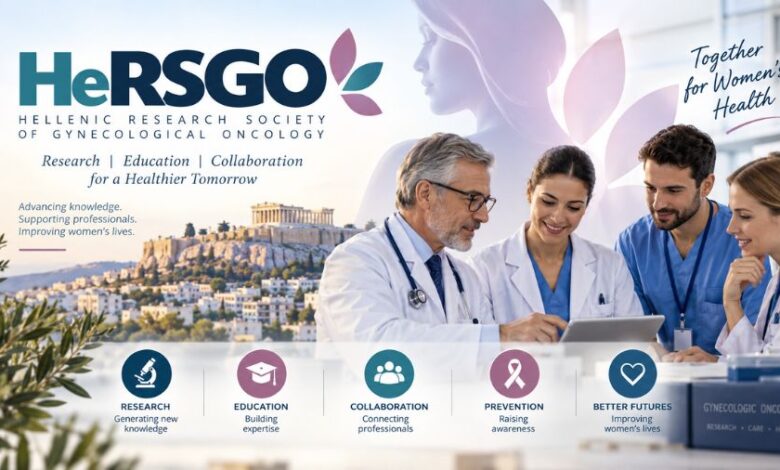
HeRSGO, short for the Hellenic Research Society of Gynecological Oncology, is a Greek scientific organization focused on strengthening research, education, collaboration, and awareness in gynecological oncology. Its work brings together professionals from different medical and scientific backgrounds with a shared interest in improving knowledge and healthcare for women affected by gynecological cancers.
The organization has a broad approach to gynecological oncology rather than concentrating on a single medical specialty. Its membership structure includes medical oncologists, gynecologic oncologists, radiation oncologists, and professionals from other relevant fields, creating an environment where different perspectives can contribute to research and patient care.
For anyone researching HeRSGO, it is useful to understand that the organization is designed around scientific cooperation and education. Its official objectives include supporting research, encouraging professional development, sharing knowledge, and promoting better approaches to prevention, diagnosis, and treatment of gynecological malignancies.
What Is HeRSGO?
HeRSGO is the English abbreviation for the Hellenic Research Society of Gynecological Oncology. The organization’s Greek name is Ελληνική Ερευνητική Ομάδα Γυναικολογικής Ογκολογίας, and according to its official statutes, it has a nationwide character with its headquarters in Athens.
The society was established with the goal of promoting research and education within gynecological oncology. Its activities cover basic, clinical, and applied research related to the prevention, diagnosis, and treatment of gynecological malignancies. This broad research focus allows the organization to address the subject from several scientific angles rather than treating it as a single-discipline field.
HeRSGO also emphasizes communication between specialists. Its stated objectives include encouraging the exchange of ideas and knowledge among gynecologic oncologists, medical oncologists, radiation oncologists, radiologists, pathologists, cytologists, biologists, geneticists, biomedical scientists, pharmacists, and other professionals involved in the field.
The Main Mission of HeRSGO
A central part of HeRSGO’s mission is improving education and research in gynecological oncology. The organization aims to create opportunities that help members develop their scientific skills while contributing to improvements in healthcare services for women with malignancies of the reproductive system.
Research is another major pillar. HeRSGO’s statutes describe support for joint research protocols, cooperation with scientific organizations in Greece and abroad, and assistance for research programs involving gynecological malignancies. The organization also identifies clinical studies and research funding as important components of its activities.
The society also has a public-facing role. Its stated objectives include providing information about prevention and early detection of gynecological cancers through educational talks, events, announcements, printed material, and other lawful communication methods. This connects scientific work with broader public awareness.
Who Can Be Part of HeRSGO?
HeRSGO has a multidisciplinary membership structure. Its official website identifies four principal groups: medical oncologists, gynecologic oncologists, radiation oncologists, and other medical and non-medical specialties. The latter group can include professionals such as biologists, dietitians, psychologists, nurses, and other relevant specialists.
The society’s statutes provide additional details about ordinary membership. Doctors and other scientists can qualify under specified conditions when they have a relevant professional license, work in the management of gynecological malignancies, or actively participate in scientific research related to the field. For doctors, the statutes also refer to evidence of lawful medical practice and a detailed professional curriculum vitae.
This structure reflects the multidisciplinary nature of cancer care. Gynecological oncology can involve surgery, systemic cancer treatment, radiation therapy, pathology, imaging, laboratory research, nutrition, nursing, and psychological support, so collaboration between different disciplines can be particularly relevant to research and education.
Research and Scientific Collaboration
Scientific collaboration is one of the areas emphasized by HeRSGO. The organization aims to encourage joint research protocols among its members as well as cooperation with other scientific societies in Greece and internationally. These collaborations can help researchers exchange knowledge and develop projects across institutional and professional boundaries.
HeRSGO’s statutes also mention collaboration with universities and scientific organizations outside Greece. The society can work with academic departments and other scientific bodies when such cooperation supports its stated objectives. This provides a framework for research partnerships, educational initiatives, and scientific events.
Another interesting part of its stated objectives is support for modern scientific approaches. The statutes mention encouraging the development and application of new diagnostic tests, approaches, and molecular therapies. They also describe the potential development of information systems for exchanging scientific information and a tissue bank for studying cellular and genetic material.
Education and Professional Development
Education is a prominent part of HeRSGO’s activities. The organization states that it creates educational opportunities for professionals working in gynecological oncology, with the broader aim of supporting continuing scientific development.
Its statutes allow for seminars, postgraduate educational courses, scientific meetings, lectures, symposia, and conferences. These activities can provide opportunities for professionals to discuss current research, clinical approaches, and developments in the field.
The society also describes an education committee responsible for supporting postgraduate education and continuing professional development. According to the statutes, the committee’s work includes helping plan and monitor postgraduate education and updating educational programs in line with European Union standards.
Leadership and Professional Representation
HeRSGO has a five-member board, with representation structured around its different professional groups. The official website currently lists Ioannis Syrios as president, Nikolaos Akrivos as vice president, Ernestos Beroukas as treasurer, Anastasios Christidis as secretary, and Eleni Stamou as special secretary.
The organization’s statutes establish a two-year term for the board. They also provide for rotation of the presidency among different specialties, while requiring the president to be a qualified physician. This structure is intended to maintain representation from different areas of gynecological oncology and related scientific disciplines.
The current membership shown on the official website also demonstrates this multidisciplinary model. It includes specialists from medical oncology, gynecologic oncology, radiation oncology, pathology, radiology, nuclear medicine, biology, surgery, and dietetics.
Public Awareness and Prevention
Gynecological cancer care is not limited to treating disease after diagnosis. Prevention and early detection are also important areas identified by HeRSGO. The organization’s statutes specifically include public information and awareness activities concerning prevention and early diagnosis.
HeRSGO describes several possible ways to support public awareness, including educational talks, information days, announcements, printed educational material, and other forms of communication. It also identifies prevention programs, early-detection initiatives, and population screening programs among its objectives.
This focus gives the organization a role beyond professional education. By supporting communication between scientific communities and the public, HeRSGO’s stated mission connects research and medical education with wider awareness of gynecological malignancies and the importance of timely medical evaluation.
Why Multidisciplinary Work Matters
Gynecological oncology involves complex medical decisions that may require input from several specialties. A patient can encounter different professionals during diagnosis, treatment planning, surgery, systemic therapy, radiation treatment, pathology assessment, and follow-up care.
A multidisciplinary scientific organization can provide a setting where these professionals exchange information and discuss developments from their respective fields. HeRSGO’s membership structure reflects this approach by bringing together several medical specialties alongside other scientific and healthcare professionals.
This type of collaboration can also be useful for research. Combining clinical experience with pathology, molecular biology, imaging, radiation oncology, medical oncology, and other disciplines can help researchers approach gynecological cancer questions from multiple perspectives. HeRSGO’s statutes explicitly encourage such scientific interaction and joint research.
HeRSGO and the Future of Gynecological Oncology
Modern gynecological oncology continues to develop through advances in diagnostics, molecular research, targeted approaches, clinical studies, and multidisciplinary care. Organizations such as HeRSGO can provide a professional environment for sharing these developments and encouraging continued education.
The society’s stated objectives include supporting innovative diagnostic approaches and molecular therapies, organizing scientific events, encouraging research programs, and connecting Greek professionals with international scientific organizations. These activities position scientific collaboration as an important part of its long-term framework.
For healthcare professionals, researchers, and others interested in gynecological oncology, HeRSGO therefore represents a platform centered on education, research, professional communication, and public awareness. Its official website provides information about its activities, membership, leadership, and organizational structure.
Conclusion
HeRSGO, the Hellenic Research Society of Gynecological Oncology, is a Greek scientific society dedicated to education, research, collaboration, and awareness in gynecological oncology. Its multidisciplinary structure brings together specialists and other professionals who contribute to different aspects of the field.
Its official objectives cover basic, clinical, and applied research, professional education, scientific collaboration, prevention, early detection, public information, and support for new diagnostic and therapeutic approaches. The organization also provides a framework for scientific meetings, seminars, conferences, research projects, and cooperation with institutions in Greece and abroad.
As gynecological oncology continues to evolve, continued exchange between researchers, clinicians, and other healthcare professionals remains an important part of scientific progress. HeRSGO’s stated mission is built around that kind of cooperation and the broader goal of improving knowledge and healthcare related to gynecological cancers.
Also read: Donna Sicuranza: The Woman Behind Connecticut’s TEAM Mobile Clinic
FAQs
What does HeRSGO stand for?
HeRSGO stands for Hellenic Research Society of Gynecological Oncology, the English name of the Greek scientific society ΕΕΟΓΟ.
What is the main focus of HeRSGO?
Its main focus is promoting education, research, scientific collaboration, prevention, diagnosis, and treatment-related knowledge in gynecological oncology.
Who can become a HeRSGO member?
The society includes medical and other scientific professionals involved in gynecological malignancies or relevant research, subject to its membership requirements.
Where is HeRSGO based?
According to its official statutes, HeRSGO has its headquarters in Athens, Greece.
Does HeRSGO organize educational activities?
Yes. Its stated activities include seminars, postgraduate educational programs, scientific meetings, conferences, lectures, and other educational events.


