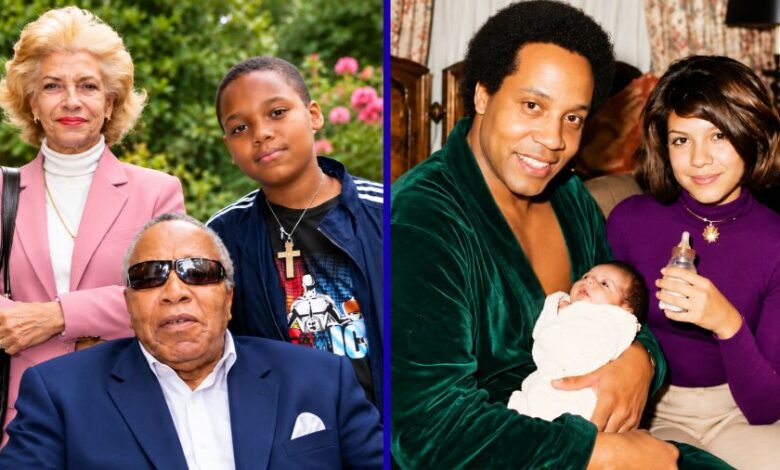
Julianna Farrait is best known as Frank Lucas’ wife, the partner of the notorious Harlem heroin trafficker whose criminal empire inspired the 2007 film American Gangster. Originally from Puerto Rico, she became associated with Lucas during his rise to prominence in New York’s drug trade, sharing a lavish lifestyle that eventually gave way to arrests, imprisonment, and family separation. Her own legal history, relationship with Lucas, and connection to children including Francine Lucas-Sinclair, Frank Lucas Jr., and Ray Lucas continue to attract public interest, although several details of her private life remain undocumented.
Quick Bio
| Fact | Details |
|---|---|
| Full Name | Julianna Farrait Rodríguez (also reported as Julianna Farrait) |
| Known As | Julie Farrait, Julie Lucas |
| Profession | No verified professional career publicly documented |
| National Background | Puerto Rican |
| Birthplace | Puerto Rico |
| Birth Year | Around 1940, based on her reported age in 2010 |
| Education | Not publicly disclosed |
| Spouse | Frank Lucas |
| Marriage | Commonly reported as 1967; exact date unconfirmed |
| Children | Francine Lucas-Sinclair is her publicly identified daughter |
| Family Connections | Frank Lucas Jr. and Ray Lucas are among Frank Lucas’s reported children |
| Known For | Marriage to Frank Lucas and drug-related criminal cases |
| Major Legal Events | 1975 investigation and 2010 Puerto Rico arrest |
| Film Connection | American Gangster (2007) |
| Film Portrayal | Eva, played by Lymari Nadal |
| Current Residence | Not publicly verified |
| Current Status | Conflicting reports about her later life and death |
Who Is Julianna Farrait?
Julianna Farrait is a Puerto Rican woman whose public identity became closely connected to Frank Lucas, one of the most notorious heroin traffickers associated with Harlem during the 1960s and 1970s. Unlike entertainers, business executives, or public personalities who become famous through their own professional achievements, Farrait attracted attention primarily through her marriage, family circumstances, and involvement in criminal investigations connected to Lucas. Her story became internationally recognizable following the release of American Gangster, which presented a dramatized account of her husband’s criminal activities and their luxurious lifestyle. Nevertheless, Farrait was more than a character in a Hollywood production or simply the wife of a notorious criminal. Contemporary newspaper reporting documented her own statements, arrests, and appearances in court, providing a limited but important record of her life. She reportedly moved from Puerto Rico to New York in 1969 and met Lucas during the period when his influence in Harlem was growing. Her later experiences included the consequences of his criminal activities, her own drug-related prosecution, and periods of separation from her family. Although many websites describe her as a former beauty queen, detailed independent records confirming a particular title, competition, or professional career are difficult to establish. Consequently, her biography is best understood through documented events rather than assumptions repeated across entertainment websites.
Background in Her Early Life and Public Identity
Very little independently verified information exists about Julianna Farrait’s childhood, parents, siblings, education, or upbringing in Puerto Rico. Several biographical accounts place her birth around 1940 or 1941, but an exact birth date has not been established through dependable public documentation. Associated Press reporting in May 2010 described her as 70 years old, which provides a reasonable indication of her approximate age at that time. Farrait has also frequently been described as attractive, fashionable, and a former homecoming queen or beauty queen. These descriptions helped shape the public image later associated with her relationship with Lucas, particularly after the release of American Gangster. However, there is an important difference between a description repeated in popular biographies and an independently documented achievement. No sufficiently reliable public record establishes that she held a particular national beauty-pageant title or pursued a professional modelling career. Her occupation before meeting Lucas is similarly unclear. Rather than assigning her an unverified profession, it is more accurate to explain that she became publicly known through her personal relationship and subsequent legal history. Her Puerto Rican background remained an important part of her identity, and her connection to the island continued to appear in later reporting, particularly when federal authorities arrested her there in 2010. The limited information available about her early years also explains why questions about her family background and education remain common among readers.
Marriage and Relationship with Frank Lucas
Julianna Farrait’s relationship with Frank Lucas became the defining chapter of her publicly documented life. Accounts of their first meeting are not entirely consistent, but Farrait provided an important version in a 2008 interview with Puerto Rican newspaper Primera Hora. She said she had moved from Puerto Rico to New York in 1969 and met Lucas at a nightclub. According to the Associated Press report that revisited the interview in 2010, she did not initially know about his drug dealings and reportedly discovered the nature of his activities approximately a year after they met. Some later biographies instead describe their introduction during an airplane journey between Puerto Rico and New York, illustrating why the meeting story should not be presented as completely settled. Their marriage is commonly dated to 1967 in biographical accounts, although that date does not align neatly with every reported version of their meeting, and an independently verified marriage record is not widely available. During their relationship, Lucas became associated with a major heroin distribution operation in Harlem, while Farrait became known for the expensive lifestyle surrounding his wealth. Their public image included luxury clothing, jewellery, expensive vehicles, and exclusive social occasions. One frequently repeated story involves an extravagant chinchilla coat and matching hat purchased for Lucas, which he reportedly wore to the 1971 Muhammad Ali and Joe Frazier boxing match at Madison Square Garden. The outfit became part of the popular account of how his conspicuous lifestyle attracted attention. However, the precise purchase details and their role in the investigation are not independently established in every account. Farrait’s own later comments suggested that she was attracted to Lucas’s confidence and lifestyle, although her relationship with him was also affected by his criminal activities, imprisonment, and repeated separations.
Parenthood and Family Life
Family life was an important part of the Lucas story, particularly because the criminal activities of the household affected the children growing up around it. The most extensively documented child connected to Julianna Farrait and Frank Lucas is their daughter, Francine Lucas-Sinclair. Francine later spoke publicly about her childhood and the difficulties of growing up with parents involved in drug trafficking and imprisonment. In a 2007 interview with ABC News, she discussed the personal impact of being Frank Lucas’s daughter, explaining that her father could appear like an ordinary parent despite the criminal reputation surrounding him. Her experiences became an important part of the family’s public story because she eventually developed an interest in helping children affected by parental incarceration. Frank Lucas also had other children, including Frank Lucas Jr., Ray Lucas, Ruby Lucas, Betty Lucas, and Candace Lucas, among those identified in published accounts of his family. However, the available evidence does not establish that every child attributed to Frank Lucas was also Julianna Farrait’s biological child. Frank Lucas Jr. was publicly identified alongside Farrait in photographs taken at Lucas’s funeral in June 2019, demonstrating the family’s continued public association. Ray Lucas was also identified as one of Frank’s sons in reporting about his family, but the precise details of his relationship to Farrait are not consistently documented. For this reason, Francine Lucas-Sinclair is the safest name to identify as Farrait’s publicly documented daughter, while Frank Lucas Jr. and Ray Lucas should be discussed within the wider Lucas family rather than automatically described as her biological sons. The family’s history illustrates how the consequences of Lucas’s criminal activities extended beyond the people directly involved in the drug trade.
Supporting Through the Challenges of Frank Lucas’ Criminal Life
Living alongside Frank Lucas during the expansion of his heroin operation exposed Farrait and their family to considerable instability. Lucas’s business generated enormous wealth according to his own accounts, but it also attracted law-enforcement attention and eventually led to the destruction of the family’s relatively comfortable lifestyle. His criminal activities involved the distribution of heroin, a drug responsible for serious addiction and social harm in American communities. The consequences were not limited to Lucas himself. His wife and children faced investigations, arrests, imprisonment, and long periods of separation. The January 1975 raid on the family’s home in Teaneck, New Jersey, became a particularly important event. Federal agents and New York police officers searched the property and seized more than half a million dollars. Farrait was also caught up in the investigation, and contemporary reporting later stated that she served approximately five years in connection with the earlier case. Accounts of the raid frequently repeat a story that she threw cash through a bedroom window while officers were searching the property. Although the incident became an enduring part of the public narrative, the exact details are often repeated without sufficient qualification. Lucas was convicted and received a lengthy prison sentence before cooperating with authorities. The family subsequently experienced further disruption, including periods associated with witness protection. Their daughter Francine later described the difficulties of growing up while both parents were unavailable because of incarceration. These experiences help explain why Farrait’s biography cannot be separated from the wider consequences of Lucas’s criminal career. At the same time, it is important not to portray her solely as someone affected by her husband’s choices, because her own later legal cases demonstrated that she also faced independent allegations and criminal proceedings.
Life After the 1975 Raid and Subsequent Arrests
The 1975 investigation did not mark the end of Julianna Farrait’s legal difficulties, as later events demonstrated that her connection to drug-related activities continued beyond the original Lucas prosecution. Accounts of her early 1980s history describe another arrest in Las Vegas involving an attempted drug transaction. Several biographies report that she received a prison sentence of approximately four and a half years following that incident, although the details of the proceedings are less consistently documented than her later Puerto Rico arrest. Her legal history therefore needs to be understood as a series of separate events rather than a single continuous imprisonment. In May 2010, Farrait was arrested in Isla Verde, Puerto Rico, during a federal undercover investigation. According to Associated Press reporting published on May 20, authorities alleged that she attempted to sell two kilograms of cocaine to a government informant at a hotel. Investigators reportedly had been monitoring her activities since February 2009. A recorded conversation from May 11 was described in the criminal complaint, and the alleged transaction took place on May 19. Farrait appeared in court the following day and requested that the judge speak to her in Spanish. At that initial stage, she faced a conspiracy charge and had not yet entered a plea, so the allegations should be distinguished from the eventual outcome of the prosecution. Later reporting in February 2012 stated that she received a five-year federal prison sentence in connection with the cocaine case. Accounts of the sentencing also described her request for mercy, reportedly explaining that she wanted to spend time with her ageing husband. This later prosecution was significant because it showed that Farrait’s legal history extended decades beyond the original Harlem investigation. It also attracted renewed media attention because Lucas was already an older man and had become less publicly active. The exact date of her release following the 2012 sentence has not been reliably established in widely available reporting.
Career Highlights and Public Recognition
Julianna Farrait did not develop a widely documented independent career in entertainment, business, politics, or another public profession. Her public recognition instead developed through her marriage to Frank Lucas, her association with his wealth, and her appearances in criminal investigations. The distinction is important because many online biographies describe her as a former beauty queen or celebrity without providing sufficient evidence of professional achievements. Her most recognizable cultural connection came in 2007 when director Ridley Scott released American Gangster. The film featured Denzel Washington as Frank Lucas and Lymari Nadal as Eva, a fictionalized character based on Farrait. The production introduced the Lucas story to a global audience and encouraged renewed interest in the people who had been connected to his criminal operation. Although Eva’s character drew inspiration from Farrait, the film should not be treated as a documentary or an exact representation of her life. Hollywood productions often combine events, simplify complicated relationships, and create dramatic scenes that may not match historical records. Farrait also attracted attention through interviews and contemporary newspaper coverage, particularly a 2008 interview in which she discussed her relationship with Lucas and aspects of their former lifestyle. Her 2010 arrest generated another wave of international reporting, followed by coverage of her 2012 sentence. Unlike the film’s lead actors, she did not establish a public entertainment career or become a regular participant in celebrity interviews. Her recognition therefore remains closely tied to the historical and cultural interest surrounding Frank Lucas rather than an independent professional achievement.
Why People Search for Julianna Farrait
Interest in Julianna Farrait continues because her story connects several subjects that attract readers, including true crime, American criminal history, celebrity relationships, family experiences, and the real events behind popular films. People searching for Frank Lucas’ wife frequently want to understand who she was before meeting him, how their marriage developed, and whether she participated in his criminal activities. Others are interested in the family’s children, particularly Francine Lucas-Sinclair, whose experiences provide a different perspective on the consequences of having an incarcerated parent. Searches for Frank Lucas Jr. and Ray Lucas also reflect curiosity about the wider family and the children who lived outside the public spotlight. Another reason for Farrait’s continued visibility is American Gangster, which encouraged audiences to compare the real people with their fictionalized movie counterparts. The film’s glamorous presentation of Lucas’s wealth and criminal lifestyle created questions about the actual experiences of the people around him. Readers also search for information about the 1975 Teaneck raid, her later arrest in Puerto Rico, and the reported five-year sentence in 2012. Questions about her current whereabouts and whether she is still alive are especially common because reliable recent information about her private life is limited and some published accounts contradict one another. Her story therefore attracts interest not simply because she was married to a famous criminal, but because it offers insight into the family circumstances, personal decisions, and legal consequences surrounding one of the most widely discussed American drug-trafficking cases of the twentieth century.
Privacy, Accuracy and Public Information
Despite the public interest in Julianna Farrait, substantial gaps remain in the historical record of her life. Her exact date of birth, childhood circumstances, education, professional background, complete family relationships, current residence, and financial circumstances have not been reliably established through widely accessible independent documentation. Her current living status also requires particular care because published accounts contain conflicting information. Getty Images has a dated photograph identifying Julianna Farrait alongside Frank Lucas Jr. at Frank Lucas’s funeral in Newark on June 11, 2019. However, reporting on Frank Lucas’s death also referred to his wife Julie as having died before him. These accounts cannot be confidently reconciled using the available public evidence, so neither a definitive death date nor an unqualified claim that she remains alive should be presented as established fact. Similarly, her relationship to every child in the Lucas family should not be assumed from lists of Frank Lucas’s children. Francine Lucas-Sinclair is the most clearly documented daughter associated with Farrait, while the biological relationships involving Frank Lucas Jr. and Ray Lucas require additional evidence. Her criminal history should also be described accurately by separating allegations at the time of arrest from subsequent sentencing reports. This approach matters because biographical websites sometimes repeat unsupported information about her birth year, beauty-pageant history, imprisonment, and present-day circumstances. A responsible account should acknowledge what contemporary newspapers, court-related reporting, interviews, and dated photographic records establish while clearly identifying details that remain uncertain. Respecting these limitations does not make her story less interesting; instead, it provides readers with a more dependable understanding of a person whose life has often been described through sensationalized accounts of her husband’s criminal reputation.
Conclusion
Julianna Farrait’s life remains closely connected to the history of Frank Lucas, the Harlem heroin trafficker whose criminal operation became the subject of American Gangster. Her relationship with Lucas brought her into a world of extraordinary wealth, public attention, legal investigations, and family disruption. Her own arrests and prison sentences demonstrate that her story involved more than simply being the spouse of a notorious criminal. The experiences of their daughter, Francine Lucas-Sinclair, also highlight the lasting consequences that incarceration and criminal activity can have on families. Meanwhile, the names Frank Lucas Jr. and Ray Lucas remain part of the wider family history, although not every biological relationship is clearly established. Despite decades of public curiosity, much about Farrait’s personal background and later circumstances remains undisclosed. Her biography is best understood through the documented events of her relationship, legal history, and family life rather than unverified claims about her private affairs. Ultimately, the story of Frank Lucas’ wife offers a more complicated perspective on the people who lived alongside one of America’s most infamous drug traffickers and the consequences that continued long after his criminal empire ended.
Also read: Stephanie Sarkisian: The Private Story Behind Steve Sarkisian’s First Wife
FAQs
1. Who is Julianna Farrait?
Julianna Farrait is a Puerto Rican woman best known as Frank Lucas’ wife and for her involvement in several drug-related criminal cases.
2. How did Julianna Farrait meet Frank Lucas?
Farrait reportedly met Lucas in New York after moving from Puerto Rico, although accounts differ about whether their first meeting occurred at a nightclub or elsewhere.
3. Did Julianna Farrait have children with Frank Lucas?
Francine Lucas-Sinclair is their publicly documented daughter. Other children are associated with Frank Lucas, but their biological relationships to Farrait remain unclear.
4. Was Julianna Farrait arrested after Frank Lucas?
Yes, she was arrested in Puerto Rico in May 2010 during an undercover cocaine investigation and later reportedly received a five-year federal sentence.
5. Who played Julianna Farrait in American Gangster?
Puerto Rican actress Lymari Nadal portrayed Eva, a fictionalized character inspired by Julianna Farrait, opposite Denzel Washington in the 2007 crime drama.
6. Is Julianna Farrait still alive?
Her current status is uncertain. Conflicting reports exist about her death, while dated Getty Images photographs identify her at Frank Lucas’s 2019 funeral.