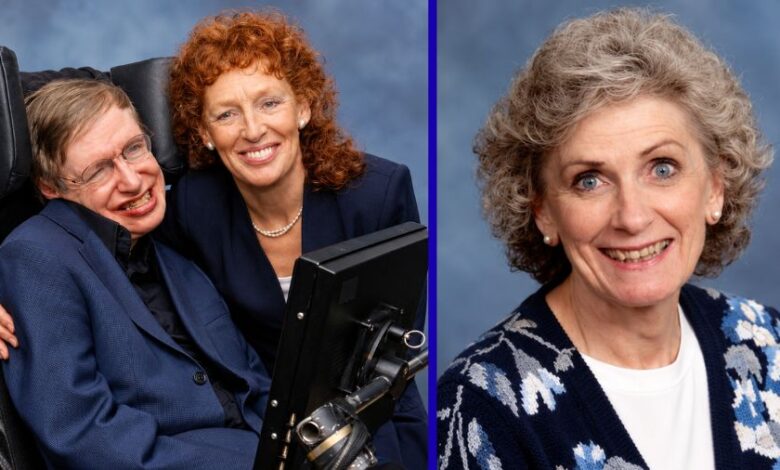
Elaine Mason is a British nurse best known as Stephen Hawking’s ex-wife and the woman who married the world-famous theoretical physicist in 1995. Before entering the public spotlight through her relationship with Hawking, Mason worked in nursing and became part of the team responsible for caring for him after his serious health complications. Their marriage lasted approximately 11 years and attracted considerable media attention because of Hawking’s separation from his first wife, Jane Hawking, the challenges associated with his disability, and a police investigation into allegations of mistreatment that concluded without evidence of criminal wrongdoing. Although Elaine Mason remains a subject of public curiosity, relatively little independently verified information is available about her life outside this relationship. Understanding her story requires separating documented events from media speculation while examining the personal circumstances surrounding one of the most discussed chapters in Stephen Hawking’s private life.
Quick Bio
| Fact | Details |
|---|---|
| Full Name | Elaine Sybil Lawson, according to published biographical reporting |
| Known As | Elaine Mason |
| Profession | Nurse |
| Nationality | British |
| Reported Birthplace | Hereford, England |
| Birth Date | Exact date has not been reliably established by authoritative public sources |
| Education | Detailed educational history has not been publicly documented reliably |
| First Husband | David Mason, an engineer |
| Second Husband | Stephen Hawking |
| Marriage to Hawking | September 1995 |
| Divorce | 2006, according to widely published accounts |
| Children | Reportedly two sons from her first marriage; their personal details are not central to her public biography |
| Known For | Her nursing work and marriage to Stephen Hawking |
| Relationship to Stephen Hawking | Second wife |
| Public Presence | Limited information about her life after the divorce |
Who Is Elaine Mason?
Elaine Mason is a British former nurse whose public identity became closely associated with Stephen Hawking, the physicist celebrated for his research on black holes, cosmology, and the nature of the universe. Her story differs from that of many people connected to famous scientists because she entered Hawking’s life through a professional caregiving role rather than through academic research or public entertainment. Following Hawking’s serious illness in the 1980s, he required extensive assistance with daily activities, communication, and personal care. Mason eventually became one of the nurses involved in that support network, and their professional relationship developed into a romantic partnership. They married in 1995, after Hawking’s first marriage had ended, and remained together until their divorce in 2006. Since then, Mason has maintained a relatively low public profile, leaving many questions about her personal circumstances unanswered. Her biography is therefore best understood through the documented milestones of her nursing career, relationship with Hawking, and place in the wider history of his family life rather than through unsupported claims about her private affairs.
Background in Nursing
Elaine Mason’s nursing background is the central part of her life before she became widely known as Stephen Hawking’s second wife. Published accounts have reported that she worked at an orphanage in Bangladesh before returning to Britain and becoming involved in professional nursing. Although this detail appears in biographical journalism, the full timeline of her early employment, education, and training has not been established through a comprehensive public record. Her later work brought her into contact with Hawking, who needed continuous care following a severe episode of pneumonia in 1985. During that illness, he underwent a tracheotomy, a procedure that created an opening in his windpipe and permanently changed how he communicated. He subsequently relied on assistive technology and a computer-based speech system, along with help from trained carers and nurses. Caring for someone with such complex needs involved far more than ordinary household assistance, requiring coordination among healthcare professionals and people familiar with his daily routines. Mason’s nursing role placed her within this demanding environment, although the precise scope of her individual clinical responsibilities has not been publicly documented in sufficient detail to reconstruct every aspect of her work.
Marriage or Relationship with Stephen Hawking
Elaine Mason’s relationship with Stephen Hawking developed while she was involved in his care, during a period when his first marriage was experiencing serious difficulties. Hawking and Jane Wilde had married in 1965 and raised three children together: Robert, Lucy, and Timothy. Their relationship gradually deteriorated under the pressure of Hawking’s progressive disability, the demands of family life, and the changes brought by his international scientific reputation. Hawking separated from Jane around 1990, and his relationship with Mason became a defining feature of the next stage of his personal life. Mason had previously been married to David Mason, an engineer associated with adapting Hawking’s computer-based communication equipment for use with his wheelchair. This connection meant that her relationship with Hawking emerged within a wider network of professional and personal relationships surrounding the physicist. After Hawking’s divorce from Jane was finalised, he married Elaine Mason in September 1995 at Cambridge Register Office. The wedding attracted significant media attention because Hawking was internationally famous and the circumstances surrounding the end of his first marriage remained controversial. Their marriage continued for approximately 11 years, until the couple divorced in 2006. Hawking later described the relationship as passionate and tempestuous, a description that reflected its complicated character without establishing every detail of their private experiences.
Parenthood and Family Life
Family relationships formed an important part of the circumstances surrounding Elaine Mason’s marriage to Stephen Hawking, although publicly available information about Mason’s own children remains limited. Before marrying Hawking, Mason was married to David Mason, and contemporary biographical reporting states that they had two sons together. Their names, subsequent lives, and current circumstances are not necessary to understanding her public biography and should not be treated as established facts without reliable supporting documentation. Hawking, meanwhile, had three children from his first marriage to Jane: Robert, Lucy, and Timothy. The transition from Hawking’s first household to his second marriage was difficult for members of the family, and some relatives reportedly felt that their relationship with him had become strained. These accounts describe the experiences and concerns of people around Hawking, rather than providing a complete or impartial record of Mason’s own intentions. Family relationships are complex, particularly when long marriages end and new partnerships begin amid disability, demanding care arrangements, and public scrutiny. Hawking’s later years included renewed contact with Jane and their children, demonstrating that family connections continued to evolve after his separation and second marriage. Because Mason has not maintained a substantial public presence, there is little reliable information about her relationships with her own sons or about the private family arrangements that followed her divorce from Hawking.
Supporting Through Stephen Hawking’s Health Challenges
The health challenges surrounding Stephen Hawking’s life help explain why nursing and personal care became such important elements of his relationship with Elaine Mason. Hawking was diagnosed with motor neurone disease, a progressive neurological condition that affected his movement and eventually left him requiring extensive assistance. His survival through a severe episode of pneumonia in 1985 marked a major turning point, as a tracheotomy saved his life but removed his natural speaking voice. He subsequently communicated through a computer-assisted speech system, while carers helped him manage everyday activities and maintain his professional commitments. Hawking’s needs required consistent support, and nursing staff worked in shifts to provide continuous care. Mason was among the nurses associated with this period of his life, and Hawking later acknowledged that her nursing skills had helped him on several occasions. However, it would be inaccurate to attribute his survival or medical management exclusively to one individual, because his care involved medical professionals, nurses, technological assistance, and other members of his support network. His scientific achievements continued despite severe physical limitations, and he remained an internationally recognised researcher, author, and public speaker. The demands of his condition also affected his personal relationships, illustrating how long-term disability can influence family responsibilities, emotional wellbeing, and the organisation of daily life. Mason’s place in this history is therefore connected both to their marriage and to the professional care environment in which their relationship began.
Life After the Marriage Ended
Elaine Mason and Stephen Hawking divorced in 2006, bringing their approximately 11-year marriage to an end. The reasons behind the breakdown of a private relationship cannot be fully reconstructed from press coverage alone, and neither speculation nor retrospective storytelling should be treated as a substitute for reliable evidence. Following the divorce, Mason largely disappeared from mainstream public attention, and there is limited trustworthy information about her subsequent employment, relationships, residence, or day-to-day activities. Unlike Hawking, who continued to publish, give interviews, appear at scientific events, and contribute to public discussions about cosmology, Mason did not establish a comparable public-facing career. Hawking later became more closely connected with Jane and their children again, and his family attended significant public occasions during the later years of his life. He died on 14 March 2018 at the age of 76. His death renewed interest in the people who had been important throughout his life, including both of his wives. Nevertheless, public interest in Mason does not mean that every aspect of her life after 2006 is available for responsible reporting. Her current residence, professional activities, and personal relationships have not been established reliably through widely recognised public sources. A careful biography should acknowledge these gaps rather than fill them with assumptions or information copied from unverified online profiles.
Career Highlights and Public Recognition
Elaine Mason’s public recognition is primarily connected to her work as a nurse and her marriage to Stephen Hawking, rather than to a separate career in science, entertainment, or public life. Her nursing work placed her in the care network supporting a scientist whose physical condition required extensive assistance, and that role became historically significant because their relationship later developed into marriage. Her former husband, David Mason, also had a professional connection to Hawking through the engineering work associated with his speech-synthesising communication system. That technology helped Hawking communicate after his tracheotomy and became an essential part of his public identity. Mason’s own professional achievements, however, have not been comprehensively documented in the public record, and there is no sound basis for assigning her awards, academic credentials, or professional distinctions that have not been independently verified. She is also frequently mentioned in discussions of the 2014 biographical film The Theory of Everything, which portrays Hawking’s early life, scientific career, and relationship with Jane. The film’s principal focus is Hawking’s first marriage and the experiences described in Jane’s memoir; it does not provide a comprehensive account of his later marriage to Elaine. Mason’s public recognition consequently remains tied to biographical reporting about Hawking rather than to a substantial body of independent interviews, publications, or professional profiles. This limited record makes careful sourcing particularly important whenever details about her background or career are presented.
The 2004 Police Investigation and Public Controversy
One of the most widely reported episodes associated with Elaine Mason’s marriage to Stephen Hawking was a police investigation into allegations that Hawking had suffered unexplained injuries and mistreatment. Reports in the early 2000s described concerns raised by some carers and family members, including questions about injuries such as a broken wrist and cuts to his face. The allegations attracted considerable attention because Hawking had a severe physical disability and depended on others for substantial daily assistance. It is essential, however, to distinguish what was alleged from what was established. Hawking publicly rejected the claims that he had been assaulted, and Mason denied responsibility. Cambridgeshire police investigated the matter and, in March 2004, announced that they could find no evidence to substantiate claims that a criminal act had occurred. No criminal charges were brought against Mason in connection with the allegations. The investigation’s conclusion did not establish every detail surrounding the reported injuries, nor does it justify presenting the accusations as proven wrongdoing. Equally, the existence of allegations alone cannot be used as proof of guilt. The episode remains part of the historical coverage of Hawking’s second marriage, but it should be discussed in neutral language that respects the difference between reported concerns, the statements of those involved, and the documented outcome of the police inquiry. Responsible coverage avoids sensationalism and does not use the controversy to make unsupported claims about either person’s character.
Why People Search for Elaine Mason
Interest in Elaine Mason continues because her name is closely connected to one of the best-known scientists of the modern era, while relatively little information about her independent life is widely available. Searches for Elaine Mason often include phrases such as Stephen Hawking’s ex-wife, Stephen Hawking’s second wife, Elaine Mason biography, and Stephen Hawking marriage history. Readers may also want to understand how Mason met Hawking, what role nursing played in their relationship, when they married, and why their marriage eventually ended. Others encounter her name while researching Jane Hawking, the family history of the physicist, or the circumstances surrounding the 2004 police investigation. These questions overlap, but they require different kinds of evidence. Marriage dates and the outcome of the police inquiry are supported by established reporting, while details about Mason’s later life and private family relationships remain much less certain. The popularity of online biographies can create the impression that a complete personal profile exists, even when many websites repeat the same limited information without independent verification. Readers benefit most from accounts that explain the historical context, distinguish confirmed facts from reported claims, and openly identify gaps in the available record. Elaine Mason’s story is significant because it intersects with Hawking’s medical care, family history, and public reputation, not because every rumour about her private life deserves repetition.
Privacy, Accuracy and Public Information
A reliable biography of Elaine Mason must recognise that public interest in her marriage to Stephen Hawking does not remove her right to privacy or justify presenting uncertain details as facts. Some published accounts describe her early work in Bangladesh, identify Hereford as her birthplace, and give a birth name of Elaine Sybil Lawson. These details have appeared in biographical journalism, but a comprehensive official record confirming her birth date, education, and complete employment history is not readily available in widely recognised public sources. Information about her children, current residence, later career, and personal relationships is similarly limited. Such gaps should be acknowledged rather than filled through inference, recycled claims, or invented background details. The same standard applies to discussion of the allegations investigated in 2004: a fair account records the concerns reported at the time, Hawking’s denial, and the police conclusion that there was insufficient evidence to substantiate criminal wrongdoing. It does not transform allegations into proven events or imply that the investigation established facts it did not establish. For readers, this distinction is important because search results frequently combine reputable reporting with unsourced biography pages and sensational headlines. A trustworthy account prioritises verifiable chronology, attributes uncertain details appropriately, and avoids making claims about private matters without strong evidence. This approach provides a more useful and respectful understanding of Mason’s life while preserving the historical context that explains why her name remains associated with Stephen Hawking.
Conclusion
Elaine Mason occupies a distinctive place in the personal history of Stephen Hawking, not because she shared his scientific career, but because she entered his life through nursing and became his second wife during a period of significant personal and medical change. Their marriage, which began in 1995 and ended in 2006, drew attention to the challenges of caregiving, the pressures surrounding a famous public figure, and the complicated relationships within Hawking’s family. The police investigation into allegations of mistreatment became another prominent part of the story, but its outcome must be reported accurately: Hawking denied the allegations, and police found insufficient evidence to substantiate criminal wrongdoing. Beyond these documented events, Mason has maintained a relatively private life, and many details about her later circumstances remain unknown. The most responsible account of Stephen Hawking’s ex-wife therefore combines established biographical facts with clear limits on what can be confirmed. By avoiding speculation and sensational claims, readers can understand Elaine Mason’s historical significance while recognising that her life extends beyond the headlines that made her widely known.
Also read: Zinzi Evans: Inspiring Film Producer and Ryan Coogler’s Wife
FAQs
Who is Elaine Mason?
Elaine Mason is a British nurse best known as Stephen Hawking’s second wife. They married in 1995 and divorced in 2006 after approximately 11 years.
When did Elaine Mason marry Stephen Hawking?
Elaine Mason married Stephen Hawking in September 1995 at Cambridge Register Office, following his divorce from his first wife, Jane Hawking.
Why did Elaine Mason and Stephen Hawking divorce?
The couple divorced in 2006. Detailed, independently verified information establishing one definitive reason for their separation is not available publicly.
Was Elaine Mason investigated by police?
Yes. Police investigated allegations of mistreatment involving Stephen Hawking in 2003–2004, but found insufficient evidence of criminal wrongdoing and brought no charges against Mason.
Did Elaine Mason have children?
Published biographical reporting states that Elaine Mason had two sons with her first husband, David Mason. Reliable public details about their later lives are limited.
Where is Elaine Mason now?
Elaine Mason has maintained a low public profile since her divorce from Hawking. Her current residence, professional activities, and personal circumstances have not been reliably established publicly.