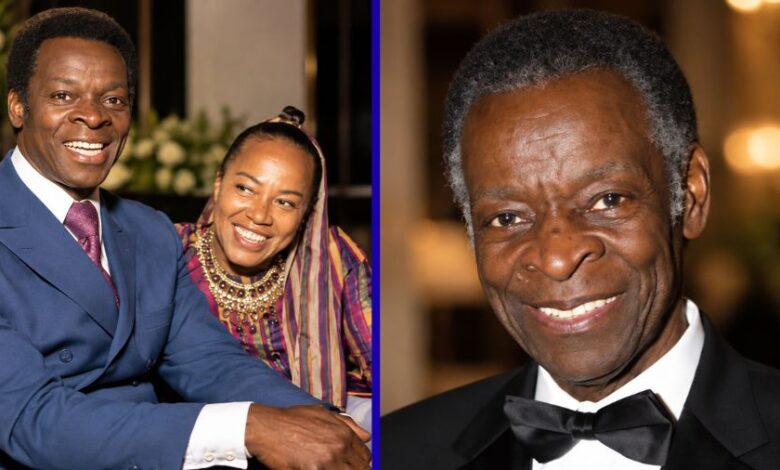
Dolores Daniels, also known as Didi Daniels Peters, was an influential American television producer, publicist, entrepreneur, and arts advocate best remembered as the wife of acclaimed actor Brock Peters. Although much of the public recognition surrounding her name comes from her marriage, she built an impressive professional career of her own, becoming one of the pioneering Black women in television production, promoting jazz broadcasting, supporting African American arts, and creating opportunities for disadvantaged communities. Her marriage to Brock Peters, her work in entertainment, and her daughter, Lise Jo Peters, remain important parts of her personal and professional story.
Quick Bio
| Detail | Information |
|---|---|
| Full Name | Dolores Mae Daniels Peters |
| Known As | Didi Daniels Peters |
| Nickname | DiDi |
| Profession | Television producer, publicist, entrepreneur, arts advocate |
| Nationality | American |
| Birthplace | Philadelphia, Pennsylvania, USA |
| Date of Birth | May 16, 1929 |
| Education | Not publicly documented in reliable biographical sources |
| Husband | Brock Peters |
| Marriage Date | July 29, 1961 |
| Children | One daughter, Lise Jo Peters |
| Known For | Jazz Party and pioneering television production |
| Business Ventures | Maga Link Inc. and Communications Bridge Institute |
| Date of Death | February 25, 1989 |
| Age at Death | 59 |
Who Is Dolores Daniels?
Dolores Mae Daniels Peters was an American entertainment professional whose career connected television, jazz music, public relations, recording-industry work, and community development. Born in Philadelphia on May 16, 1929, she became known professionally as Didi Daniels Peters and developed a reputation for pursuing opportunities in industries where Black women had limited representation. Her best-known television project was Jazz Party, a program associated with the early presentation of jazz on television. She also owned New York radio station WNCN, worked in publicity for United Artists Records, and supported cultural institutions, including the Dance Theatre of Harlem and the Museum of African American Art. Her professional achievements are particularly significant because they demonstrate that her identity was not limited to being Brock Peters’ wife. She was an established producer and organizer who worked to improve minority participation in entertainment and media. Her contributions were recognized after her death in 1989 through tributes published in the American press and the Congressional Record, which described her as a producer, publicist, businesswoman, and community activist.
Background in Television Production and Media
Dolores Daniels developed her professional career during a period when American television and the entertainment industry offered relatively few opportunities to Black women in leadership positions. Her involvement in television production therefore represented an important professional achievement, particularly because she worked to create programming that gave jazz musicians and African American cultural expression greater visibility. One of her most recognized projects was Jazz Party, a television series dating to 1958 that featured jazz-related programming. A 1989 congressional tribute described it as the first regular television series devoted to jazz and noted that the production earned her an Emmy Award nomination. Her interest in music also extended into radio broadcasting, where she owned WNCN in New York, an early all-jazz station. The station featured musicians such as Duke Ellington, Nat Adderley, and Horace Silver, who contributed recordings and commentary. Daniels understood the importance of giving musicians a platform beyond traditional concert venues, and radio offered an opportunity to bring jazz to a broader audience. Her professional experience was not confined to producing programs; she also worked in the recording industry as an assistant publicity director at United Artists Records, becoming one of the early women executives in that business. These roles illustrate the range of her experience across broadcasting, television, music promotion, and entertainment management.
Marriage or Relationship with Brock Peters
The personal life of Dolores Daniels became closely connected with the career of Brock Peters, an accomplished American actor known for his performances in film, television, and theatre. Brock Peters was born George Fisher on July 2, 1927, in Harlem, New York City, and developed a distinguished acting career that included his memorable portrayal of Tom Robinson in the 1962 film To Kill a Mockingbird. Dolores and Brock married on July 29, 1961, beginning a relationship that combined family life with shared interests in entertainment and African American cultural representation. Their marriage lasted until Daniels’ death in February 1989, and the couple remained connected through professional projects as well as their personal relationship. They shared an interest in improving opportunities for Black performers, producers, and other entertainment professionals, and their partnership extended into business and nonprofit initiatives. While Brock Peters became widely recognized through his acting performances, Dolores contributed through production, publicity, broadcasting, and organizational leadership. Their relationship is an important part of her biography, but it should not overshadow the professional identity she established independently. Contemporary newspaper coverage confirmed that Brock Peters temporarily stepped away from his theatrical performance in Driving Miss Daisy following his wife’s death, illustrating the personal significance of the loss. Their marriage is also documented in the biographies and historical records associated with Brock Peters, providing a reliable foundation for understanding their family history.
Parenthood and Family Life
Dolores Daniels and Brock Peters had one daughter, Lise Jo Peters, who is also identified in some entertainment databases as Lisa Jo Peters. Her parents’ marriage brought together two people with strong connections to the entertainment industry, but they generally maintained a distinction between their professional activities and their daughter’s private life. Publicly available information about Lise Jo Peters is limited, and there is little independently verified material about her education, occupation, personal relationships, or present activities. This limited public record should not be interpreted as evidence that she had no connection to her parents’ professional lives; rather, it reflects the family’s relatively private approach to personal matters. Brock Peters’ 2005 obituary identified Lise Jo as his surviving daughter, while contemporary records concerning Dolores Daniels also confirmed that she was survived by a daughter. These historical references establish the family connection without requiring assumptions about Lise’s private circumstances. For readers searching for Dolores Daniels because of her relationship with Brock Peters or interest in Lise Jo Peters, the most important confirmed detail is that the couple had one daughter together. Their family story therefore forms a meaningful part of Daniels’ biography, even though the available public record focuses much more heavily on her career and community activities than on domestic details.
Supporting Through Professional and Social Challenges
Dolores Daniels built her career during a period when racial discrimination and gender barriers restricted access to important positions in American entertainment, broadcasting, and business. Rather than limiting her activities to existing opportunities, she became involved in projects that could create new professional pathways for other people. Her work with jazz television and radio helped provide musicians with platforms for their talent, while her later community initiatives addressed the lack of practical media training available to disadvantaged people and minorities. She and Brock Peters recognized that access to technical education could determine whether someone was able to enter the growing television and videotape industries. In a 1983 statement reported by the Los Angeles Times, Daniels explained that disadvantaged students often could not afford training and that traditional school systems did not give sufficient attention to media skills. This observation helped shape their involvement in the Communications Bridge Institute, a nonprofit training initiative intended to prepare people for employment involving videotape technology. The program was significant because it approached inequality as a practical employment issue rather than simply a question of representation on screen. Training could create opportunities in entertainment, hospitals, banks, and other workplaces where recording and video technology were increasingly important. Daniels’ work therefore extended beyond her own advancement, reflecting a commitment to helping people acquire skills that could improve their professional prospects.
Life After Major Professional Milestones
As her career developed, Dolores Daniels expanded her involvement from television and radio into cultural organizations, nonprofit activities, and broader community initiatives. Before moving to Los Angeles, she founded the Advisory Board and Guild associated with the Dance Theatre of Harlem, an institution established to expand opportunities and representation in ballet and dance. She also served as a founding board member of the Museum of African American Art in Los Angeles, supporting an organization dedicated to preserving and presenting African American artistic contributions. After relocating to California, she continued working with Brock Peters on projects designed to increase minority participation in media and entertainment. Their organization, Maga Link Inc., became associated with the development of the Communications Bridge Institute, which provided practical training in videotape technology. Her activities also included producing The American Tap Show, a segment of the 1984 Los Angeles Olympics Arts Festival. This project demonstrated her continued interest in connecting entertainment with cultural expression and public events. These later professional milestones reveal that Daniels did not restrict herself to one medium or occupation. Instead, she moved between television, music, dance, museums, public relations, and vocational training, using her experience to support wider cultural and professional participation. Her work during these years also shows how her partnership with Brock Peters developed into a broader collaboration around education, representation, and the arts.
Career Highlights and Public Recognition
The career of Dolores Daniels included several achievements that were recognized by newspapers, congressional representatives, and entertainment-industry accounts after her death. Jazz Party remains one of her most notable television credits because it demonstrated her ability to develop programming centered on a musical tradition that was deeply connected to African American cultural history. Her ownership of WNCN also placed her within the early development of specialist jazz broadcasting in New York, where the station offered musicians an opportunity to reach listeners through recorded performances and commentary. At United Artists Records, she gained experience in publicity and executive-level recording-industry work at a time when women, particularly Black women, were underrepresented in senior entertainment positions. Her contributions to the Dance Theatre of Harlem and the Museum of African American Art further established her as an arts advocate rather than solely a commercial media professional. She also worked with organizations that sought to improve minority participation in film and television, while her collaboration with Brock Peters supported educational initiatives for people who lacked access to technical training. Another important achievement was her involvement in The American Tap Show, presented as part of the 1984 Los Angeles Olympics Arts Festival. Following her death, members of Congress publicly recognized her achievements, including her work as a pioneering Black female television producer and her Emmy Award nomination for Jazz Party. These acknowledgments provide historical evidence of the professional respect she earned during her lifetime.
Why People Search for Dolores Daniels
Interest in Dolores Daniels generally comes from several connected aspects of her life, particularly her marriage to Brock Peters, her work as a television producer, and her role in African American cultural organizations. People researching Brock Peters’ family often want to know who his wife was, when they married, and whether they had children. Daniels is especially relevant to these searches because their marriage lasted from 1961 until her death in 1989, and they had one daughter, Lise Jo Peters. Other readers discover her through historical searches about early Black women television producers, jazz broadcasting, or the development of African American arts institutions. Her association with Jazz Party is particularly important because it connects her name with an early television effort devoted to jazz programming. Her work at WNCN and United Artists Records also provides insight into the broader professional opportunities she pursued. In addition, her partnership with Brock Peters in community and media-training initiatives attracts interest from readers exploring his activities outside acting. Some searches may confuse Dolores Daniels with unrelated people or fictional characters who share the same name, making it important to use her full name, Dolores Mae Daniels Peters, when researching her history. The most accurate understanding of her life comes from considering these different connections together rather than defining her only through her marriage to a well-known actor.
Privacy, Accuracy and Public Information
Although Dolores Daniels had a public professional career, many details of her private life were never extensively documented in widely accessible historical records. Her birth date and birthplace are recorded in entertainment biographies, while her career achievements and death are described in contemporary newspaper reporting and congressional tributes. Information about her formal education, parents, siblings beyond the family references in her obituary, and early personal experiences remains limited in reliable public sources. Similarly, detailed information about Lise Jo Peters’ private life has not been consistently established through authoritative public documentation. Readers should therefore distinguish between information supported by historical reporting and claims repeated by secondary biography websites without clear evidence. One example concerns the reported cause of Daniels’ death: the Los Angeles Times obituary identifies cancer, while some entertainment databases specify a brain tumor. The more specific diagnosis should not be treated as independently confirmed by the contemporary newspaper obituary. Her date of death, February 25, 1989, and age of 59 are supported by contemporary reporting. The marriage date of July 29, 1961, appears in entertainment biographical records, while the couple’s relationship and family connection are also confirmed in historical accounts. Respecting these distinctions is important when writing about a person whose contributions deserve recognition without adding unsupported personal details. A responsible biography should acknowledge what is known, explain where public information is limited, and avoid turning gaps in the historical record into invented stories.
Conclusion
Dolores Daniels Peters deserves recognition as more than the wife of actor Brock Peters. She was a pioneering television producer, jazz broadcaster, recording-industry professional, entrepreneur, and advocate for African American arts and education. Her work on Jazz Party, involvement with WNCN, contributions to United Artists Records, and leadership in cultural organizations demonstrated her determination to expand opportunities in entertainment and the arts. Alongside Brock Peters, she also supported initiatives that provided disadvantaged people with access to practical media training and employment skills. Their marriage and their daughter, Lise Jo Peters, remain important parts of her family story, while her professional accomplishments provide a wider understanding of her lasting significance. Although she died in 1989 at the age of 59, the historical recognition of her work offers a reminder of the people who helped shape American television and cultural institutions beyond the spotlight. Her legacy is found not only in the programs she produced or organizations she supported, but also in the opportunities she helped create for others.
Also read: Scott McCurdy: The Talented Illustrator Behind Jennette McCurdy’s Family
FAQs
1. Who was Dolores Daniels?
Dolores Daniels, also known as Didi Daniels Peters, was an American television producer, entrepreneur, publicist, and arts advocate who worked in jazz broadcasting and cultural organizations.
2. Was Dolores Daniels Brock Peters’ wife?
Yes, Dolores Daniels married actor Brock Peters on July 29, 1961, and remained his wife until her death on February 25, 1989.
3. Did Dolores Daniels and Brock Peters have children?
Yes, they had one daughter named Lise Jo Peters, who is also identified as Lisa Jo Peters in some biographical records.
4. What was Dolores Daniels famous for?
She was known for producing Jazz Party, owning New York jazz radio station WNCN, and supporting African American arts and media education.
5. When did Dolores Daniels die?
Dolores Daniels died on February 25, 1989, in Los Angeles, California, at age 59, according to contemporary newspaper reporting.
6. What happened to Brock Peters after Dolores Daniels died?
Brock Peters continued his acting career after his wife’s death and remained active in film, television, and theatre until his death in 2005.