CIDNET: How Encartele’s Digital Platform Is Transforming Correctional Facility Technology

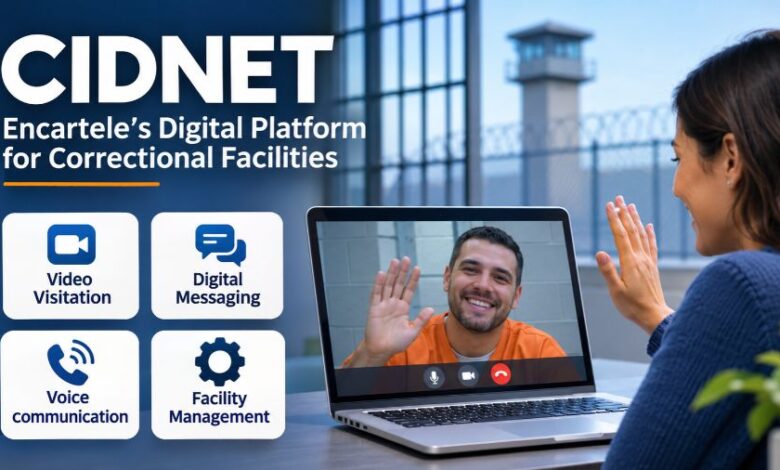
CIDNET is a correctional technology platform developed by Encartele to modernise communication, digital services and facility operations in jails and prisons. Designed to connect incarcerated individuals with approved family members and friends, the platform combines voice calls, video visitation, digital messaging and administrative applications within one technology ecosystem. Its approach also extends beyond communication, helping correctional facilities manage digital content, operational processes and security-related oversight. Understanding how CIDNET works, who uses it and what makes its technology different provides useful insight into the growing role of digital infrastructure in correctional facilities.
What Is CIDNET?
CIDNET, also written as CID Net, is an internet-based technology platform developed by Encartele Inc., a company specialising in communications and technology solutions for correctional institutions. It is designed to bring communication applications and facility management tools together through a centralised system. Unlike traditional correctional telephone services that primarily focus on voice calls, CIDNET supports multiple digital services, including messaging, video visitation, voice communication and operational applications. The platform serves correctional facilities, incarcerated individuals, their approved contacts and facility administrators. Encartele describes CIDNET as a modern Internet Applications Provider for the corrections industry, with a focus on connectivity, operational efficiency and more accessible digital services.
The History of CIDNET and Its Development
Encartele’s Background
CIDNET’s development is closely connected to the history of Encartele, which was founded in 2004 in Omaha, Nebraska. The company emerged through the merger of call centre technology and inmate communication systems, bringing together experience in telecommunications and correctional services. Its early focus was on addressing communication requirements within correctional environments, where security, controlled access and reliable connections are essential. As digital technology developed, Encartele expanded its approach beyond conventional telephone systems and began building a broader technology platform for correctional institutions.
The Launch of CIDNET
Encartele launched its CIDNET platform in 2017 as the foundation of a wider suite of correctional technology solutions. The launch represented a move towards internet-based applications that could support communication and facility operations through a more integrated system. Since then, the platform has developed to include services for families, incarcerated individuals and correctional staff. Encartele reports that its technology is used by more than 450 correctional facilities across the United States, although this figure represents the company’s own published claim rather than an independently audited industry measurement.
How Does CIDNET Work?
CIDNET operates through internet-connected applications and compatible communication devices installed or made available within participating correctional facilities. Family members and friends can create accounts through the public customer portal, identify the relevant correctional facility and submit a request to connect with an incarcerated individual. Once the facility approves the connection, users can access whichever services are available at that location. These may include voice calls, video visits and digital messages. The system also uses a data-based access model for its communication applications. Instead of relying exclusively on conventional per-minute billing, users purchase data that is consumed when they access supported services. This approach allows different applications to operate through a shared data balance, subject to the platform’s terms and the facility’s policies.
Creating a CIDNET Account
The process generally begins with registration through the CIDNET customer portal. Users provide their basic account information, verify their email address and select the state and correctional facility where their family member or friend is held. They can then search for the individual and submit a connection request by providing the required relationship information. Importantly, submitting a request does not automatically establish communication access. Correctional facility staff control approval, and the available services depend on the institution’s configuration. Once approval is granted, users can check their account for available communication options and purchase the required data.
Understanding CIDNET’s Data-Based System
One of the platform’s distinguishing features is its use of data rather than traditional time-based billing as the basis for accessing supported applications. Its Data Token Access Protocol, known as DTAP, provides token-based data streaming. In practical terms, users purchase a data balance that can be used across eligible services instead of purchasing separate communication time for every application. Actual consumption depends on the amount of information transmitted, meaning video communication, voice calls and text-based messages may use different amounts of data. The system is designed to charge according to data usage, but the total cost still depends on the applicable purchase rates and communication activity.
Key Features of the CIDNET Platform
Voice Communication
CIDNET provides voice communication services that allow incarcerated individuals to contact approved friends and family members using supported facility devices. These may include handheld communication devices and wall-mounted telephones, depending on the institution’s equipment. Calls are initiated by the incarcerated individual rather than by family members directly calling into the facility. Approved contacts can receive calls and manage certain account-level communication preferences. Voice services provide an important connection option for people who may not have reliable internet access or who prefer traditional telephone conversations.
Video Visitation
Video visitation allows incarcerated individuals and approved contacts to communicate face-to-face through supported devices. Depending on facility arrangements, visits may take place remotely or through on-site equipment. Remote video sessions allow family members to participate from an approved location with a suitable internet connection, while on-site sessions require attendance at the correctional facility. Users may need to schedule visits in advance, and facility staff can control approval and availability. Video visitation provides an alternative to physical visits, particularly for families who live far from the institution or face transportation difficulties.
Digital Messaging and Mail
The platform also supports digital communication through its Mail application. Approved contacts can exchange electronic messages and, where enabled, photographs with incarcerated individuals. This service offers an alternative to conventional written correspondence and can make communication more convenient for families. CIDNET also provides a separate Letters application designed to support the digital delivery of incoming postal mail. These services should not be confused: digital messaging and digitised postal correspondence are different functions within the broader platform.
Facility Management Applications
CIDNET extends beyond family communication through applications designed to support daily correctional facility operations. Its platform includes tools such as electronic forms, digital content, law library access, commissary ordering integrations, data access and digital letter delivery. Electronic forms can support the submission of grievances and requests, while content applications allow facilities to make selected documents and information available to incarcerated individuals. These capabilities demonstrate how correctional technology platforms can combine communication services with administrative processes.
Digital Signage and Environmental Monitoring
Another part of CIDNET’s wider technology ecosystem involves digital signage and sensor-based connectivity. Digital signage can distribute facility announcements, schedules and other important information across designated areas, reducing dependence on printed notices. Environmental monitoring capabilities can connect sensors and related systems to the platform’s centralised infrastructure. The exact functions available depend on the facility’s implementation, equipment and service configuration.
Who Uses CIDNET?
Correctional Facilities
Jails and other correctional institutions use CIDNET to provide communication services and manage selected digital operations. Administrators can configure access permissions, manage available applications and oversee system activity according to facility policies. Bringing different services into one platform may also reduce the need to maintain several disconnected technology systems.
Incarcerated Individuals
People held in participating facilities can use supported applications to communicate with approved contacts and access selected digital resources. Depending on local arrangements, these resources may include voice services, video visitation, electronic messaging, legal information and facility documents. Access is controlled by the institution, so not every application is necessarily available to every individual.
Family Members and Friends
Families and approved contacts use CIDNET to remain connected with incarcerated loved ones. Through an online account, they can manage their contacts, purchase data, receive calls, send eligible messages and arrange video visits where supported. This can be particularly valuable for people living far from a correctional facility or facing practical barriers to regular in-person visits.
Correctional Staff and Administrators
Facility employees use administrative features to manage communication access, review relevant system activity and make digital resources available. The platform’s operational applications can also help organise routine requests and distribute information. These tools are intended to support facility workflows while keeping control of permissions and access with correctional administrators.
What Makes CIDNET Different From Traditional Inmate Communication Systems?
Traditional correctional communication systems have often centred on telephone services, with additional applications supplied through separate providers or platforms. CIDNET takes a broader approach by combining voice, video, messaging and operational applications within one connected technology ecosystem. Its data-based model is another important distinction because supported communication services draw from a shared data balance rather than relying solely on conventional minute-based access. The platform also incorporates facility-oriented capabilities such as digital signage, electronic forms and content distribution. However, its broader feature set does not mean that every participating institution uses every application. Actual functionality depends on the facility’s agreement, installed equipment, policies and available services.
Security, Privacy and Communication Monitoring
Security is a central consideration in correctional technology because communication systems operate within controlled environments. CIDNET provides facilities with tools to manage user permissions, access and communication activity. Its published information explains that communications through its Voice, Video and Mail applications can be recorded, converted into text and monitored by correctional staff. Additional tools include flagged text alerts, which can identify selected words or phrases, and multi-party detection, which can help identify conversations involving multiple speakers. Visual link analysis can also help authorised investigators examine communication relationships. These capabilities are intended for correctional oversight, but they raise important privacy considerations. Users should understand that communication through the platform is subject to facility rules, applicable monitoring practices and the service’s terms. They should not assume that ordinary messages or conversations are private.
Benefits of CIDNET for Correctional Facilities and Families
CIDNET offers several potential advantages through its integrated approach to correctional communication and operations. For families, remote video visitation and electronic messaging can make it easier to maintain contact without travelling to a facility for every interaction. For incarcerated individuals, multiple communication options provide alternatives to relying exclusively on traditional telephone calls. For administrators, centralised applications can help organise digital services, control access and distribute information more efficiently. The data-based access model also aims to provide a different billing approach from conventional rounded-minute systems. Nevertheless, the practical value of these advantages depends on service availability, internet connectivity, facility policies and the costs associated with data purchases.
Limitations and Challenges of CIDNET
Despite its capabilities, CIDNET has limitations that potential users should understand. The first is facility availability: the platform’s services are not necessarily offered at every jail or correctional institution, and participating facilities may enable different applications. Second, access to an incarcerated individual requires facility approval, meaning account registration alone does not guarantee communication privileges. Third, video visitation and other internet-dependent services require compatible devices, appropriate browser permissions and a reliable connection. Data consumption can also vary according to the type and duration of communication, making it important for users to understand purchasing requirements before paying. Finally, recording and monitoring policies may limit privacy expectations. These factors mean that the experience can differ considerably between facilities and individual accounts.
The Future of Correctional Technology and CIDNET
The correctional technology industry is increasingly moving towards integrated digital services that combine communication, information access and administrative tools. Platforms such as CIDNET illustrate this shift by bringing together applications that were traditionally handled through separate systems. Future developments across the sector may include improved device connectivity, more accessible digital educational resources, expanded administrative automation and increasingly sophisticated monitoring capabilities. However, these developments also require careful attention to data protection, transparency, affordability and appropriate oversight. For CIDNET, continued development will depend on how effectively Encartele balances technological innovation with the operational requirements of correctional facilities and the communication needs of families. The wider significance of this technology lies in its potential to make correctional environments more digitally connected while maintaining appropriate institutional controls.
Conclusion
CIDNET represents a broader approach to correctional technology by combining voice communication, video visitation, digital messaging and facility management applications within an internet-based platform. Developed by Encartele, it reflects the transition from conventional inmate telephone systems towards more integrated digital infrastructure. Its data-based access model, administrative capabilities and communication options provide potential benefits for facilities, incarcerated individuals and their families. However, service availability, facility approval, data costs, connectivity requirements and monitoring policies remain important considerations. Ultimately, CIDNET demonstrates how technology providers are reshaping communication and operational services within the correctional industry.
Also read: Wisely by ADP Explained: Paycard Features, Benefits and How It Works
FAQs
1. What is CIDNET used for?
CIDNET is used by correctional facilities to provide voice calls, video visitation, digital messaging and selected administrative services for incarcerated individuals.
2. Who owns CIDNET?
CIDNET is a correctional technology platform developed by Encartele Inc., an Omaha-based company founded in 2004.
3. Is CIDNET free to use?
Creating an account is generally free, but users must purchase data to access supported communication services, subject to facility-specific arrangements.
4. Can families make video calls through CIDNET?
Yes, approved contacts can schedule remote or on-site video visits where the correctional facility supports and enables the service.
5. Are CIDNET messages and calls monitored?
Yes, communications through supported Voice, Video and Mail applications can be recorded and monitored by correctional facility staff.
6. Does CIDNET work in every US jail?
No, CIDNET is available only at participating correctional facilities, and individual institutions determine which applications and communication services are enabled.