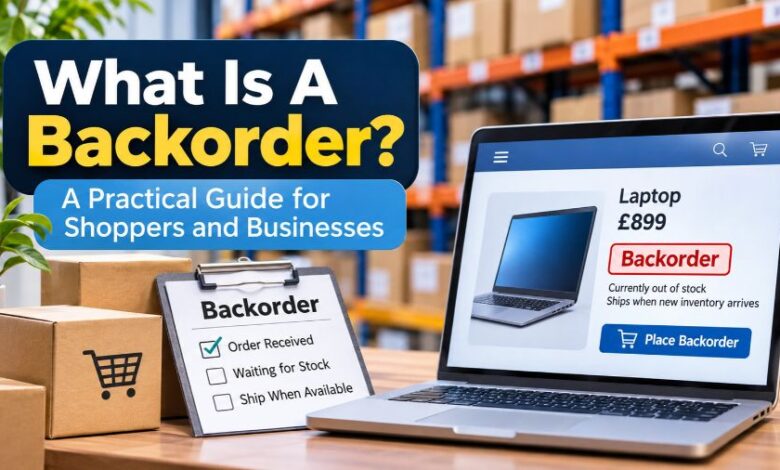
What Is A Backorder? A backorder is an order placed for a product that is temporarily unavailable in a seller’s inventory but is expected to become available again. Instead of cancelling the purchase or refusing the order, the business accepts the customer’s request and fulfils it when new stock arrives. Backorders are common in eCommerce, retail, wholesale, and manufacturing, particularly when customer demand exceeds available inventory. Understanding how backorders work, why they happen, and how businesses manage them can help customers make informed purchasing decisions while allowing companies to maintain sales and improve inventory planning.
What Does Backorder Mean?
A backorder refers to a customer order that a business cannot fulfil immediately because the requested product is currently unavailable. However, the seller expects to receive additional inventory from a supplier or manufacturer and agrees to deliver the product once it becomes available. The order remains active rather than being rejected or cancelled. For example, imagine an online electronics store sells a laptop that costs $900. A customer places an order, but the store has already sold all its available units. The retailer expects another shipment within two weeks and allows customers to continue purchasing the laptop. Any orders accepted during this period are considered backorders. The important distinction is that a backordered product is still available for purchase under the seller’s backorder policy, even though immediate shipment is not possible.
How Does a Backorder Work?
A backorder works through an inventory and order fulfilment process that connects customer purchases with future stock replenishment. When a customer orders an unavailable product, the retailer records the purchase in its order management system and identifies the quantity that needs to be fulfilled. The business then checks incoming inventory, contacts its supplier if necessary, and estimates when the missing products will arrive. Once the shipment reaches the warehouse, employees update inventory records, allocate available units to outstanding orders, and arrange delivery. Depending on the retailer’s fulfilment policy, customers may receive products in separate shipments or wait until every item in their order is available. Throughout this process, accurate inventory records and communication are essential because the business must ensure that accepted orders can eventually be fulfilled.
Step 1: Customer Places an Order
The process begins when a customer purchases a product that has no immediately available inventory. The online store or sales representative informs the customer that the item is backordered and provides an estimated shipping or availability date when possible. The customer can then decide whether to continue with the purchase.
Step 2: The Business Records the Backorder
After accepting the purchase, the business records the outstanding quantity in its inventory management or order management system. This information helps employees identify which customer orders are waiting for stock and prevents them from being overlooked during future fulfilment activities.
Step 3: New Inventory Is Arranged
The retailer contacts its supplier, distributor, or manufacturer to arrange additional stock. If an incoming shipment has already been scheduled, the business checks its expected arrival date and confirms whether the available quantity will cover outstanding customer orders.
Step 4: Products Arrive and Orders Are Fulfilled
When the new inventory reaches the warehouse, the business updates its stock records and allocates the available products to backordered customers. Employees then prepare the orders, arrange shipping, and provide tracking information when available.
What Causes Products to Go on Backorder?
Backorders generally occur when customer demand exceeds the inventory a business can supply at a particular time. However, several operational and supply chain problems can contribute to this situation. Unexpected demand increases may quickly empty warehouse shelves, particularly when a product becomes popular because of seasonal shopping, advertising, or changing consumer preferences. Supplier delays can also prevent retailers from receiving replacement inventory on schedule. Manufacturing interruptions, shortages of raw materials, transportation problems, and inaccurate demand forecasting can create additional difficulties. Some businesses deliberately maintain lower inventory levels to reduce storage expenses and avoid holding excessive products. Although this approach can improve inventory efficiency, it also leaves less room to handle sudden increases in demand. When replenishment cannot keep pace with customer purchases, backorders become more likely.
Unexpected Customer Demand
A sudden increase in customer purchases is one of the most common reasons for backorders. For example, a newly released smartphone may attract more buyers than a retailer originally expected. If customers continue placing orders after the available units have sold, the retailer may accept additional purchases and fulfil them when another shipment arrives.
Supplier and Manufacturing Delays
Retailers depend on suppliers and manufacturers to maintain product availability. If a supplier experiences production difficulties, equipment problems, labour shortages, or delays in obtaining materials, the retailer may not receive replacement stock on time. These disruptions can affect several businesses across the same supply chain.
Inaccurate Inventory Forecasting
Inventory forecasting helps businesses estimate how many products customers are likely to purchase during a particular period. When forecasts underestimate actual demand, companies may order insufficient quantities and run out of stock earlier than expected. Better forecasting can help businesses identify potential shortages before they affect customer orders.
Transportation and Logistics Problems
Products may become backordered even after manufacturers complete production. Delays at ports, customs clearance, distribution centres, and transportation networks can prevent inventory from reaching retailers. These logistical challenges are particularly relevant to businesses that depend on imported goods or international suppliers.
Backorder vs Out of Stock vs Preorder
Backorder, out of stock, and preorder describe different inventory situations, although customers sometimes use these terms interchangeably. A backorder means the seller accepts an order for an existing product that is temporarily unavailable and expects to fulfil it after replenishment. Out of stock generally means there are no available units for immediate purchase, and the retailer may not currently accept orders for the product. A preorder is different because customers purchase or reserve a product before its official release or initial availability. For example, ordering an existing television that has sold out but will be restocked is a backorder, while reserving a smartphone before its launch is a preorder. Understanding these differences helps customers recognise whether they are purchasing an existing product awaiting replenishment or reserving something that has not yet become available.
What Is the Difference Between Backorder and Backlog?
A backorder specifically refers to an accepted customer order that is waiting for unavailable inventory. A backlog is a broader collection of unfinished or unfulfilled work and orders. It may include backordered products, orders waiting for warehouse processing, and other outstanding commitments. Therefore, backorders can form part of a company’s overall order backlog, but not every item in a backlog is necessarily a backorder.
Real-World Examples of Backorders
Backorders occur across several industries because businesses cannot always maintain enough inventory to satisfy every customer immediately. In the electronics industry, a retailer may accept orders for a popular graphics card after its available units have sold. Customers receive their products when the distributor supplies another shipment. Furniture retailers also use backorders because large products such as sofas, dining tables, and wardrobes can require substantial storage space. A furniture business may display products in its showroom while arranging delivery directly from a manufacturer after receiving an order. Similarly, clothing retailers may accept purchases for popular jackets or shoes while waiting for another production batch. In manufacturing, a company may record backorders when customers request components that are temporarily unavailable but expected from suppliers. These examples demonstrate how backorders allow businesses to maintain customer demand without requiring every product to remain physically available in a warehouse.
Benefits of Backorders for Businesses
Backorders can provide several commercial advantages when businesses have reliable suppliers and effective inventory management processes. One major benefit is the ability to retain sales that might otherwise be lost when a product becomes temporarily unavailable. Customers who are willing to wait can still purchase the item rather than immediately choosing a competitor. Backorders can also help companies reduce the need to maintain excessive inventory, which may lower storage, handling, and inventory holding costs. Businesses can use customer orders as additional information about demand and identify products that require more frequent replenishment. Another advantage is improved flexibility for retailers that sell a large range of products but cannot economically maintain substantial quantities of every item. However, these benefits depend on accurate stock information, realistic delivery estimates, and the ability to obtain replacement products within a reasonable period.
Reduced Inventory Holding Costs
Maintaining large quantities of inventory requires warehouse space, handling resources, insurance, and ongoing management. Backorders can help businesses operate with lower stock levels while continuing to accept customer purchases. This approach can be particularly useful for expensive products, specialised equipment, and items with relatively unpredictable demand.
Fewer Lost Sales Opportunities
When customers can still place an order for a temporarily unavailable product, businesses have an opportunity to retain revenue that might otherwise go to competitors. This can be valuable for retailers with established customer relationships and products that buyers are willing to wait for.
Better Demand Information
Backorder records provide useful information about customer purchasing activity. Businesses can examine which products repeatedly experience shortages, how many customers are waiting, and how quickly demand exceeds available inventory. These insights can support purchasing decisions and improve future inventory forecasts.
Disadvantages and Risks of Backorders
Although backorders can help businesses maintain sales, they also create operational challenges and potential customer dissatisfaction. The biggest concern is delivery uncertainty. If suppliers fail to deliver products on time, customers may experience longer waiting periods than originally expected. Some buyers may cancel their orders or purchase from another retailer. Businesses can also face additional administrative work because employees must monitor outstanding orders, coordinate replenishment, update customers, and organise shipments. If a company accepts more backorders than it can realistically fulfil, the resulting delays may damage customer confidence and the retailer’s reputation. Payment arrangements can create another concern because customers need to understand whether they will be charged immediately or when the product is dispatched. For these reasons, businesses should avoid treating backorders as a substitute for proper inventory planning and supplier management.
Customer Dissatisfaction and Order Cancellations
Customers generally expect clear information about product availability and delivery times when making online purchases. Unexpected delays can create frustration, particularly when customers need products for specific occasions or business operations. If communication is poor, customers may cancel their purchases or lose confidence in the retailer.
Uncertain Supplier Availability
A retailer may expect a new shipment but discover that the supplier cannot provide the required quantity. In some situations, manufacturing problems or discontinued products can make replenishment difficult or impossible. Businesses should verify incoming supply before accepting large quantities of backorders.
Additional Shipping and Administrative Costs
When an order contains several products and only some are available, the business must decide whether to ship available items separately or wait until the complete order is ready. Separate deliveries can increase packaging, handling, and transportation expenses. Managing multiple outstanding orders can also place additional pressure on warehouse and customer service teams.
How Businesses Can Manage Backorders Effectively
Effective backorder management requires businesses to coordinate inventory planning, purchasing, supplier relationships, and customer communication. Companies should regularly review stock levels and establish appropriate reorder points for products with consistent demand. Safety stock can provide an additional inventory buffer against unexpected demand or supplier delays, although the appropriate quantity depends on product demand, replenishment lead times, and storage costs. Businesses should also monitor supplier performance and consider alternative suppliers for important products to reduce dependence on a single source. Inventory management software can help track available stock, incoming shipments, reserved quantities, and outstanding customer orders. Clear customer notifications are equally important because buyers need realistic information about estimated availability and shipping arrangements. By combining accurate inventory records with reliable replenishment processes, businesses can reduce unnecessary delays and manage unavoidable backorders more effectively.
Use Inventory Management Software
Inventory management systems help businesses monitor stock movements and identify products that are approaching their reorder points. These systems can also track incoming purchase orders, outstanding customer demand, and product availability. Accurate information helps retailers avoid accepting more orders than their expected supply can support.
Maintain Reliable Supplier Relationships
Businesses should regularly evaluate supplier reliability, production capacity, communication, and delivery performance. Maintaining relationships with multiple suppliers can provide additional flexibility when one supplier experiences delays. However, alternative suppliers should be checked for product quality, availability, pricing, and delivery requirements before businesses depend on them.
Provide Accurate Delivery Estimates
Customers should be informed that an item is backordered before completing their purchase. Retailers should provide estimated availability or shipping dates based on the information available from suppliers. If circumstances change, businesses should communicate the revised timeline rather than allowing customers to discover the delay themselves.
Prioritise Outstanding Customer Orders
When replacement inventory arrives, businesses need a consistent process for allocating products to outstanding orders. Many retailers fulfil orders according to their original purchase dates, although other priorities may apply depending on contractual commitments and customer requirements. A clearly defined allocation policy reduces confusion and helps employees process backorders efficiently.
What Should Customers Do When an Item Is on Backorder?
Customers should review the seller’s backorder information carefully before completing a purchase. The first thing to check is the estimated availability or shipping date, because this provides an indication of how long the waiting period might be. Buyers should also understand the retailer’s payment policy, including whether the full amount is charged immediately or when the product is dispatched. Cancellation and refund conditions are equally important, particularly when the expected delivery date is uncertain. If the product is needed urgently, comparing alternative retailers with available inventory may be a better option. Customers who have already placed a backordered order should monitor email notifications and contact the seller if the estimated delivery date passes without an update. A backorder is not necessarily a problem, but purchasing decisions should be based on the seller’s actual policies and the buyer’s delivery requirements.
How Long Does a Backorder Usually Take?
There is no universal timeframe for fulfilling a backordered product. Some orders may be completed within a few days when replacement inventory is already moving through the supply chain. Others may require several weeks or longer if the product depends on overseas manufacturing, imported materials, or complicated transportation arrangements. The waiting period also depends on how many customers have already placed orders and how much inventory the supplier can provide. A retailer expecting 100 units may receive only 60, meaning some customers will need to wait for another shipment. Estimated delivery dates should therefore be treated as forecasts rather than absolute guarantees unless the seller provides a firm commitment. Customers should contact the retailer when an expected date changes or when they need clarification about the status of their purchase.
Can a Backordered Product Be Cancelled or Refunded?
Whether a customer can cancel a backordered purchase depends on the retailer’s terms, the payment arrangement, and applicable consumer protection laws. Many businesses allow customers to cancel before an item has been dispatched, while others have specific conditions for orders that are already being processed. Refund arrangements also vary. Some retailers collect payment when an order is placed, whereas others authorise payment or collect it closer to dispatch. Customers should review the cancellation and refund policy before purchasing and retain their order confirmation and relevant communications. In the UK, online shoppers may also have statutory cancellation rights under applicable consumer protection rules, subject to relevant exceptions. A seller’s backorder policy does not automatically remove any legal rights that apply to the transaction. When delivery is significantly delayed, customers should check the retailer’s obligations and seek appropriate consumer advice if a dispute arises.
Conclusion: What Is A Backorder
A backorder is an important inventory and order fulfilment practice that allows businesses to accept customer purchases when products are temporarily unavailable. It helps retailers retain sales, manage inventory levels, and respond to changing customer demand without immediately rejecting orders. However, successful backorder management depends on reliable suppliers, accurate demand forecasting, organised inventory systems, and transparent customer communication. For shoppers, understanding backorder terms makes it easier to evaluate delivery expectations, payment arrangements, and cancellation options before purchasing. For businesses, treating backorders as part of a wider inventory management strategy can help balance customer demand with available supply while reducing unnecessary operational problems.
Also read: Charfen.co.uk: Complete Website Review, Content, Guest Posts and Trust Guide
FAQs
1. Does Backorder Mean the Product Is Sold Out?
Yes, a backordered product has no immediately available stock, but the seller continues accepting orders because additional inventory is expected.
2. Is It Safe to Buy a Backordered Product?
Generally, yes, provided the retailer is trustworthy and clearly explains delivery estimates, payment arrangements, cancellation conditions, and refund policies.
3. Do Customers Pay Immediately for Backordered Items?
Payment policies vary between retailers. Some collect payment during checkout, while others charge customers when products are ready for dispatch.
4. Can a Backorder Take Several Months?
Yes, backorders can take several months when manufacturing interruptions, international shipping problems, supplier shortages, or limited product availability delay replenishment.
5. What Happens When a Backordered Product Arrives?
The retailer updates its inventory, allocates available units to outstanding orders, prepares customer purchases, and arranges delivery according to its fulfilment policy.
6. What Is the Difference Between a Backorder and a Preorder?
A backorder involves an existing product awaiting replenishment, whereas a preorder allows customers to reserve a product before its initial release.