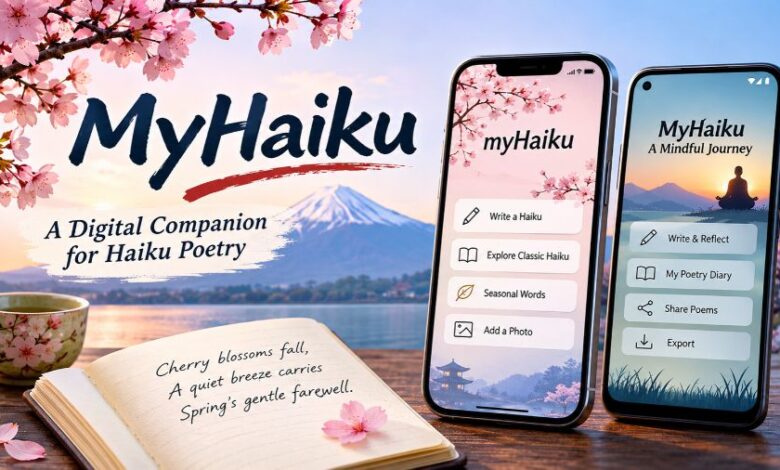
MyHaiku is a name associated with digital poetry applications that help people create, save, organize, and explore traditional Japanese haiku. These applications bring a centuries-old literary art form into modern technology, allowing users to express personal thoughts, capture meaningful moments, and maintain collections of short poems using smartphones and tablets. However, MyHaiku does not refer to just one application, as different developers have released products with similar names for different platforms. Understanding their features, availability, developers, and purposes can help users identify the correct application. This guide explores MyHaiku, its available versions, writing tools, compatibility, benefits, limitations, and what users should know before downloading it.
What Is MyHaiku?
MyHaiku is a name used by digital applications designed around haiku poetry, a traditional Japanese form of short poetry. These applications provide convenient ways to write original poems, preserve creative ideas, and explore existing literary works. Rather than functioning as conventional social networking platforms or general-purpose writing software, they concentrate on the experience of creating and managing short poetic compositions. Two notable applications currently associated with this name are myHaiku, developed by Satoshi Sato for Apple devices, and MyHaiku: A Mindful Journey, published by Godi’s Apps for Android. Although they share a similar name and creative purpose, they are separate products with different developers and features. Users should understand this distinction before searching for an installation or expecting particular functionality.
Understanding the Different MyHaiku Applications
The MyHaiku name appears across different mobile application listings, making it important to distinguish between individual products. Each version approaches poetry from a slightly different perspective, with one emphasizing literary research and personal poem management while another focuses on reflection and mindful writing.
myHaiku by Satoshi Sato
The Apple application called myHaiku is developed by Satoshi Sato and is designed for people who want to create, record, and manage their own haiku compositions. Its official App Store description explains that the application includes a built-in collection of nearly 30,000 public-domain haiku associated with Japanese poets, including Matsuo Bashō, Kobayashi Issa, Yosa Buson, and Masaoka Shiki. Users can create poems by entering information such as the composition date, subject, seasonal word, original poem, and an accompanying photograph. The application also provides search functionality for exploring existing poems using poet names, seasonal expressions, and words appearing in compositions. These capabilities make it particularly relevant to people interested in maintaining an organized poetry collection and discovering traditional Japanese literary works.
MyHaiku: A Mindful Journey
MyHaiku: A Mindful Journey is a separate Android application published by Godi’s Apps, with Henrik Reiner Godmann identified as its developer. Its central idea involves using short poetry as a way to reflect on personal experiences, emotions, and everyday surroundings. According to its Google Play description, users can take a few minutes to observe their thoughts or environment and express those experiences through haiku. The application supports saving compositions in a diary-style collection, revisiting previous entries, exporting poems, and sharing them with other people. This approach makes it different from the Apple version, which places greater emphasis on organizing original compositions and exploring an extensive collection of existing poetry. The Android application is therefore better understood as a reflective writing companion rather than a comprehensive literary reference library.
Key Features of MyHaiku
The features associated with MyHaiku depend on which application someone chooses. The Apple version combines original poetry creation, seasonal vocabulary, photographs, search functionality, and access to historical compositions, while the Android version emphasizes personal expression and maintaining a digital poetry diary. Both approaches offer a structured environment for preserving short pieces of writing instead of leaving creative ideas scattered across ordinary notes or messaging applications. Their shared focus on concise poetry makes them interesting for beginners and experienced writers who appreciate the haiku format. However, neither application should automatically be assumed to provide every feature available in the other, and users should examine the individual store descriptions to understand the capabilities of their preferred version.
Haiku Writing and Personal Collections
Writing and organizing original poetry is one of the central purposes of these applications. The Apple version allows users to enter their composition date, subject, seasonal word, poem, and a photograph representing the scene. Its search and organization options make it easier to revisit previously written compositions. MyHaiku: A Mindful Journey takes a more diary-oriented approach, allowing users to save poems and return to their personal writing history. This can be useful for people who enjoy documenting everyday observations, seasonal changes, or memorable experiences. Both applications offer an alternative to keeping handwritten poetry notebooks, although users should check the available backup and export options before relying on either application as their only permanent storage location.
Traditional Japanese Poetry Collection
One distinguishing feature of the Apple myHaiku application is its built-in collection of nearly 30,000 public-domain poems, as described in its App Store listing. The collection includes works attributed to several important Japanese poets, providing users with an opportunity to explore established literary traditions alongside their own creative writing. This feature can help readers understand how traditional haiku communicates nature, seasons, atmosphere, and emotion through concise language. The application also supports searching poems using poet names, seasonal words, and terms appearing within compositions. However, the developer acknowledges that some seasonal vocabulary and poem information may contain inaccuracies, so readers should consider consulting established literary references when researching historical or academic material.
Seasonal Words and Photography
Seasonal vocabulary, traditionally known as kigo, is an important element of classical Japanese haiku. These words help establish the time of year and connect a short poem with a particular natural or cultural atmosphere. The Apple myHaiku application includes seasonal-word searching, allowing users to explore vocabulary associated with spring, summer, autumn, and winter. Users can incorporate a selected seasonal expression into their original compositions and attach photographs representing the scenes behind their writing. Combining text with photography provides another way to preserve the circumstances that inspired a poem. These features are particularly useful for writers who enjoy observing nature, recording seasonal experiences, and connecting visual memories with creative expression.
How Does MyHaiku Work?
MyHaiku applications generally follow a straightforward process that begins with opening the relevant writing interface and creating a new composition. Depending on the version, users can enter a short poem, provide additional information, and save it to a personal collection. In the Apple application, the writing screen includes fields for the creation date, subject, seasonal vocabulary, original haiku, and an associated photograph. Users can also explore the built-in poetry database through its search interface. In the Android version, the process is more focused on writing a personal haiku, saving it in a diary-style collection, and revisiting or exporting the composition later. The applications are designed to make short-form creative writing accessible without requiring advanced technical knowledge or complicated publishing tools.
What Is Haiku Poetry and Why Does It Matter?
Haiku is a traditional Japanese poetic form known for expressing observations and emotions through concise language. Classical Japanese haiku commonly uses a structure involving 17 sound units arranged in three phrases, often represented as 5-7-5. However, Japanese sound units, known as morae, are not identical to English syllables, meaning that a strict 5-7-5 English translation does not always reproduce the original structure accurately. Traditional haiku frequently incorporates seasonal references and a cutting element that creates a relationship or contrast between different images. Nature, weather, changing seasons, and everyday experiences are common subjects. Digital applications such as MyHaiku make this literary form easier to practice by providing dedicated spaces for writing, organizing, and exploring short compositions.
Benefits of Using MyHaiku
MyHaiku offers several practical advantages for people interested in poetry and personal creative writing. Its specialized environment encourages users to concentrate on individual observations instead of producing lengthy compositions. A digital collection can also make it easier to revisit previous writing, identify recurring themes, and preserve creative ideas. The mindfulness-focused Android version provides an additional reflective dimension by encouraging users to pay attention to their surroundings and express their experiences through short poems. Meanwhile, the Apple application offers access to a substantial public-domain poetry collection and seasonal vocabulary tools. These features may support creative expression, literary exploration, and personal documentation. Nevertheless, the benefits depend on the user’s interests and the specific version being used.
MyHaiku Compatibility and Availability
The two applications have different platform requirements, so checking compatibility is an important part of choosing the correct version. The Apple myHaiku application is listed for iPhone and iPad, with its current App Store requirements specifying iOS 18.0 or later and iPadOS 18.0 or later. Its listing also identifies compatibility with certain Mac computers running macOS 15.0 or later with Apple silicon. The Android application, MyHaiku: A Mindful Journey, is distributed through Google Play. Availability, installation requirements, and pricing can differ depending on the country, operating system, and application version. Users should always check their device’s supported software version and the latest official store listing before installing either product.
Is MyHaiku Free to Use?
MyHaiku does not have one universal pricing structure because the name refers to independently developed applications. The Apple myHaiku listing displays a paid purchase price, shown as $3.99 in the United States App Store at the time of research, although regional prices may differ. The Android application has its own Google Play listing and distribution conditions. Pricing and availability may change as developers update their products or adjust regional store settings. Therefore, users should avoid assuming that both applications are free simply because they share a similar name. Checking the official Apple App Store or Google Play listing provides the most reliable information about current prices, purchases, and installation availability.
Privacy and Safety Considerations
Privacy is an important consideration when choosing any mobile application, particularly one used to store personal thoughts and creative writing. Apple’s listing for myHaiku states that its developer indicates the application does not collect data, although Apple clarifies that developer-provided privacy information has not been independently verified by the platform. The Google Play listing for MyHaiku: A Mindful Journey provides separate developer-declared data-safety information, including information about device or other identifiers potentially being collected or shared. These disclosures should not be treated as interchangeable because the applications have different developers and privacy practices. Before installing either version, users should review its current privacy policy, data-safety information, permissions, and available export or deletion options. People writing private diary entries should also consider whether their device has suitable screen-lock and backup protections.
Limitations of MyHaiku
Although MyHaiku applications offer useful creative-writing features, they are not necessarily suitable for every poetry-related requirement. Their specialized focus means they may not provide the advanced editing, collaboration, publishing, or community features available in broader writing platforms. The Apple application concentrates on haiku creation and literary searching, while the Android version emphasizes personal reflection and diary-style writing. Users looking for an AI-powered poetry generator should not assume these applications can automatically create poems because their documented descriptions focus primarily on user-created compositions. Another consideration is that historical poetry databases and seasonal vocabulary may require independent verification for academic purposes. Understanding these limitations helps users select an application based on its actual capabilities rather than expectations created by its name.
Who Should Use MyHaiku?
MyHaiku may appeal to different audiences depending on their interests and preferred writing experience. Beginners who want to explore short-form poetry can use these applications as dedicated spaces for practicing concise expression. Experienced poetry enthusiasts may find the Apple version particularly interesting because of its historical poetry collection, seasonal vocabulary, and organizational tools. People who enjoy journaling or reflecting on everyday experiences may prefer the Android version’s diary-oriented approach. Students and readers exploring Japanese literary traditions may also benefit from discovering classical haiku, although academic research should involve additional authoritative sources. Ultimately, MyHaiku is most relevant to people who appreciate short poetry and want a convenient digital environment for recording and revisiting their creative work.
Future of Digital Poetry Applications
Digital poetry applications demonstrate how traditional literary practices can be supported through modern mobile technology. As smartphones become increasingly integrated into everyday creative activities, dedicated writing tools can provide convenient ways to capture ideas whenever inspiration appears. Future developments across the wider digital poetry market may include improved writing interfaces, multilingual support, cloud synchronization, accessibility improvements, and optional AI-assisted creative features. However, these possibilities should not be confused with confirmed features of the existing MyHaiku applications. Their future direction depends on individual developers, software updates, and user demand. The broader opportunity lies in making poetry more accessible while preserving the creativity, personal observation, and cultural significance that make traditional literary forms valuable.
Conclusion
MyHaiku represents a small but interesting intersection between traditional Japanese poetry and modern mobile technology. Its name is associated with separate applications offering different approaches to creative expression, including an Apple application by Satoshi Sato featuring a large public-domain poetry collection and an Android application by Godi’s Apps focused on mindful writing and personal journaling. Both provide opportunities to create and preserve short compositions, but their features, compatibility, pricing, and privacy information should be considered separately. Understanding these distinctions helps users choose the appropriate application for their needs. Ultimately, MyHaiku demonstrates how dedicated digital tools can help preserve personal creativity and make the experience of exploring short-form poetry more accessible.
Also read: Tetris Unblocked: Complete Guide to Gameplay, Features, and Online Safety
FAQs
1. What is MyHaiku used for?
MyHaiku applications help users write, save, organize, and revisit short Japanese-style poems, with different versions offering poetry references or mindfulness-focused journaling features.
2. Who developed the MyHaiku application?
Satoshi Sato developed the Apple myHaiku application, while Henrik Reiner Godmann is identified as the developer of the Android version.
3. Is MyHaiku available on Android and iPhone?
Yes, separate applications are available through Google Play and Apple’s App Store, although their developers, features, and compatibility requirements differ.
4. Does MyHaiku include traditional Japanese poems?
The Apple myHaiku application includes nearly 30,000 public-domain haiku associated with Japanese poets such as Bashō, Issa, Buson, and Shiki.
5. Is MyHaiku an AI-powered poetry generator?
The documented features of the identified MyHaiku applications primarily support user-created poetry, organization, and journaling rather than automatic AI poem generation.
6. Is MyHaiku free to download?
Pricing depends on the specific application and region. The Apple version is paid in the US store, while Android pricing should be checked separately.