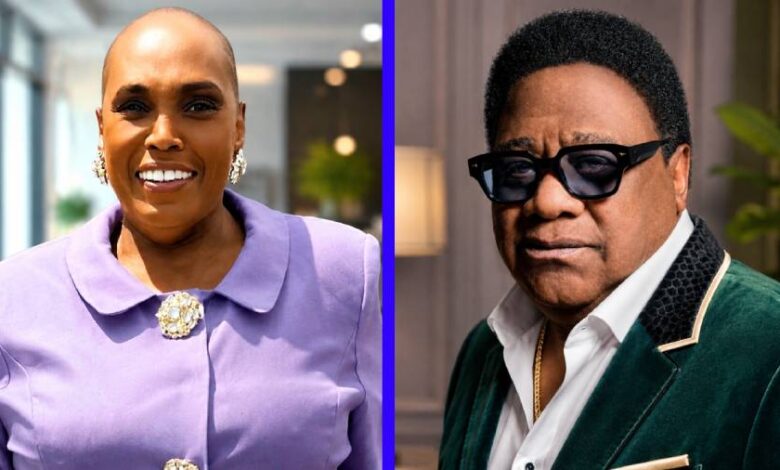
Shirley Kyles is best known as Al Green’s first wife, but her story extends beyond her connection to one of America’s most celebrated soul singers. A Chicago native who became involved in gospel music and church work in Memphis, Kyles married Green in June 1977 after meeting him through church activities. Their marriage produced three daughters but ended in divorce in 1983 after Kyles reported repeated domestic abuse, allegations that became part of the public record and were followed by Green’s admission under oath that he had struck her. More than a decade later, Shirley Kyles publicly discussed her experience in a 1995 Washington Post interview, explaining that she wanted her story to help other people affected by domestic violence.
Quick Bio
| Fact | Verified information |
|---|---|
| Full Name | Shirley Anne Watts Kyles Green, according to contemporary UPI reporting |
| Known As | Shirley Kyles; Shirley Green |
| Profession | Gospel singer, backing vocalist and church worker |
| Nationality | American |
| Birthplace | Chicago, Illinois, according to published biographical records |
| Birth Year | Approximately the late 1940s; exact date is not reliably established |
| Education | Not reliably documented by strong primary or contemporary sources |
| Spouse | Al Green, married in June 1977 |
| Divorce | Marriage ended in February 1983 |
| Children | Three daughters with Al Green: Alva, Rubi and Kora |
| Known For | Her marriage to Al Green and her later public account of domestic abuse |
| Relationship to Al Green | First wife and former spouse |
| Church Connection | Worked at Green’s Full Gospel Tabernacle Church |
| Music Connection | Performed as one of Green’s backing vocalists |
| Current Status | Later-life details, including an alleged date of death, have not been reliably established |
Shirley Kyles’ public biography is unusually limited compared with that of her famous former husband, which makes separating documented information from later internet claims particularly important. Contemporary reporting identifies her as a former member of Al Green’s backing band and gives her full name as Shirley Anne Watts Kyles Green. The Royal Albert Hall archive also identifies Shirley Kyles as Green’s former spouse and backing vocalist. Her exact birth date has not been established by a sufficiently authoritative source, and several websites now circulate a 2023 death claim based on an Alabama obituary for a woman named Shirley Cephas Kyles; however, the available evidence does not establish that the deceased woman was Al Green’s former wife. For that reason, a responsible biography should not present the alleged date of death as confirmed fact.
Who Is Shirley Kyles?
Shirley Kyles was a Chicago-born gospel musician and church worker whose public life became closely associated with Al Green during his transition from celebrated soul singer toward Christian ministry. According to the Washington Post, Kyles first met Green in 1976 at Mount Vernon Missionary Baptist Church in Memphis, where she was serving as minister of music. Green had become increasingly involved in religious work after the traumatic events of the mid-1970s and was developing a gospel-oriented musical direction. Kyles subsequently helped put together a backing group for him and worked as an administrator at his Full Gospel Tabernacle Church. The Royal Albert Hall archive independently describes her as Green’s former spouse and backing vocalist, while UPI’s 1981 reporting also identified her as a former member of his backup band. These records establish that her connection with Green was not simply romantic: she was involved in both his musical and church activities during an important period of his career.
Background in Gospel Music and Church Work
Before becoming known as Al Green’s ex-wife, Shirley Kyles had an established connection with gospel music and church life in Memphis. The Washington Post reported that she had previously opened two concerts featuring Al Green at the Memphis Coliseum, although she had not met him personally at those events. Their eventual meeting came through church, where Kyles was serving as minister of music. At the time, Green was moving toward ministry and wanted help creating a backing group as he changed the direction of his music. Kyles became part of that effort, eventually singing backup and working in the administration of Green’s church. Her involvement therefore placed her directly inside the intersection of gospel music, ministry and Green’s increasingly religious public identity. The available historical sources do not provide a complete résumé for Kyles, and later websites sometimes attribute academic degrees or professional credentials to her without sufficiently strong documentation. Those claims should therefore be treated cautiously rather than presented as established facts.
Marriage or Relationship with Al Green
Shirley Kyles married Al Green in June 1977 in Memphis in a remarkably private ceremony. The Washington Post described the wedding as taking place in the living room of a minister’s home, with only the bride, groom, minister and one witness present. Kyles recalled that Green arrived at her apartment unexpectedly with a marriage proposal on the morning of the ceremony, shortly after she had stopped singing backup for him and had left her church-administration role. She said Green presented the relationship as part of the religious work they could accomplish together. At first, the marriage appeared happy, but the relationship deteriorated quickly. Kyles later told the Washington Post that Green began physically abusing her, describing incidents involving slapping, kicking, threats and other violence. The history of the marriage is especially important because it is documented not merely through later biographies but through contemporary reporting, legal proceedings and Kyles’ own account.
The marriage also unfolded during a major turning point in Al Green’s life and career. Green had already become one of the leading soul performers of the early 1970s, with songs such as “Tired of Being Alone” and “Let’s Stay Together,” while simultaneously becoming increasingly committed to Christian ministry. The Encyclopedia of Arkansas records that Green married Shirley Kyles in June 1977 and that the couple divorced in 1983; it also notes that Kyles later alleged abuse and that Green acknowledged under oath that he had been abusive. This overlap between Green’s public religious identity and the private difficulties within his marriage became a significant part of the historical record surrounding the couple.
Parenthood and Family Life
Shirley Kyles and Al Green had three daughters together: Alva Lei, Rubi Renee and Kora Kishé. By the time the Washington Post interviewed Kyles in January 1995, the daughters were teenagers and were living with their mother. The newspaper reported that they were too young to remember the abuse their mother described from the marriage. Kyles’ role as a mother was central to the way she later discussed her past because she repeatedly framed her decisions around protecting her children and preserving their relationship with their father. Her 1995 comments also showed that she did not want her public account to become an attempt to destroy Green’s reputation; instead, she emphasized her own experience and the process of coming through it. Public sources identify the three daughters as the children Kyles shared with Green, while broader claims about additional children or detailed adult careers should be treated separately unless supported by reliable records.
Family circumstances also influenced how Kyles approached the end of her marriage. According to her 1995 interview, fear, shame, promises of change and concern about raising her children contributed to her returning to the relationship after earlier separations. She described having already experienced a failed marriage and said she did not want to face another divorce. These details help explain why her story is more complicated than a simple account of marriage followed immediately by separation. Her experience reflected the emotional and practical difficulties that can keep people in abusive relationships even when they recognize that the relationship has become unsafe. The historical record presents this as Kyles’ own explanation of her choices rather than a generalized judgment about her circumstances.
Supporting Through Domestic Abuse
Domestic abuse became the defining challenge of Shirley Kyles’ marriage and ultimately the reason the relationship ended. She first filed for divorce in 1978, alleging cruelty and physical abuse, but the couple reconciled and the case was withdrawn. In March 1981, UPI reported that Kyles had obtained a warrant accusing Green of beating her, with the contemporary report noting a black eye and other bruises. She again pursued divorce proceedings, and the allegations became part of the legal record. During the later proceedings, Kyles gave sworn testimony describing repeated violence, while Green eventually acknowledged under oath that he had struck her. The Encyclopedia of Arkansas likewise records that Kyles alleged domestic abuse and that Green acknowledged the abuse under oath. These documented proceedings are substantially stronger evidence than unsourced claims repeated on modern biography websites.
The circumstances described by Kyles in 1995 were severe and involved repeated episodes rather than one isolated disagreement. She told the Washington Post that there were several separations during the marriage, particularly when the violence became too frequent or severe, but she repeatedly returned because of fear, hope that Green would change, shame and concern about facing another divorce. The newspaper also reported that members of Kyles’ family, including sisters and two children from an earlier marriage, corroborated aspects of her account. Most significantly, the newspaper noted that Green himself had admitted striking her under oath. Because these statements concern domestic violence, they should be presented carefully and in their historical context rather than sensationalized for entertainment or search traffic.
Life After Divorce
Shirley Kyles’ divorce from Al Green was finalized in February 1983, bringing an end to a marriage that had lasted more than five years. Public accounts report that Green agreed to pay a substantial amount in alimony and child support, although the financial settlement is less important to understanding Kyles’ life than the circumstances that led to the separation. After the divorce, Kyles largely remained outside the entertainment spotlight, unlike Green, whose career continued through gospel music, ministry and later returns to secular music. The public record about Kyles’ life during the years immediately following the divorce is limited, and there is no sufficiently authoritative biography documenting every stage of her personal or professional development. Consequently, claims about specific employers, academic degrees, later marriages, residences or professional titles should not be treated as confirmed unless supported by stronger evidence.
One of the clearest documented developments after the divorce came more than a decade later, when Kyles decided to speak publicly about her experience. In 1995, she told the Washington Post that the highly publicized discussion surrounding Nicole Brown Simpson’s history of alleged domestic abuse had prompted her to break her own silence. Kyles said her intention was not simply to attack her former husband but to explain how she had survived the abuse and to help other victims. She emphasized prayer and faith as important parts of her ability to move forward. This interview is particularly valuable because it provides a direct account from Kyles herself at a time when she was choosing to re-enter the public conversation on her own terms.
Career Highlights and Public Recognition
Shirley Kyles did not build a conventional celebrity career independent of Al Green, but her involvement in gospel music and church administration gave her a meaningful role during a formative stage of Green’s transition into ministry. She served as a minister of music before meeting Green, later sang as one of his backing vocalists and worked in the administration of his church. The Royal Albert Hall archive specifically records her as a backing vocalist and former spouse of Green, while UPI described her in 1981 as a former member of his backup band. Her most significant public recognition, however, came years later when she spoke openly about domestic violence. Rather than seeking celebrity status, she used her own experience to discuss survival, faith and the consequences of abuse.
Kyles’ historical significance is therefore connected to two very different parts of her life. In the 1970s, she was a church musician and close collaborator within Al Green’s musical and religious world. In the 1990s, she became a rare first-person voice discussing the private reality behind a famous marriage. The contrast is important: she was not simply a person famous because she married a recording artist. She had her own involvement in gospel music and church work, and later chose to tell her story publicly when she believed it could benefit other people experiencing domestic violence. The available evidence does not support assigning her a long list of later professional accomplishments, but the documented record itself provides a meaningful account of her role and public contribution.
Why People Search for Shirley Kyles
People commonly search for Shirley Kyles because of her connection to Al Green, one of the most influential American soul singers of the 1970s. Searches for “Al Green’s ex-wife” frequently lead to questions about who Shirley Kyles was, when they married, how long the marriage lasted, whether they had children and what happened between them. Interest also comes from the 1995 Washington Post account in which Kyles publicly described the domestic abuse she said she experienced during the relationship. Her story therefore sits at the intersection of music history, celebrity relationships, family life and domestic-violence awareness. The strongest available evidence confirms that Kyles was Green’s first wife, a former backing vocalist and church worker, and the mother of three daughters with him.
Search interest has also produced a large amount of conflicting information about Kyles’ later life. Some recent websites publish a precise birth date, detailed educational history, professional credentials and a 2023 death date, but those details are not consistently supported by high-quality sources. In particular, the alleged 2023 death is sometimes linked to an obituary for a Shirley Cephas Kyles in Mobile, Alabama, while contemporary sources identify Al Green’s former wife by the fuller name Shirley Anne Watts Kyles Green. Without an authoritative record linking those identities, the responsible conclusion is that her later-life status has not been publicly verified to the standard required for a fact-based biography.
Privacy, Accuracy and Public Information
Shirley Kyles’ biography demonstrates why celebrity-family research requires careful source verification. Much of what is genuinely known about her comes from a small number of historical sources, especially the 1995 Washington Post interview, the 1981 UPI report and archival information about Al Green. By contrast, numerous newer websites repeat one another’s claims about her birth date, education, later employment, residence and death without demonstrating where those facts originated. A reliable biography should distinguish between documented facts and claims that remain unverified. For that reason, this article does not assign Shirley Kyles an exact birthday, state a specific current residence, claim a particular academic degree or declare that she died in 2023. The absence of reliable public information is itself important information, particularly when the individual has lived largely outside the celebrity spotlight.
The documented part of Kyles’ story remains substantial without filling gaps with speculation. She came from Chicago, became involved in Memphis church music, met Al Green through church in 1976, worked as a backing vocalist and church administrator, married him in June 1977, had three daughters with him, pursued divorce proceedings in 1978 and 1981, and ended the marriage in 1983. In 1995, she publicly discussed her experience of domestic violence and explained that she hoped her story could help others. Those facts are supported by contemporary reporting and archival material, making them a stronger foundation for understanding Shirley Kyles than unsupported claims about her private later years.
Conclusion
Shirley Kyles remains an important but relatively private figure in the history surrounding Al Green, and describing her only as “Al Green’s ex-wife” leaves out much of what the historical record actually reveals. She was a gospel musician, backing vocalist and church worker who became part of Green’s life during his transition toward ministry, a mother of three daughters, and later a woman who publicly described her experience of domestic abuse in the hope of helping others. Her marriage to Green ended in 1983, but her decision to speak about the relationship in 1995 gave her story a significance beyond celebrity biography. The most responsible account of Shirley Kyles is therefore one that recognizes both her connection to a famous musician and her own voice, while resisting the temptation to fill the gaps in her later life with unverified information.
Also read: Samantha Struthers Rader: The Verified Facts on Sally Struthers’ Daughter
FAQs
Who is Shirley Kyles?
Shirley Kyles is Al Green’s first wife, a former backing vocalist and church worker who later publicly discussed her experience with domestic abuse.
When did Shirley Kyles marry Al Green?
Shirley Kyles married Al Green in June 1977 in Memphis, Tennessee, in a small private ceremony held at a minister’s home.
How many children did Shirley Kyles have with Al Green?
Shirley Kyles and Al Green had three daughters together: Alva Lei, Rubi Renee and Kora Kishé, according to historical biographical sources.
Why did Shirley Kyles and Al Green divorce?
Kyles sought divorce amid allegations of repeated domestic abuse, while Green later acknowledged under oath that he had struck his wife.
Did Shirley Kyles speak publicly about her marriage?
Yes. In 1995, Kyles spoke to the Washington Post about the abuse and explained that she wanted her experience to help other victims.
Is Shirley Kyles still alive?
Her current status has not been reliably established. Recent online death claims conflict with the identification details available in stronger historical sources.